The Defining Decade: Navigating the Uncertainty and Potential of Your 20s
The Weight of the Defining Decade
Many of us walk into adulthood under a heavy cloud of cultural misinformation. We are told our 20s should be the best, most carefree years of our lives. When the reality of rent, entry-level job stress, and dating burnout hits, we feel like we are failing. But the truth is far more liberating: your 20s are empirically the most difficult decade of adulthood. It is a period defined by a high concentration of "firsts" and "worsts." You are managing your first major breakups, your worst bosses, and your most acute financial anxieties. This is not a sign that you are doing it wrong; it is a sign that you are in the thick of the most critical developmental window you will ever experience.
Meg Jay, a clinical psychologist and author of The Defining Decade, reminds us that 80% of life's most defining moments happen by age 35. This isn't meant to cause panic, but to instill a sense of intentionality. Your 20s are the time when your brain and personality change more than at any other period in adulthood. It is a period of high stakes and high uncertainty. The stress you feel stems from not having the adult sources of safety yet—the stable career, the long-term partner, the sense of home. Recognizing that this decade is a foundation-building phase, rather than a finished product, allows you to shift from a state of paralysis to one of active problem-solving.
Identity Capital and the Evolution of Work
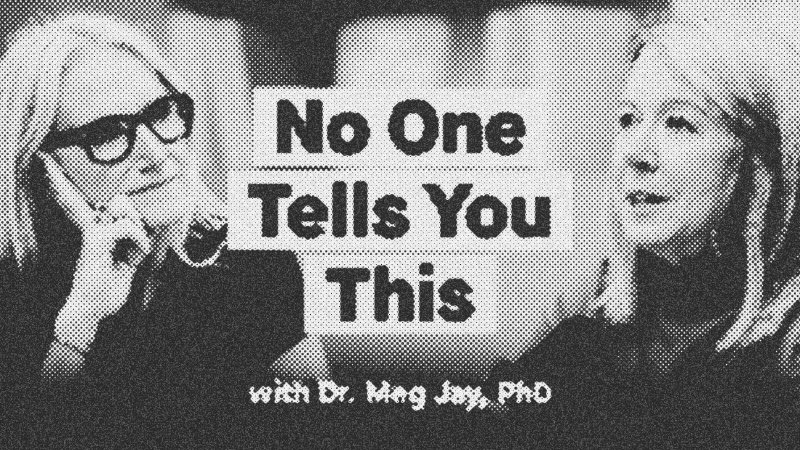
In a landscape where the average young adult will have nine different jobs by age 35, the traditional concept of a "career ladder" has vanished. Instead, we must focus on building identity capital. This concept refers to the collection of personal assets—skills, experiences, and even personal stories—that add value to who you are and what you have to offer. Even if you are currently in a job that feels beneath your education level or outside your desired industry, you are not necessarily stagnant. The key is to ensure you are learning something that you can "trade up" for your next opportunity.
Meg Jay argues that your learning curve in your 20s directly predicts your earning curve in your 40s and 50s. This makes the first ten years of work the most vital for setting your lifelong financial trajectory. For those feeling stuck in underemployment, the advice is simple but firm: get onto the steepest learning curve possible. This might mean taking an internship, pursuing a certification, or simply shifting into an environment where you are forced to grow. The goal is not to have your entire life figured out by 30, but to have started the process of figuring it out. Doing nothing feels safe, but it is actually the most dangerous path, as underemployment tends to be "sticky"—the longer you stay in a role that doesn't challenge you, the harder it becomes to leave.
Avoiding the Trap of Sliding Instead of Deciding
When it comes to love and relationships, the stakes are arguably higher than they are in your career. The person you choose to partner with is the most important decision you will ever make, yet many people approach dating with far less intentionality than they do a job search. We often see couples "sliding" into major life transitions—moving in together because the lease is up, or getting married because they've been together for five years and it seems like the next logical step. This is "sliding, not deciding," and it often leads to deep dissatisfaction and high divorce rates later in life.
Intentional dating involves having the "29 conversations" with yourself and your partner. You need to know what you want regarding children, money, religion, and lifestyle before you are too deeply entangled to leave. Meg Jay suggests that the best time to work on your marriage is before you have one. This means doing a rigorous "gut check." If you imagine being in your current relationship five years from now and the thought makes you feel trapped or anxious, that is a data point you cannot ignore. Loneliness in your 20s is common—young adults are statistically the loneliest demographic in the U.S.—but settling for the wrong person to avoid that loneliness is a trade-off that rarely pays off.
Skills Over Pills: Conquering Social Uncertainty
The rise of social anxiety in young adults is often a mislabeling of social uncertainty. It is normal to feel anxious when your friendships are unstable, you are in a new city, and your professional reputation is not yet established. Rather than viewing this as a clinical disorder that requires a lifelong label, we should view it as a developmental challenge. The remedy for social uncertainty is experience. Life is the best therapist, and the only way to build social confidence is to put yourself in situations where you must practice difficult conversations.
Building the skill of talking to "weak ties"—people outside your immediate inner circle—is the single most important habit for growth. These are the people who introduce you to new ideas, new jobs, and new social circles. While medication can sometimes help take the edge off acute symptoms, it doesn't teach you the skills needed to navigate a high-stakes meeting or a first date. True resilience comes from facing unwanted thoughts and feelings and learning how to handle them through intentional action. Growth happens when you move toward the things that scare you, one conversation at a time.
The Courage to Imagine Your Life Going Well
We often spend an enormous amount of mental energy on "what if" scenarios that focus on failure. What if I never find a partner? What if I never get a good job? This focus on the negative is often a form of avoidance; if we convince ourselves that failure is inevitable, we don't have to take the risks required for success. Mel Robbins and Meg Jay suggest a radical reframe: what if you had the courage to imagine your life going well?
Imagining success forces you to get clear on your dreams, which in turn highlights the steps you need to take today. Your 20s are like a plane just after takeoff—a small course correction now leads to a vastly different destination ten or twenty years down the line. Whether you are 22 or 52, it is never too late to start being intentional. Take care of the minutes, and the years will take care of themselves. By choosing to act with courage and clarity today, you are creating the safety and fulfillment you desire for your future self. Your potential is not a fixed point; it is a horizon you move toward with every intentional choice.
- Meg Jay
- 36%· people
- Mel Robbins
- 9%· people
- Scott Stanley
- 9%· people
- The 20some Treatment
- 9%· books
- The Defining Decade
- 9%· books
- Other topics
- 27%
The Best Advice I Wish I Knew in My 20s
WatchMel Robbins // 1:20:02

Mel Robbins is the creator and host of The Mel Robbins Podcast, one of the most successful podcasts in the world, and a #1 New York Times bestselling author. She has 40M followers and is known globally for practical tools on mindset and behavior change. The Wall Street Journal calls her a “billion-view podcaster,” and TIME says she gives millions “a reason to believe in themselves.” Her books are published in 63 languages. The Let Them Theory is a #1 bestseller across every major list and a top-selling book of 2025 with more than 8M copies sold. She also wrote The 5 Second Rule and The High 5 Habit, and has seven #1 Audible releases. Her company, 143 Studios, produces award-winning podcasts, books, courses, and events for partners like Starbucks, Ulta Beauty, JP Morgan Chase, LinkedIn, and Audible. She has been honored by TIME 100 Digital Voices, Forbes 50 Over 50, USA Today, Apple Podcasts, Spotify, and The Hollywood Reporter.