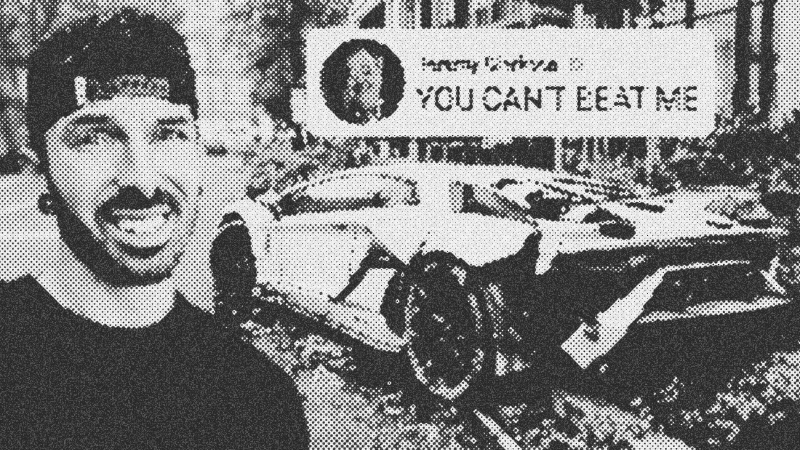
, a car that defines the pinnacle of naturally aspirated V12 performance. This particular machine arrived as a pile of auction-bought tragedy, a category S wreck that most sane mechanics would have left for the scrap heap. But under the fluorescent lights, we see potential. The mission isn't just to make it run; it's to restore its soul and then take it to the legendary
. Before we can even dream of the Italian asphalt, we have to face the cold reality of Italian engineering. The car is currently hobbled, restricted to a miserable 60 mph because the onboard computers have detected a catastrophic failure in the rear-wheel steering system. In a car designed for 217 mph, a limp mode is the ultimate insult.
The Ghost in the Rear-Wheel Steering
Modern supercars are less like traditional automobiles and more like fighter jets with wheels. The SVJ's rear-wheel steering is a masterpiece of dynamic stability, using dual motors to toe the wheels inward during braking—mimicking a skier's 'snowplow'—and adjusting geometry mid-corner for surgical precision. Our problem began with a 'lost communication' code that signaled a digital severance between the car's brain and the rear actuators. We initially suspected a dead motor, a component that
engineering dictates that these modules must be replaced in pairs, meaning a simple mechanical fix could snowball into a £30,000 nightmare because a 'Version C' module refuses to talk to a 'Version B' sibling.
Precision under the hood means looking past the diagnostic screen. After hours of frustration, we spotted a tiny, almost invisible break in the wiring loom high above the motor. This wasn't a computer failure; it was a physical wound from the accident. Using a soldering iron and a bit of 'big brain' ingenuity, we bypassed the manufacturer's rigid protocols. We performed a surgical transplant, taking the mechanical internals of the secondhand motor and mating them with the original, coded circuit boards. It was a gamble that defied the official service manual, but when the dash lights cleared and the knocking noise vanished, we knew we had outsmarted the factory's planned obsolescence. The SVJ was officially ready to breathe again.
I REBUILT A WRECKED LAMBORGHINI SVJ THEN ATTEMPTED TO BEAT JEREMY CLARKSON
Titanium, Carbon, and the Italian Aesthetic
With the mechanical ghosts exorcised, the focus shifted to the car’s visual identity. I have a lingering phobia of white
for a full wrap in a color reminiscent of ice titanium—a sophisticated, metallic grey that highlights the SVJ's aggressive aeronautical lines. This wasn't a standard wrap job. Because the base car was white, every edge and crevice had to be meticulously covered to ensure no 'factory' paint peeked through. We accompanied this with a custom set of two-piece wheels featuring full carbon fiber barrels. At £5,000 for the set, these wheels aren't just jewelry; they reduce unsprung mass, which is critical when you’re planning to dive into the Tamburello corner at 150 mph.
Reassembling an SVJ is like putting a puzzle together where every piece costs as much as a family sedan. We discovered a leaking
shock absorber, another £7,800 setback, but there is no room for compromise on a track car. We fitted the 'ALA' (Aerodinamica Lamborghini Attiva) active aero system, a complex network of motorized flaps in the front bumper and rear wing that stall or increase downforce in milliseconds. Seeing the car come together, with its satin red SVJ stickers and gold-tipped titanium exhaust, it ceased to be a 'wreck.' It became 'Suzanne,' a resurrected beast destined for the motherland.
The Shakedown and the Surprise V10 Guest
A 1,000-mile journey from the UK to Italy is the ultimate test of a DIY rebuild. If a bolt is loose or a cooling line is pinched, the French motorway will find it. We crossed the channel, the V12 singing through the titanium pipes, feeling every bit the fighter jet it resembles. Along the way, we were joined by
. For a mechanic, driving a car you built with your own hands on this track is a terrifying experience. Every vibration feels like a looming failure; every gear shift is a prayer. The benchmark was
. On paper, the SVJ is faster, but the SVJ doesn't drive itself. My first laps were tentative, breaking far too early, resulting in a disappointing 2:08. The simulator can teach you the line, but it can't simulate the fear of putting a £300,000 car into a concrete wall.
As the day progressed, the confidence grew. We whittled the time down to 2:04, then 2:01. The car was performing, the rear-wheel steering was tucking the nose into the apexes, and the ALA system was keeping us pinned to the tarmac. But we were pushing the limits of the build. During the final hot laps, the cockpit filled with a sinister heat. I looked at the gauges—the coolant temperature was buried in the red. I had to limp back to the pits as the engine bay began to smoke. We weren't just fast; we were literally on fire.
The Cost of Performance
In the pits, the carnage was evident. The titanium exhaust—a material known for its rigidity and acoustic brilliance—had reached its breaking point. Titanium is brittle, and under the extreme vibrations of track use, the custom exhaust had fractured. This allowed 1,000-degree flames to shoot directly into the engine bay, melting heat shields and incinerating plastic oil breather lines. It was a brutal reminder that performance has a price. We had pushed 'Suzanne' until she bled, but she hadn't broken entirely. She had given us everything she had before the heat became too much.
The final results were a mixed bag of pride and humility.
's time by a heartbreaking tenth of a second. We didn't beat the man, but we beat the odds. We took a car that was destined for a crusher, re-engineered its digital DNA, and drove it across a continent to challenge one of the world's most famous lap times.
Respect the Engineering
Rebuilding a supercar isn't just about replacing parts; it's about understanding why they exist in the first place. This journey taught me that while we can 'big brain' our way around a £30,000 repair bill, we must always respect the thermal and mechanical stresses these machines endure. The titanium exhaust failure was a lesson in material science—sometimes, the 'cooler' material isn't the right one for the job. Going forward, 'Suzanne' will get a stainless steel heart, something that can handle the heat of
years ago. But the SVJ is alive. It is no longer a 'wrecked car'; it’s a survivor with a story etched into its melted heat shields. If you’re going to fail, fail at 160 mph while chasing a legend. We’ll be back, and next time, the heat won’t stop us.