Mat Armstrong bypasses Bugatti parts ban with Audi and Aston Martin swaps
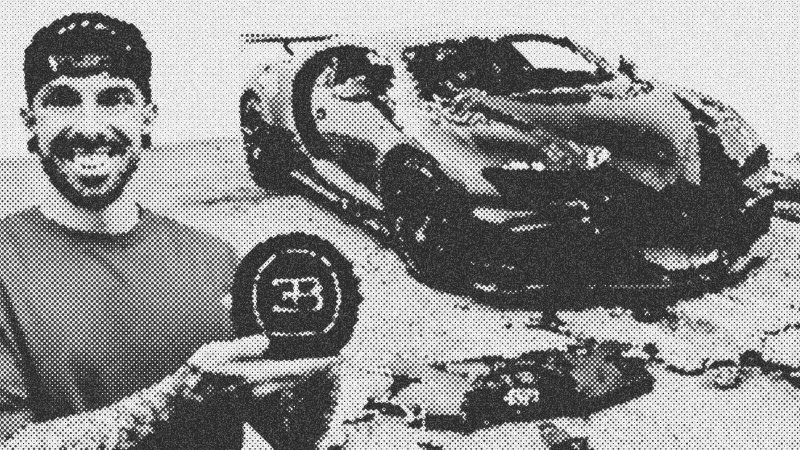
Rebuilding a crashed Bugatti Chiron is a lesson in engineering humility and logistical warfare. When Bugatti refused to supply parts or technical support for this salvaged build, claiming it couldn't be done in a garage, the project shifted from a standard restoration to a high-stakes fabrication exercise. To get this car back on the road, every major system—from the structural chassis legs to the safety-critical airbag modules—had to be reverse-engineered, cross-referenced, or built from raw materials. This isn't just about turning wrenches; it’s about proving that even the world’s most exclusive hypercars are still just machines made of metal, leather, and code.
Structural surgery on the aluminum chassis
The Bugatti Chiron chassis is a masterpiece of aluminum and carbon fiber, but when the front-end takes a hit, the manufacturer's solution is usually a full replacement. Without access to new structural components, the team relied on Bob from The Machine Shop to perform surgical repairs on the front chassis leg. The process began by cutting away the mangled aluminum and salvageable mounting plates where the crash bar bolts up. Aluminum fabrication on this level requires respecting the material's temper; you can't just beat it back into shape.
Bob used a map gas torch to soften the metal before straightening the original mounting plates. Once the plates were flat, he reconstructed the hollow, square-box chassis leg using the exact same grade of aluminum as the factory. The trick to maintaining structural integrity lies in the welding sequence—tacking the four corners, then sliding internal reinforcement pieces in to build the box from the inside out. After sanding down the welds and tapping new threads for the crash bar bolts, the repair was virtually indistinguishable from a factory-pressed part once the Blackhorse Automotive team applied clear coat. It proves that with enough heat and precision, even "unrepairable" hypercar frames can be brought back to spec.
Cross-referencing the Volkswagen Group parts bin
One of the best-kept secrets in the exotic car world is the "parts bin" reality. Even a multi-million dollar Bugatti shares DNA with more humble siblings in the Volkswagen Group. When facing deployed airbags, the team discovered that Bugatti used parts that were physically identical to those found in much cheaper vehicles. The passenger-side airbag, for instance, featured a part number that perfectly cross-referenced with an Audi A3.
Despite skepticism from some specialists, the team sourced an Audi A3 airbag from the UK Airbag Team and found it to be a perfect match—not just in shape, but in the electrical connectors and mounting dimensions. The driver-side steering wheel airbag presented a different hurdle, eventually requiring the explosive charge and internal bag from an Aston Martin unit to be swapped into the custom Bugatti trim. For the knee airbags, the team opted for a professional reset of the original units, involving the installation of new explosive charges to ensure the safety systems remained functional without needing a direct supply line from Molsheim.
Interior re-engineering and laser-cut leather
The interior restoration, handled by E3 Customs, went beyond simple upholstery. The deployment of the passenger airbag actually rips through the dashboard leather, meaning the repair had to replicate the factory's "weakening" points that allow the bag to burst through safely. To achieve this, the team used a laser to etch a specific pattern into the back of the new white leather. This etching is invisible from the front but creates a controlled failure point that mirrors the OEM safety standards.
Matt at E3 Customs also pushed the aesthetic boundaries with a custom purple and white "half-and-half" design. This involved creating stencils on a computer, laser-cutting vinyl, and using fabric paint to create permanent patterns in the leather. They even had to fabricate missing knee pads from scratch using plastic and trim, proving that when the manufacturer stops selling parts, the 3D printer and laser cutter become the mechanic's best friends. The result is a cabin that maintains the Bugatti Chiron identity while adding a level of customization the factory would never allow.
Custom cooling and the 40-liter hurdle
The Bugatti Chiron cooling system is a monster, utilizing ten different radiators and a coolant capacity of nearly 40 liters. This system is divided into high-temperature circuits for the engine and low-temperature circuits for the charge air coolers. With several radiators destroyed in the crash, Bob had to manufacture new units using cores from Honda Civic radiators, which shared the necessary dimensions.
Fabricating these radiators required machining custom end tanks and brackets without having the car on-site for fitment. The team had to mirror the undamaged side of the car to guess the mounting points. During the final assembly, the challenge shifted to plumbing. After installing the main center radiators and the custom-built side units, the team performed a pressure test using a vacuum-filling tool. Unfortunately, the pressure test revealed a leak in one of the custom radiator cores—likely sustained during shipping. In a system this complex, even a pinhole leak is a catastrophic failure. While the car didn't reach operating temperature in this session, the modular nature of the custom build means the faulty unit can be pulled, TIG-welded, and reinstalled without waiting for a shipment from France.
The reality of a garage-built hypercar
The project stands as a defiance of the modern automotive industry's "right to repair" restrictions. Bugatti designed the Bugatti Chiron to be serviced only by authorized technicians with specialized equipment. By separating the car in half in a standard garage and fabricating parts from raw aluminum and donor vehicle components, the team has demystified one of the world’s most complex machines. The use of CarVertical to track the car's history ensures transparency, acknowledging the salvage title while showcasing the quality of the reconstruction. The outcome isn't just a car that looks like a Bugatti; it's a machine that has been touched by every facet of automotive craft—fabrication, electronics, and precision tuning. It serves as a reminder that with enough technical grit, no car is truly "unfixable."
- Bugatti
- 17%· companies
- Bugatti Chiron
- 17%· products
- Bob
- 10%· people
- Audi A3
- 7%· products
- E3 Customs
- 7%· companies
- Other topics
- 41%
WE MADE THE PARTS THAT BUGATTI REFUSED TO SELL US
WatchMat Armstrong // 43:02

I am Mat Armstrong from Leicester UK. Follow me as i build & modify cars. I dont really specialise in any manufacture of car, neither am i professionally trained, just a regular guy winging it as i go along restoring each car with my own personal touch (even if that means getting the angle grinder out) I hope my content brings a smile to your face and maybe inspires you to get on the spanners yourself. There would be no point in me listing what car i own at the moment as i switch and change so often, but you are likely to see Audi's, Mercedes, VW, Maserati's, Bentleys & more. I do like German engineering but im not scared to give the others a try 😆 At the end of the day im here for a good time & never take things too seriously so enjoy!! Mat Armstrong ⬇️ Im always active on my other social accounts aswell which are below ⬇️