The 3D-Printed Frontier: Inside Nate's $5,000 Ultimate Tech Upgrade
Designing a Custom Ecosystem
When most users approach a $5,000 budget, they pivot toward flagship pre-built systems or premium shelf-ready components. Nate, a product designer at Linus Media Group, took a fundamentally different path. His upgrade demonstrates a shift toward hyper-personalization in consumer electronics, where the hardware is not just purchased but fabricated. By selecting the Prusa CORE One+ kit 3D Printer as a centerpiece of his upgrade, Nate moved beyond being a consumer to becoming a manufacturer. This project highlights a growing trend: the convergence of industrial DIY and high-performance computing.
The Engineering of a 3D-Printed NAS
The standout element of this build is a massive 12-bay 12-bay ATX NAS case entirely 3D printed from models available on Printables. This isn't just an aesthetic choice; it’s a functional engineering challenge. While the material cost for the filament remained low—roughly equivalent to a budget off-the-shelf case—the complexity involved in thermal management and structural integrity is significant.
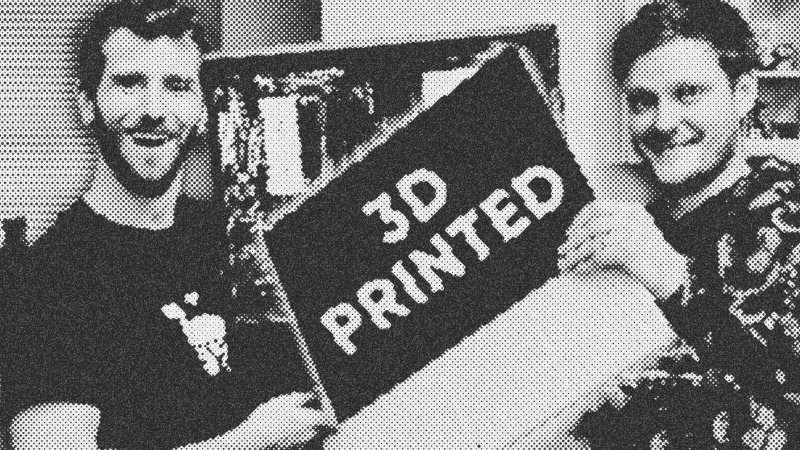
During assembly, Nate and the team faced real-world fabrication hurdles. A critical error arose involving extra brass standoffs melted into the 3D-printed motherboard backplate. Because these standoffs were essentially permanent, they required manual surgery—cutting through brass and plastic to ensure compatibility with the ASUS ROG Strix B850-A WiFi Motherboard. It serves as a stark reminder that while 3D printing offers infinite flexibility, it lacks the standardized safety nets of mass-produced chassis.
High-Performance Silicon and Thermal Trade-offs
At the heart of the primary gaming rig sits the AMD RYZEN 7 9800X3D 8-Core CPU. This processor represents the pinnacle of current gaming performance, utilizing 3D V-Cache to minimize latency in simulation-heavy titles like Factorio. However, shoving top-tier power into custom enclosures often leads to clearance issues.
The team struggled with AIO liquid cooler placement, discovering that the custom chassis dimensions caused the fans to interfere with the motherboard's power cables. This led to a classic builder's compromise: sacrificing a secondary fan to make the system close. It illustrates the "experienced builder's tax"—the need to solve physical geometry puzzles that software-based design sometimes overlooks.
Data Sovereignty via Local Storage
Beyond the gaming performance, the shift toward local data management was a primary goal. Nate integrated four 8TB drives—a mix of Seagate IronWolf Pro 8TB NAS HDD and Western Digital 8TB Ultrastar HDD—to create a massive storage pool. His choice to mix brands was a calculated, albeit paranoid, move to avoid single-batch manufacturing defects. Running on HexOS, the system aims for maximum accessibility without the privacy concerns of cloud-based solutions. This local infrastructure ensures family photos and critical project files remain under personal control, protected further by an APC Back-UPS Pro BR1000MS UPS to mitigate data corruption during power events.
The Industrial Workshop Integration
Perhaps the most "exotic" part of this $5,000 spend was the Router Spindle. Nate isn't just building PCs; he's building a CNC router table to act as a jointer for woodworking. Powered by a 3.2 kW motor that hits 24,000 RPM, this industrial gear requires a Raspberry Pi 5 running LinuxCNC for precision control. This highlights how modern enthusiasts are bridging the gap between digital creation and physical manufacturing, using high-end tech to facilitate traditional crafts.
- 12-bay ATX NAS case
- 6%· products
- AMD
- 6%· companies
- AMD RYZEN 7 9800X3D 8-Core CPU
- 6%· products
- APC Back-UPS Pro BR1000MS UPS
- 6%· products
- ASUS ROG Strix B850-A WiFi Motherboard
- 6%· products
- Other topics
- 71%
He 3D Printed a case instead of buying one? - AMD $5000 Ultimate Tech Upgrade
WatchLinus Tech Tips // 22:50

Linus Tech Tips is a passionate team of "professionally curious" experts in consumer technology and video production who aim to educate and entertain. Sponsorship Inquiries: [email protected]