OSHCut motion simulator handles rough terrain with clever engineering and raw power
The brute-force engineering of extreme simulation
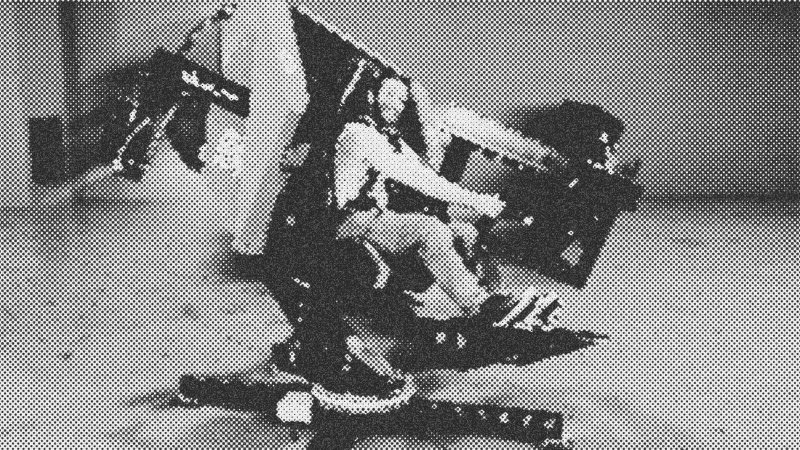
Most commercial motion simulators rely on pneumatic actuators or low-power motors that struggle to mimic the violent transitions of off-road driving. The OSHCut Motion Simulator rejects this compromise. This custom-engineered rig leverages three heavy-duty servo motors from Technic Inc., delivering up to 7.7 peak horsepower per channel. Operating at a blistering 180 degrees per second across yaw, pitch, and roll axes, it translates virtual suspension travel into immediate, visceral physical feedback.
Solving mechanical fatigue with modular design
High-torque machinery demands intelligent power transmission. To prevent back-driving the massive motors, the rig pairs them with a 7:1 worm gear. Additionally, a 20:1 Omega drive system keeps noise to an absolute minimum during rapid, high-speed shifts. Power is routed through a continuous slip ring originally designed for industrial windmills, allowing infinite rotation without the risk of binding or tearing cables.
Yet, even heavy-duty industrial components eventually fail under stress. During initial testing, a main drive belt snapped after approximately 1,000 hours of cumulative operation. Instead of requiring a complete strip-down, the rig's smart laser-cut frame allowed the team to tip the simulator onto its back, unbolt the leg brackets, and slide a new toothed belt into the integrated tensioner assembly.
Custom steel and localized fabrication
The entire mechanical frame serves as a proof of concept for modern, localized fabrication. Created by OSHCut, the metal parts were designed entirely in CAD and manufactured using automated laser-cutting services. Double-walled tubes prevent structural collapse when tightening bolts down under extreme torque, proving that high-grade simulation rigs do not require proprietary casting or exotic, inaccessible manufacturing processes.
Real-world telemetry meets first-person crawling
While the rig performs admirably in traditional racing simulators, its peak performance shines when paired with a custom radio-controlled truggy. Operating on a hand-sculpted XPS foam canyon, the RC truck utilizes an ESP32 microcontroller and a 9-axis inertial measurement unit. As the physical truck navigates the dirt and gravel, real-time telemetry is piped back to the simulator's on-board laptop. The resulting physical response is so tightly coupled with the FPV camera feed that it eliminates the sensory mismatch that typically triggers motion sickness.
- ESP32
- 20%· products
- McMaster-Carr
- 20%· companies
- OSHCut
- 20%· companies
- OSHCut Motion Simulator
- 20%· products
- Technic Inc.
- 20%· companies
I IMMEDIATELY Broke this Hyper-Realistic Gaming Sim
WatchLinus Tech Tips // 15:42

Linus Tech Tips is a passionate team of "professionally curious" experts in consumer technology and video production who aim to educate and entertain. Sponsorship Inquiries: [email protected]