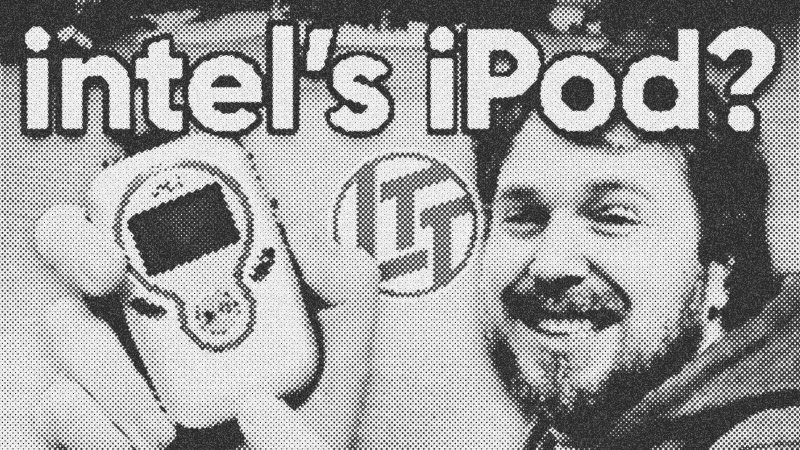
—attempted to define what a portable MP3 player should be. These weren't just products; they were experiments in storage, ergonomics, and branding. Most of them failed spectacularly because they focused more on technical specifications than the actual human experience of carrying music. Reviewing these "nuggets" today offers a masterclass in how not to design consumer electronics.
The Intel Pocket Concert: High-End Hardware, Bizarre Execution
threw its engineering weight into this device, boasting 128MB of storage and a surprisingly durable aluminum chassis. On paper, it was a powerhouse for its time, featuring an FM radio and remarkably low total harmonic distortion. However, the user experience was a cluttered mess of specialized software and physical buttons. The "Guided Tour" preloaded on the device reveals a company trying too hard to sell a lifestyle it didn't fully understand, featuring strange audio cues of doors opening and closing that serve as an unintentional metaphor for the confusing interface. While the hardware felt premium, the software gatekeeping and the need for the
(or Click!) drives—miniature spinning magnetic discs that were essentially the last attempt for floppy-style media to compete with flash memory. Each disc held 40MB, meaning you had to carry a wallet of fragile, magnetic squares to listen to more than an hour of music. The device is chunky, heavy, and notoriously unreliable. During testing, the mechanical nature of the drive makes itself known through audible whirrs and clicks, a stark contrast to the silent solid-state future. It’s a testament to a time when manufacturers were desperate to find a cheap storage solution, even if it meant sacrificing the durability and portability essential for a mobile device.
represents the opposite end of the spectrum: massive storage at the cost of extreme bulk. Shaped like a thick portable CD player, it housed a 6GB hard drive—an ungodly amount of space in the early 2000s. It was a desktop-class digital-to-analog converter (DAC) that happened to have a battery compartment. With gold-plated tips and an array of line-out ports,
targeted the audiophile. Yet, its reliance on nickel-metal hydride (NiMH) batteries and a 12-hour initial charge requirement highlights the primitive state of power management. It was more of a portable library than a player you could actually go for a run with.
, which often felt like navigating a spreadsheet. The hardware was often silver and blue plastic, a aesthetic choice that has aged far worse than the clean lines of the early 2000s
These devices are more than just tech garbage; they are the DNA of the modern smartphone. They remind us that early adoption is often a struggle against bad battery life, fragile media, and terrible compression. If you find an
today, it is likely a non-functional paperweight due to battery leakage or drive failure. They serve as a vital reminder that in consumer tech, being first matters less than being usable.