Best Buy and Amazon exploit pricing loopholes to fake consumer savings
The erosion of the honest discount
Online shopping was supposed to usher in an era of perfect price transparency. Instead, major retailers have developed a sophisticated toolkit of deceptive marketing tactics designed to manufacture a sense of urgency. The most egregious offender is the "compare at" reference price. Unlike a traditional discount based on a store's previous selling price or the MSRP, modern reference pricing is often an optimistic fabrication. By moving away from fixed benchmarks, retailers can claim massive savings against hypothetical prices that no one ever actually paid.
Best Buy's shifting definitions
Best Buy recently overhauled its promotional language, replacing the "was" price with a "comparable value." Their fine print reveals a startling lack of accountability: this reference price can be based on a different product entirely, a price offered by a third-party marketplace seller, or even a price they intend to charge in the future. This policy essentially allows the retailer to pick the highest number possible from any corner of the internet to make their current offer look like a steal. It’s a strategy built on the Fear Of Missing Out (FOMO), targeting shoppers who don't have the time to audit every transaction.
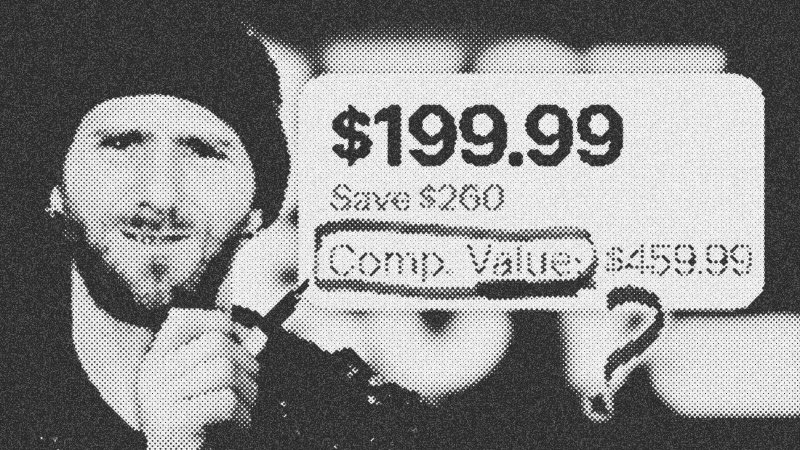
The three horsemen of deceptive retail
While Best Buy is currently pushing the envelope, they are not alone. Walmart and Amazon utilize similar strategies, often relying on 90-day median prices that lack transparency. Beyond "compare at," consumers must navigate the "up to" and "starting at" traps. The Better Business Bureau suggests that "up to" claims should only be used if at least 10% of items meet that discount threshold, yet enforcement is virtually non-existent. These phrases serve as legal shields, absolving companies of the responsibility to provide the value their headlines promise.
Why price trackers are disappearing
Tools like CamelCamelCamel and PC Part Picker are vital for historical context, but retailers are fighting back. Amazon has been accused of crushing services like PriceZombie by barring them from affiliate programs if they show competitor prices or historical data older than 24 hours. This systematic destruction of third-party auditing tools leaves consumers vulnerable. Without aggressive regulatory intervention from the Federal Trade Commission, the only defense is manual vigilance and participating in class-action advocacy.
- Amazon
- 15%· companies
- Best Buy
- 15%· companies
- Best Buy Canada
- 8%· companies
- Better Business Bureau
- 8%· companies
- CamelCamelCamel
- 8%· products
- Other topics
- 46%
This Should Be Illegal...
WatchLinus Tech Tips // 14:04

Linus Tech Tips is a passionate team of "professionally curious" experts in consumer technology and video production who aim to educate and entertain. Sponsorship Inquiries: [email protected]