Brianne Linne proves melanoidins, not tannins, cause dry sensations in coffee
The chemistry of the dry cup
Astringency remains one of the most polarizing sensations in the specialty coffee world. Enthusiasts and professionals often describe it as a sandpaper-like dryness on the tongue, yet its chemical origin in coffee has been shrouded in myth for decades. Unlike wine or tea, where the presence of Tannins provides a clear explanation for this mouth-puckering effect, coffee follows a different biological path. Understanding this phenomenon requires separating physical touch from taste perception.
Debunking the tannin myth in coffee
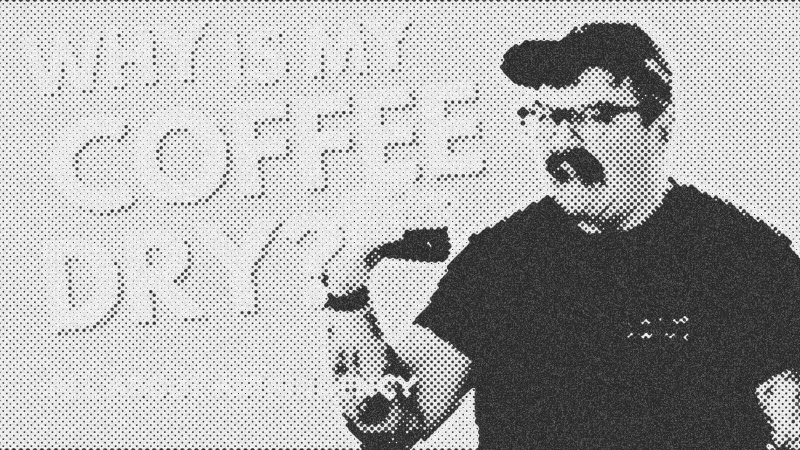
A persistent misconception in coffee shops and competition stages is that coffee contains tannins similar to red wine. Samo Smrke, a chemist at the Zurich University of Applied Sciences, explicitly rejects this notion. Coffee lacks the significant amounts of polymeric polyphenols—specifically those with enough hydroxyl groups—to precipitate proteins in the same way wine does. While coffee contains Chlorogenic Acid, these compounds do not function like traditional tannins. Therefore, the "dryness" drinkers experience must stem from an entirely different molecular structure.
Brianne Linne identifies the melanoidin connection
Recent research by Brianne Linne at Ohio State University has shifted the focus toward Melanoidins. These nitrogenous brown polymers, formed during the Maillard reaction, are what give coffee its color. Through a fractionation process, Linne isolated a specific subset of small-scale melanoidins that carry phenolic compounds. These structures essentially block lubricating saliva, creating the friction we perceive as dryness. This discovery explains why both light and dark roasts can be astringent: light roasts possess high levels of precursor chlorogenic acids, while dark roasts produce more complex melanoidin structures that can harbor these drying phenolics.
Practical implications for brewing extraction
This scientific shift has direct consequences for how we dial in a brew. Because these astringent-carrying melanoidins extract relatively slowly, pushing extraction too far—a common goal among those seeking high yields—often invites dryness. Lance Hedrick suggests that the "extraction ceiling" for light roasts is likely lower than previously thought. If a cup feels physically abrasive, the solution isn't necessarily to fix a flavor imbalance, but to physically reduce the amount of these late-extracting compounds by lowering the water temperature or shortening the brew ratio.
The future of coffee science
While the melanoidin theory provides the most robust explanation to date, other factors may contribute. Jonathan Gagne has previously theorized that micro-particles or "fines" could mechanically cause a sensation of dryness. While unproven, using thicker paper filters to remove these particles often yields a smoother cup. As research continues, the coffee community is moving away from vague descriptors and toward a precise, chemical understanding of how roasting and brewing interact to create the perfect mouthfeel.
- Astringency
- 10%· specialty topics
- Brianne Linne
- 10%· people
- Chlorogenic Acid
- 10%· chemicals
- Jonathan Gagne
- 10%· people
- Lance Hedrick
- 10%· people
- Other topics
- 50%
Think Your Coffee Is Bitter? It Might Be Astringent (Here’s the Fix)
WatchLance Hedrick // 18:35

What's up, everyone! Lance Hedrick here. Coffee Pro of a decade, coach two 2x World Barista Champion runner-ups, past Latte Art Champion, academic in remission, and extremely neurodivergent weirdo. I teach all interested in coffee everything about coffee, from coffee science, theories, brew methods, machine reviews, and more. And, I am a weirdo. I have a patreon listed below. I hope to purchase all products shown on this channel and subsequently giving them away to supporters. Cheers!