Lance Hedrick claims half-million dollar roller mills make Nespresso capsules superior
The industrial precision of the roller mill
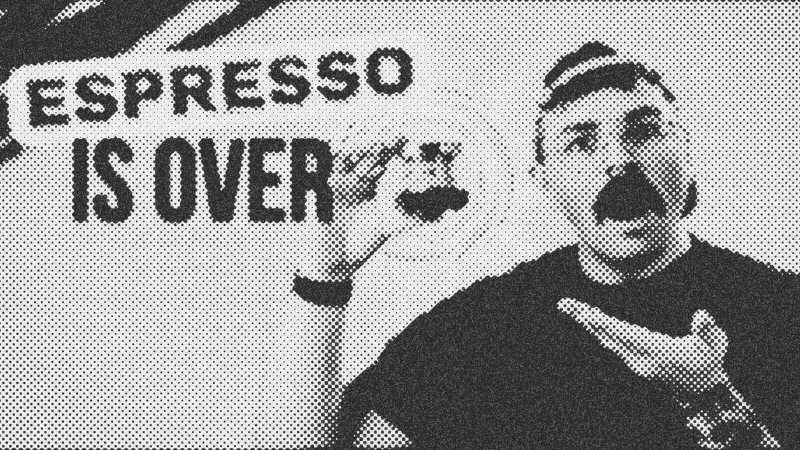
While home enthusiasts obsess over burr geometry in four-figure grinders, industrial giants like Nestle utilize massive, multi-story Roller Mill. These machines, often costing upwards of $500,000, use multiple rotating cylinders to crush coffee beans with surgical accuracy. This process minimizes heat damage and creates a uniform particle size distribution that standard espresso grinders cannot replicate. The result is a collection of perfectly spherical grounds designed to optimize extraction efficiency within a pressurized environment.
Science of densification and puck prep
Beyond the grind, the magic of the Nespresso capsule lies in the concept of densification. By tightly packing the grounds into a hermetically sealed aluminum pod, manufacturers eliminate the need for manual distribution tools, shakers, or tamping. This pre-engineered puck preparation ensures a homogeneous texture that resists channeling. Modern espresso theory often overlooks the sheer research budget industrial players spend to maximize profit margins, which ironically leads to highly efficient, albeit standardized, extraction parameters that maximize tasty yields from minimal coffee doses.
Engineering the high-end capsule conversion
To bridge the gap between convenience and enthusiast gear, S Works Design developed a 49mm stainless steel conversion kit. This hardware allows high-end lever machines, such as the Strietman ES3 or the Meticulous Espresso machine, to accept standard Nespresso pods. The kit features a water inlet that punctures the bottom of the capsule and a corrugated stainless steel lid that pierces the foil. This setup enables users to apply advanced pressure profiling and blooming stages to a coffee format usually relegated to budget appliances.
Satirical revelation and the April Fools twist
Despite the elaborate demonstration of "nitro-like" crema and silky textures, the entire argument serves as an elaborate April Fools' Day prank. Lance Hedrick eventually clarifies that the presentation was purely satirical. While the technical specs of roller mills and densification are rooted in factual industrial processes, the claim that capsules represent the "endgame of coffee" is a humorous critique of the specialty coffee world’s obsession with incremental gains and expensive hardware.
- Lance Hedrick
- 11%· people
- Meticulous Espresso
- 11%· products
- Nespresso
- 11%· products
- Nespresso conversion kit
- 11%· products
- Nestle
- 11%· companies
- Other topics
- 44%
This Ends Everything. Espresso Is Actually Dead. For Real This Time.
WatchLance Hedrick // 14:36

What's up, everyone! Lance Hedrick here. Coffee Pro of a decade, coach two 2x World Barista Champion runner-ups, past Latte Art Champion, academic in remission, and extremely neurodivergent weirdo. I teach all interested in coffee everything about coffee, from coffee science, theories, brew methods, machine reviews, and more. And, I am a weirdo. I have a patreon listed below. I hope to purchase all products shown on this channel and subsequently giving them away to supporters. Cheers!