Espresso Without Pressure: How to Master the SOUP Brewing Method
The Post-Pressure Era of Specialty Coffee
For decades, the coffee world has operated under a rigid set of rules formulated in the 1940s. These rules—high pressure, fine grinds, and dark roasts—were designed to mask the inconsistencies of robusta-heavy blends. But as we move into the era of ultra-light roasts, these old strictures are failing us. Many enthusiasts find that light roast espresso often tastes like a high-stakes gamble: either a sour, under-extracted mess or a bitter, over-extracted disappointment. Enter the SOUP Method.
This guide will teach you how to achieve the juiciness, clarity, and sweetness of a world-class filter coffee but with the concentration and intensity of espresso. By prioritizing a gentle puck saturation and high flow rates over the traditional nine bars of pressure, you can unlock a level of consistency that conventional espresso machines simply cannot reach. We are moving away from the "Godshot" lottery and toward a repeatable, succulent extraction profile.
Tools and Materials Needed
To implement this method, you need equipment that offers tactile feedback and control over flow. While expensive Descent Espresso machines can run these profiles via algorithms, the manual route is more intuitive for beginners. You will need:
- A Manual Brewer: The Cafelat Robot, Flair 58, Wacaco Picopresso, or the OXO Rapid Brew are all excellent candidates.
- Precision Grinder: A grinder capable of hitting the "halfway point" between espresso and V60 settings, such as the 1Zpresso ZP6.
- Paper Filters: Both bottom and top paper filters are critical for maintaining even flow and preventing puck erosion.
- Precision Scale: To monitor your output in real-time.
- Light Roast Coffee: This method shines brightest with Nordic or ultra-light roasts that typically struggle under high pressure.
Step-by-Step Instructions for the Perfect SOUP
1. The Grind Adjustment
A common mistake is grinding too fine. For the SOUP method, you should aim for a grind size roughly double that of a typical turbo shot. If your grinder’s zero point is burlock and your V60 setting is a 9, start around 4.5. The goal is low resistance; you want the coffee to drip out slightly before you even apply pressure.
2. Puck Preparation and Filtration
Place a dry paper filter at the bottom of your basket. This reduces resistance at the exit holes and ensures the extraction is uniform across the entire bottom surface. Dose your coffee—I recommend 17g to 22g—and tamp normally. Crucially, place a secondary screen or paper filter on top of the puck to prevent the water from digging craters into the coffee bed during the high-flow phase.
3. The Gentle Soak
This is the most critical phase. Instead of blasting the puck with pressure, you must gently saturate it. On a Cafelat Robot, this means barely letting the weight of the arms rest. Watch the bottom of the basket using a mirror. You are waiting for the entire surface to become wet and "glossy." This usually takes 5 to 10 seconds. If you see bald spots, the soak is not yet complete. A gentle soak preserves the internal structure of the puck, preventing the compression that causes bitterness.
4. The High-Flow Execution
Once the bottom is fully saturated, push through with a fast flow rate—aim for approximately 5 to 6 grams per second. Notice the pressure gauge; if you are doing this correctly, the needle should barely move. You are looking for a homogeneous, uninhibited flow of water. Aim for a ratio between 1:2.5 and 1:3. Because the grind is coarser, you can hit 18% to 20% extraction yields with half the contact time of a traditional shot.
Tips and Troubleshooting
Managing Acidity: Because this method excels at extraction, the perceived acidity can be intense. If your shot is too sour, do not grind finer. Instead, increase your water's alkalinity (buffer) to 50-70 ppm. This will chemically mute the harshness without ruining the flavor profile.
Equipment Nuances: If you are using an AeroPress, you will need an attachment like the JoePresso to accommodate a standard espresso basket. Stock AeroPress gaskets can be sticky, making it difficult to maintain the steady 6g/s flow required for a true SOUP profile. For those using the OXO Rapid Brew, remember that the machine is essentially hard-capped at one bar of pressure, making it the most "foolproof" soup machine on the market.
Visual Cues: If your shot has a heavy layer of crema, you might be grinding too fine or soaking too aggressively. A true SOUP shot should look more like a concentrated filter coffee—juicy, translucent, and vibrant—rather than a thick, syrupy Italian espresso.
Redefining the Extraction Paradigm
By following this guide, you should achieve a cup that offers the best of both worlds: the body and concentration of espresso with the clarity and aromatic complexity of a pour-over. This method proves that pressure is often a red herring in specialty coffee. When we remove the violence of high-pressure brewing, we find a more forgiving and consistent window of deliciousness. Whether you are using a Wacaco Picopresso on a hiking trail or a Flair 58 in your kitchen, the SOUP method is a powerful tool for any enthusiast tired of the bitterness and inconsistency of traditional light-roast espresso.
- Cafelat Robot
- 12%· products
- Flair 58
- 12%· products
- OXO Rapid Brew
- 12%· products
- Wacaco Picopresso
- 12%· products
- 1Zpresso ZP6
- 6%· products
- Other topics
- 47%
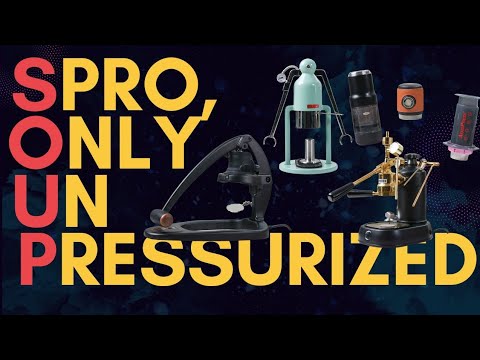
Espresso Without Pressure? The SOUP Method Changing Coffee Forever
WatchLance Hedrick // 41:44

What's up, everyone! Lance Hedrick here. Coffee Pro of a decade, coach two 2x World Barista Champion runner-ups, past Latte Art Champion, academic in remission, and extremely neurodivergent weirdo. I teach all interested in coffee everything about coffee, from coffee science, theories, brew methods, machine reviews, and more. And, I am a weirdo. I have a patreon listed below. I hope to purchase all products shown on this channel and subsequently giving them away to supporters. Cheers!