Acoustic Cavitation or Over-Engineered Novelty? Testing the Drink Osma Machine
The Rapid Cold Brew Dilemma
Drink Osma Machine promises to solve the primary friction point of cold coffee: the agonizing 12-to-24-hour wait. Designed by Joey Roth, this industrial-chic device claims to deliver a finished beverage in under 90 seconds. It operates on a principle far removed from traditional immersion or drip methods. The machine uses a diaphragm pump to create acoustic cavitation, theoretically generating micro-bubbles that expand and contract at specific frequencies to force extraction at room temperature. It is a bold engineering claim that seeks to disrupt the specialty coffee market, but the practical reality of using it reveals a significant gap between innovation and execution.
Industrial Design Meets Finicky Hardware
Visually, the Osma is a triumph of minimalism. Its 20-pound anodized frame has a small footprint and a satisfyingly rugged feel. However, the user experience is hampered by several design choices. The anodized coating shows every scratch and blemish, and the workflow is prone to messiness. The Portafilter drips persistently after a shot, and because the initial flow rate is so violent, using a bottomless portafilter results in immediate spraying. Furthermore, the provided leveler—intended as a foolproof distribution tool—often fails to provide the consistency required for the espresso-fine grind sizes this machine demands.
The Extraction Ceiling
In testing over 50 shots, a recurring limitation emerged: low extraction yields. Despite the unique "acoustic" theory, the highest extraction yield recorded was a mere 17.1%, with most shots landing closer to 15%. For context, a standard Toddy Cold Brew System or a well-executed flash-brew often hits 18-20%. The resulting cup often tastes thin and lacks the complexity or sweetness of traditional cold brew. While it creates a beautiful, nitrogen-like cascading foam, the texture is doing the heavy lifting for a flavor profile that is objectively weak. To achieve a palatable drink, you almost certainly need to rely on milk or additives to mask the lack of depth.
Dialing-In Difficulties and Final Verdict
The Drink Osma Machine is notoriously difficult to dial in. Because it is highly sensitive to coffee solubility, switching beans requires a complete recalibration. A grind size that produced an 8-ounce shot in 60 seconds with one coffee might result in a gushing 8-second disaster with another. When you factor in the 25-28 gram dose required for each attempt, the waste adds up quickly. While it is a fascinating piece of tech for those who prioritize speed and aesthetics above all else, most discerning enthusiasts will find the lack of flavor robustness a deal-breaker. It is a beautiful machine that produces a mediocre drink.
- Drink Osma Machine
- 33%· products
- Joey Roth
- 17%· people
- Lance Hedrick
- 17%· people
- Portafilter
- 17%· products
- Toddy Cold Brew System
- 17%· products
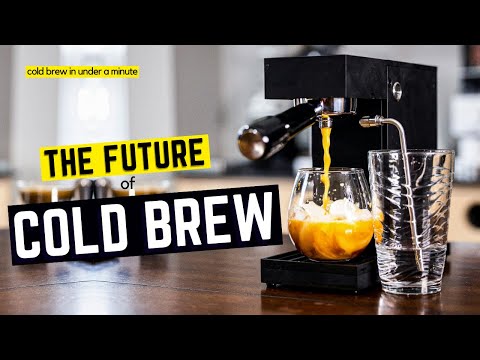
IS THIS THE FUTURE OF COLD BREW?: Review of the Drink Osma Machine
WatchLance Hedrick // 18:22

What's up, everyone! Lance Hedrick here. Coffee Pro of a decade, coach two 2x World Barista Champion runner-ups, past Latte Art Champion, academic in remission, and extremely neurodivergent weirdo. I teach all interested in coffee everything about coffee, from coffee science, theories, brew methods, machine reviews, and more. And, I am a weirdo. I have a patreon listed below. I hope to purchase all products shown on this channel and subsequently giving them away to supporters. Cheers!