Lance Hedrick finds 93°C beats boiling for light roast extraction
The Myth of Burning Coffee
For decades, home brewers followed a rigid dogma: never use boiling water because it "burns" the beans. Lance Hedrick dismantles this misconception by pointing out that coffee roasting occurs at temperatures far exceeding 100°C. While boiling water won't technically scorch roasted material, the thermal energy of the water profoundly dictates which compounds are pulled into the final cup. The debate has shifted from safety to sensory precision, particularly for Nordic Light roasts that require high energy for proper extraction.
Testing the Thermal Variable
Hedrick executed a controlled experiment using a Plastic V60 to maintain thermal stability. He isolated temperature as the sole variable, testing a range from 96°C down to 84°C in three-degree increments. This specific interval is crucial; chemical sensory data suggests that human tasters struggle to distinguish differences in Espresso or filter coffee until a 3°C threshold is crossed. To ensure accuracy, Hedrick utilized a blind cupping methodology, equalizing the temperature of each sample before tasting to eliminate thermal bias.
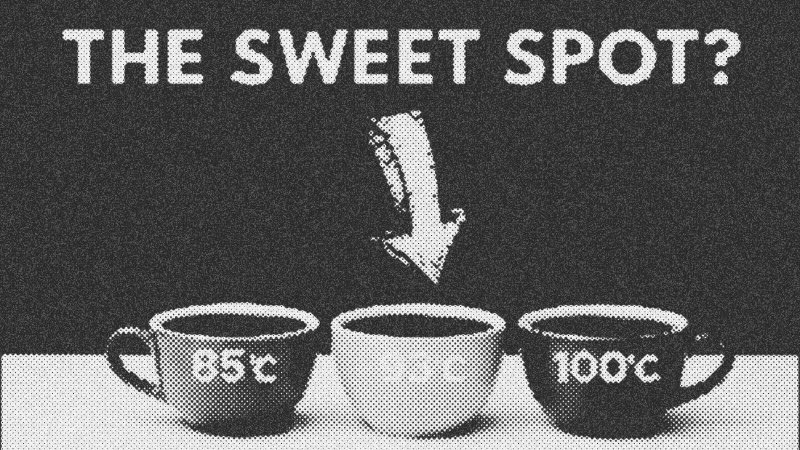
Bitterness Versus Complexity
The results revealed a clear trade-off between extraction yield and flavor clarity. The highest temperature (96°C) produced a "roasty, caramelized bitterness," even in ultra-light beans. While it boasted the highest extraction, the flavor profile suffered from a lack of nuance. Conversely, the 84°C brew fell flat, lacking the structural integrity and aromatic excitement necessary for a high-quality experience. Hedrick identifies the 90°C to 93°C range as the "sweet spot," where sweetness and complexity are maximized without the interference of bitter compounds.
Extraction Metrics and Practical Reality
Data from the experiment showed a 1.5% extraction yield difference between the highest and lowest temperatures. While TDS (Total Dissolved Solids) levels varied by 0.5%, the most striking realization involves kettle accuracy. Hedrick warns that consumer kettles from brands like Fellow, Timemore, or OXO often display temperatures that differ from the actual water heat by at least a degree. He advises home brewers to ignore one-degree adjustments and instead focus on five-degree jumps to find their preferred profile, as smaller changes are often statistically and sensorially insignificant.
Redefining the Ideal Cup
Temperature functions as a blunt instrument for extraction. If a coffee lacks strength, Hedrick suggests increasing agitation or refining grind size rather than cranking up the heat and risking bitterness. Ultimately, while 93°C provided the most balanced profile in this test, coffee remains a subjective pursuit where
- Espresso
- 13%· misc
- Fellow
- 13%· companies
- Lance Hedrick
- 13%· people
- Nordic Light
- 13%· misc
- OXO
- 13%· companies
- Other topics
- 38%
How Brewing Temperature Affects Coffee Taste
WatchLance Hedrick // 15:55

What's up, everyone! Lance Hedrick here. Coffee Pro of a decade, coach two 2x World Barista Champion runner-ups, past Latte Art Champion, academic in remission, and extremely neurodivergent weirdo. I teach all interested in coffee everything about coffee, from coffee science, theories, brew methods, machine reviews, and more. And, I am a weirdo. I have a patreon listed below. I hope to purchase all products shown on this channel and subsequently giving them away to supporters. Cheers!