The Evolutionary Siege: Why Cancer Is a Battle Against Darwinian Selection
The Architecture of Biological Rebellion
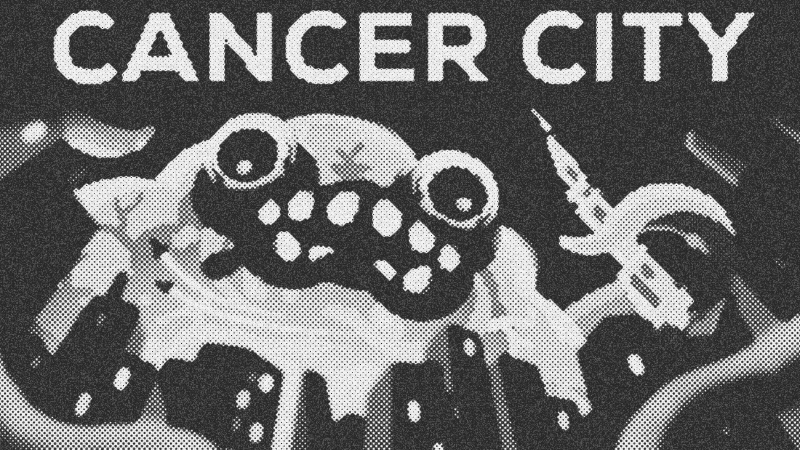
Cancer begins not as an external invader, but as a fundamental breakdown in the cellular code. A single corrupted cell loses its ability to self-destruct, triggering a cascade of rapid multiplication. Within weeks, this lineage evolves into a chaotic settlement often termed "Tumor Town." These cells are not a monolithic threat; they are a diverse clan of competing mutations. They seize resources by hijacking the body's infrastructure, specifically through angiogenesis—forcing the growth of new blood vessels to feed their relentless expansion. This isn't just growth; it is a hostile urban redevelopment of the body's healthy tissue.
The Elimination Phase: The Immune Blitz
The body does not ignore this rebellion. As healthy cells starve and die, they release chemical signals that activate the immune system. First responders like Macrophages and Natural Killer Cells arrive to execute tumor inhabitants. The system then deploys its heavy weapons: T Cells. These specialized hunters identify genetic corruptions that cancer cannot hide. They block resource delivery and trigger a massive collapse of the tumor. For most people, this victory happens silently and frequently, effectively wiping the rebellion from the map.
The Equilibrium Phase: Survival of the Fittest
Natural selection is a double-edged sword. When the immune system destroys 99.9% of a tumor, it inadvertently selects for the most resilient survivors. This Equilibrium Phase is a brutal cycle of evolutionary pressure. The surviving cells learn to evade detection, survive with less oxygen, and resist T Cells attacks. Each failed elimination attempt results in a leaner, meaner lineage of cancer that understands the "law" of the body better than its predecessors.
The Escape Phase: Breaking the System
The final transition to malignant cancer occurs when a cell exploits the immune system's own safety protocols. By targeting inhibitor receptors, cancer cells flip the "off switch" on immune cells. They create a Cancer Microenvironment, a fortified borderland where signals are corrupted and swat teams are ordered to stand down. This is the Escape Phase. The tumor is no longer a localized nuisance; it becomes a systemic predator that steals nutrients until the host can no longer function. Our hope lies in immunotherapy—modifying our own cells to bypass these forged permits and strike back with precision.
- T Cells
- 13%· people
- angiogenesis
- 7%· products
- cancer
- 7%· products
- Cancer Microenvironment
- 7%· products
- corrupted cell
- 7%· products
- Other topics
- 60%
The Reason Why Cancer is so Hard to Beat
WatchKurzgesagt – In a Nutshell // 10:25

Animation videos explaining things with optimistic nihilism since 12,013. We’re a team of illustrators, animators, number crunchers and one dog who aim to spark curiosity about science and the world we live in. To us nothing is boring if you tell a good story. For updates on our videos and other news from the kurzgesagt universe follow us on Twitter, Facebook, Instagram and LinkedIn.