Biological Industrialism: The Quantum Architecture of Trees
The Alchemy of Thin Air
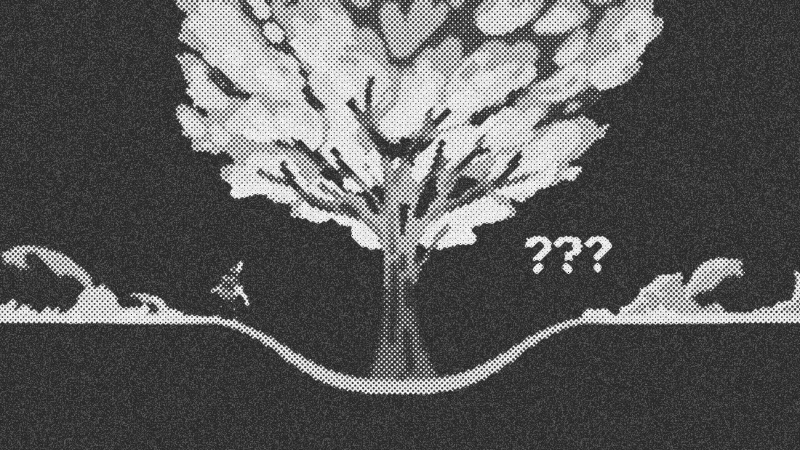
When we observe a giant redwood, we see a monument of biological engineering. Yet, the mass of these titans does not come from the soil. If it did, centuries of growth would leave massive craters around every trunk. Instead, trees perform a feat of cosmic alchemy, assembling their massive structures by pulling carbon directly from the atmosphere. They are, in essence, solid pillars of air and sunlight. To build a single ton of carbon, a tree must process five million cubic meters of gas, filtering a sparse 0.04% concentration of CO2 into physical reality.
The Leaf as a Quantum Factory
Leaves are the industrial megalopolises of the natural world. Each leaf is a high-efficiency surface designed to capture photons. They are remarkably thin—often only ten cells deep—ensuring light penetrates every factory cell. Inside, chloroplasts drive photosynthesis, splitting water molecules into hydrogen and oxygen. This process generates glucose, the universal building block of complex life. While trees are often credited with producing our oxygen, they also consume it through cellular respiration, especially at night when the factories go dark.
Subterranean Intelligence and Mining
Below the surface lies an equally complex "underground empire." Roots are not mere anchors; they are sophisticated sensory arrays. The root cap acts as a command center, using gravity-sensing cells to navigate the dark, chaotic maze of the soil. When encountering solid rock, roots transform into hydraulic jacks. They exert immense pressure to widen fractures and release specialized acids to dissolve mineral bonds, mining for rare phosphorus and nitrogen.
The Mycelial Trade Alliance
Trees do not exist in isolation. They have forged a billion-year-old alliance with fungi. These fungal networks stretch for kilometers, accessing nutrient pockets too small for even the finest root hairs. In a sophisticated trade agreement, trees provide a portion of their sky-born sugars in exchange for water and minerals. This symbiotic relationship creates a vast, interconnected living structure that may link entire forests into a single, communicating entity.
- Chloroplasts
- 11%· biology
- CO2
- 11%· compounds
- Fungi
- 11%· biology
- Glucose
- 11%· compounds
- Leaves
- 11%· biology
- Other topics
- 44%
Why Are There No Holes Around Trees?
WatchKurzgesagt – In a Nutshell // 11:21

Animation videos explaining things with optimistic nihilism since 12,013. We’re a team of illustrators, animators, number crunchers and one dog who aim to spark curiosity about science and the world we live in. To us nothing is boring if you tell a good story. For updates on our videos and other news from the kurzgesagt universe follow us on Twitter, Facebook, Instagram and LinkedIn.