Orange dwarfs beat the sun for nurturing long-term cosmic life
The flawed paradise of Earth
We often view Earth as the ultimate sanctuary, yet a cold scientific gaze reveals it is remarkably average. Vast swaths of our planet remain biological dead zones—inhospitable ice caps, arid deserts, and abyssal oceanic trenches where sunlight never penetrates. Our sun, a yellow dwarf, is a temperamental host. It grows hotter with age, and we have already exhausted 70% of the habitable window for life on our world. To find a truly "superhabitable" planet, we must look beyond our own orbital mechanics and imagine Hestia, a hypothetical world optimized for the maximum possible density of life.
Orange dwarfs provide the ultimate stability
The quest for a perfect world begins with the right star. While red dwarf are long-lived, their planets are often tidally locked or scourged by radiation. The ideal candidate is an orange dwarf. These stars offer a lifespan of up to 70 billion years—seven times that of our sun—providing an immense temporal canvas for evolution to experiment. A world orbiting such a star enjoys a stable energy output, allowing life to emerge and thrive without the looming threat of stellar death in the near cosmological future.
Architecture of a superhabitable world
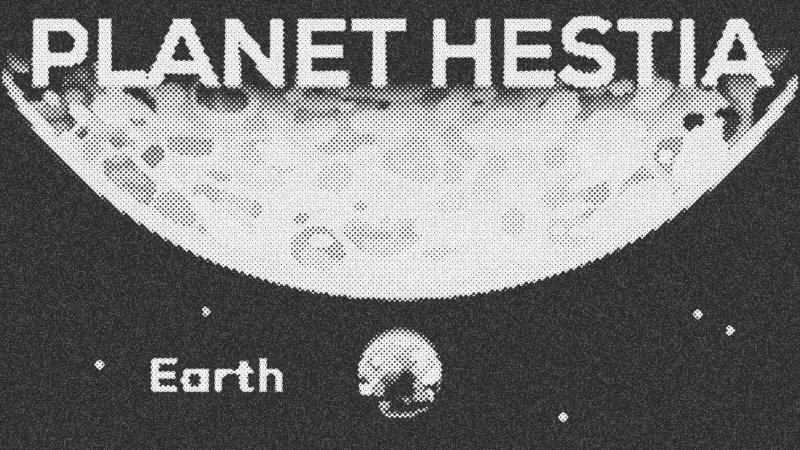
Hestia is a Super-Earth with 1.3 times Earth's radius and double its mass. This increased surface area is just the foundation. Unlike the monolithic continents of Earth that create rain shadows and vast inland deserts, Hestia is an archipelago world. By fragmenting tectonic plates, we maximize coastlines—the most biodiverse regions on any planet. A thicker atmosphere, 1.5 times more dense than our own, facilitates efficient flight and higher metabolic activity, allowing ecosystems to expand vertically into the sky.
Oceans of light and shallow warmth
Earth’s oceans are largely abyssal deserts, but Hestia features shallow seas rarely exceeding 200 meters. This ensures the entire seafloor remains within the photic zone, where photosynthesis can fuel massive coral megacities. By maintaining a global temperature 5°C warmer than Earth, Hestia eliminates polar ice and frost-ravaged landscapes, creating a planet-wide tropical rainforest. In this environment, the biodiversity would dwarf our own, potentially hosting hundreds of millions of species across a vibrant, interconnected biosphere.
- Hestia
- 27%· places
- Earth
- 9%· places
- Mars
- 9%· places
- orange dwarf
- 9%· concepts
- plate tectonics
- 9%· concepts
- Other topics
- 36%
Why Earth Sucks Compared to the Planet Hestia
WatchKurzgesagt – In a Nutshell // 14:53

Animation videos explaining things with optimistic nihilism since 12,013. We’re a team of illustrators, animators, number crunchers and one dog who aim to spark curiosity about science and the world we live in. To us nothing is boring if you tell a good story. For updates on our videos and other news from the kurzgesagt universe follow us on Twitter, Facebook, Instagram and LinkedIn.