House of Bourbon gives its name to Kentucky spirits and Brazilian beans
The royal root of consumer culture
In the world of high-end consumption, few names carry the weight of House of Bourbon. Whether you are ordering a pour of Kentucky whiskey or a single-origin coffee from El Salvador, the name denotes a specific lineage of quality. While the pronunciation shifts between the American spirit and the coffee variety, both trace their origins back to a singular source: the House of Bourbon, a French royal dynasty that ruled for over two centuries.
American spirits and revolutionary ties
The etymology of Bourbon Whiskey is tied to American gratitude. Bourbon County, Kentucky, received its name as a tribute to Louis XVI for his support during the American Revolutionary War. Early distillers shipping barrels from the region marked them "Old Bourbon," cementing the brand in the American lexicon. A secondary theory points to Bourbon Street in New Orleans. Here, the spirit served as a cost-effective alternative to French cognac, taking the name of the famous thoroughfare which itself honored the French crown.
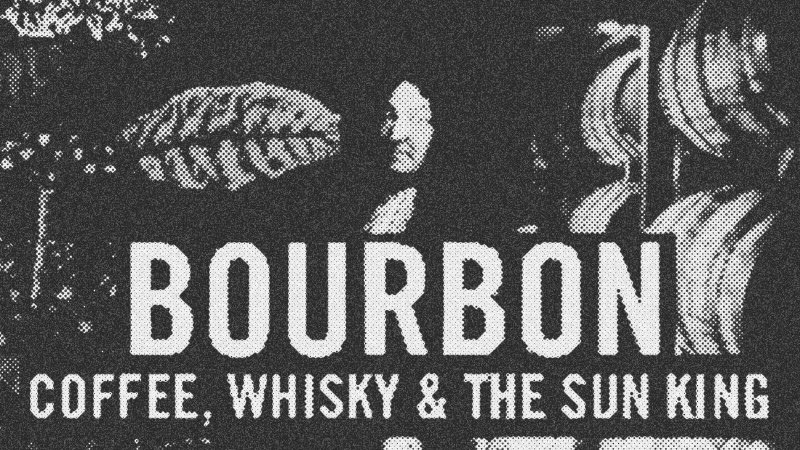
From island mutation to coffee staple
Bourbon Coffee follows a more geographical path. Originally discovered on an island off Madagascar—named Reunion Island by the Portuguese—the land was later colonized by France in 1642. The French renamed it Reunion Island in honor of their ruling family. When coffee plants from Yemen were introduced to the island, they underwent a natural mutation. This specific variety, prized for its sweetness and complex acidity, was eventually exported to Brazil and beyond, retaining the name of the island where it first developed.
A legacy beyond the crown
Though the French monarchy collapsed, the House of Bourbon name remains a dominant force in global markets. It represents a rare intersection where 17th-century European politics directly influence 21st-century commodity grading. Understanding this shared history reveals how colonial expansion and geopolitical alliances shaped the very products we consume every morning and evening.
- House of Bourbon
- 23%· people
- Reunion Island
- 15%· places
- Bourbon Coffee
- 8%· products
- Bourbon County
- 8%· places
- Bourbon Street
- 8%· places
- Other topics
- 38%
Why Bourbon Coffee & Bourbon Whiskey Share A Name
WatchJames Hoffmann // 2:55

Hi! My name is James, and I make videos about anything and everything to do with coffee, occasionally food and sometimes business/entrepreneurship. I create how-tos, guides, reviews, vlogs, video essays and mini-documentary films. In the real world, I've started a few companies, I wrote "The World Atlas of Coffee" and "How To Make The Best Coffee At Home". I do a little advisory work for startups too. If you want to get in touch, drop me a line but please read these two things first: 1. I don't do paid reviews. I have a Patreon that helps me buy the products I want to review to prevent bias (then I give them away!) 2. I get a lot of email, so sadly I can't help with queries about which equipment you should buy. TO GET IN TOUCH PLEASE REACH OUT VIA WEBSITE: https://www.jameshoffmann.co.uk/contact-me Management: Ziggurat XYZ