Monolith Flat Max delivers elite espresso for a steep 3,250 dollars
Precision engineering meets eccentric design
The Monolith Flat Max by Kafatek occupies a rarefied space in the coffee world. At $3,250, it is less of a kitchen appliance and more of a precision instrument for the espresso-obsessed. Built around massive 98mm Shuriken flat burrs designed by founder Denis, the grinder prioritizes mechanical integrity and grind quality over mass-market aesthetics. The build is exceptionally solid, featuring tight tolerances that justify its industrial, function-first appearance.
Variable RPM and the Shuriken Sweet advantage
A defining technical feature is the variable RPM controller. While many modern grinders push high speeds, the Monolith Flat Max operates at a relatively low maximum of 500 RPM, with a recommended sweet spot around 350. This slower approach, combined with the Shuriken Sweet burr set, produces a unimodal grind profile. In testing, this translated to espresso shots defined by immense clarity and sweetness, favoring light to medium roasts that require high extraction without the muddying effect of excessive fines.
Workflow quirks and accessory letdowns
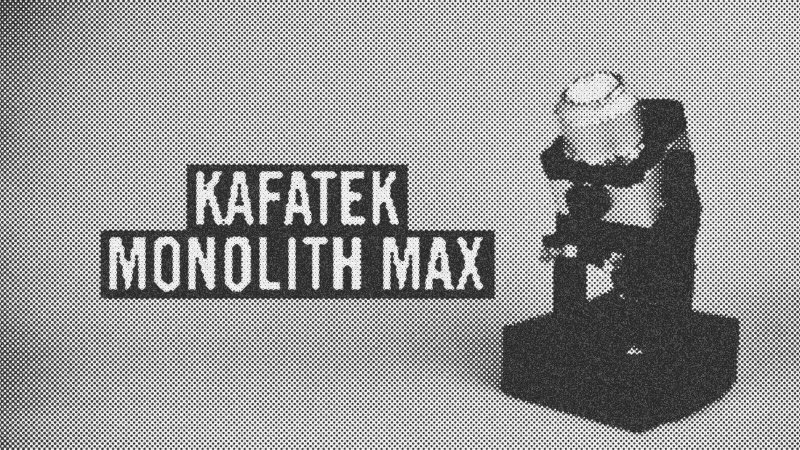
User experience is a mixed bag of innovative brilliance and minor frustrations. The magnetic exit chute is a clever touch that simplifies cleaning, yet the included dosing cup feels remarkably cheap for a machine at this price point. Furthermore, the RPM control box lacks the premium finish of the main unit, feeling more like a third-party component than an integrated part of the design. The bellows system, while effective at clearing the chamber, tends to scatter grounds, necessitating frequent tidying of the base and portafilter forks.
The struggle with filter coffee versatility
Though marketed as a multi-purpose tool, the Monolith Flat Max is unapologetically espresso-forward. Navigating to filter coffee ranges requires rotating the dial past its marked 0-10 scale, forcing users to rely on aftermarket stickers or "hacks" to track settings. Additionally, the bean funnel angle is shallow; beans occasionally stick if sprayed with water for static reduction, requiring manual intervention. For a $3,250 investment, these ergonomic friction points are notable, even if the cup quality remains world-class.
- Monolith Flat Max
- 38%· products
- Denis
- 13%· people
- James Hoffmann
- 13%· people
- Kafatek
- 13%· companies
- Shuriken
- 13%· products
- Shuriken Sweet
- 13%· products
The Kafatek Monolith Flat Max (Episode #5)
WatchJames Hoffmann // 10:00

Hi! My name is James, and I make videos about anything and everything to do with coffee, occasionally food and sometimes business/entrepreneurship. I create how-tos, guides, reviews, vlogs, video essays and mini-documentary films. In the real world, I've started a few companies, I wrote "The World Atlas of Coffee" and "How To Make The Best Coffee At Home". I do a little advisory work for startups too. If you want to get in touch, drop me a line but please read these two things first: 1. I don't do paid reviews. I have a Patreon that helps me buy the products I want to review to prevent bias (then I give them away!) 2. I get a lot of email, so sadly I can't help with queries about which equipment you should buy. TO GET IN TOUCH PLEASE REACH OUT VIA WEBSITE: https://www.jameshoffmann.co.uk/contact-me Management: Ziggurat XYZ