Narnia book rebound with 1.25-point vector lines and acanthus leaves
The Delicate Balance of Crafting Heritage Book Covers
Rebinding a beloved literary work requires more than physical skill; it demands a deep intellectual engagement with the text's history and spirit. When designing a new leather cover for an omnibus edition of The Chronicles of Narnia, the artisan must reconcile historical reverence with modern aesthetic sensibilities. The design process must honor the rich theological and mythological layers penned by C.S. Lewis while ensuring the final object remains an elegant piece of material culture.
The Fallacy of the Medieval Rabbit Hole
Initial design concepts often gravitate toward the historical background of the author. Because Lewis was a scholar of medieval literature, an illuminated manuscript style feels appropriate on the surface. This approach invites the inclusion of whimsical, obscure details, such as the mythological monopods or complex floral margins.
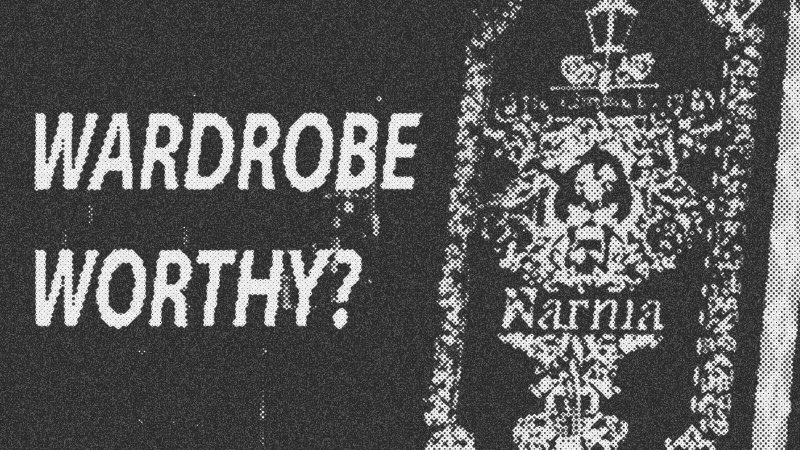
However, literal historical mimicry often fails contemporary design standards. When a cover becomes cluttered with esoteric references, it loses its visual hierarchy. A successful design must balance two guiding principles: it must captivate an observer who has never read the book, while simultaneously offering profound resonance for the lifelong enthusiast.
Unifying Icons and the Acanthus Leaf
To establish a cohesive visual language, an artisan must isolate universal through-lines. For Narnia, these are the regal profile of Aslan and the iconic Oxford-inspired lamp post.
To frame these elements with historical gravity without slipping into clutter, the classical acanthus leaf motif offers the perfect compromise. Originating in ancient Greece and revived throughout the Romanesque and Neo-Gothic eras, these stylized, curling leaves provide an organic yet structured border.
Translating Hand-Drawn Fluidity to Digital Vectors
Using digital assets to compose complex foliage requires meticulous adjustment to avoid a rigid, computerized appearance:
- Establish a Uniform Foundation: Every outline is traced systematically using a consistent 1.25-point stroke width.
- Incorporate Internal Contrast: Use tapered stroke profiles inside the leaves to mimic hand-carved depth.
- Apply Painterly Tweaks: Convert digital vector strokes into solid shapes, manually adjusting the edges to introduce slight variations that evoke a brush-drawn, artisanal quality.
Heraldry and the Architecture of Cohesion
For the back cover, a fictional coat of arms offers an opportunity to display iconic heraldry. A custom escutcheon featuring a lion rampant, flanked by a warrior mouse and a faun, captures the whimsical yet noble spirit of the series.
To prevent this complex illustration from feeling like a separate entity, the heraldic elements must speak the same stylistic language as the front. By utilizing the exact 1.25-point line weight, mimicking the acanthus scrollwork within the supporting ribbons, and maintaining strict symmetry, the entire binding achieves perfect aesthetic equilibrium.
- Aslan
- 33%· people
- C.S. Lewis
- 33%· people
- The Chronicles of Narnia
- 33%· books
Rebinding Narnia | A Cover Design Masterclass
WatchIngenius Designs // 11:05

At Ingenius Designs, we collect hobbies like some people collect stamps, but unlike stamps we don't want to leave the collection in a dark closet somewhere. Join us as we share our art and other creations, along with tutorials for any discoveries we make along the way!