Layne Norton reveals why food label errors make calorie tracking a guessing game
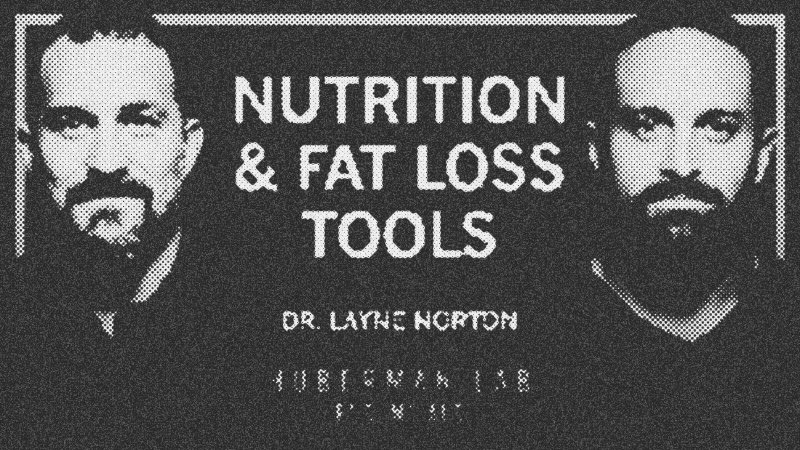
The quest for optimal physical health, fat loss, and muscle growth often feels like wading through a sea of conflicting claims. From the extreme corners of the fitness industry promoting hyper-restrictive diets to the confusing details of nutritional biochemistry, finding a reliable path to body composition goals is notoriously difficult. During a comprehensive discussion, neurobiologist Andrew Huberman and nutritional scientist Layne Norton cut through the noise, mapping out the biological mechanisms of metabolism and nutrition with strict, research-backed evidence.
The Unseen Physics of Energy Balance
At its core, weight management operates on the fundamental law of thermodynamics: energy balance. While the phrase "calories in, calories out" sounds simple, the actual biology governing energy utilization is incredibly complex. A calorie is not a physical object, but a unit of heat energy. Specifically, it represents the potential chemical energy stored within the molecular bonds of macronutrients. When we consume food, our bodies digest, assimilate, and metabolize these molecules to produce adenosine triphosphate (ATP), the primary energy currency of human cells.
However, calculating the "energy in" portion of the equation is surprisingly difficult. Food labels, commonly treated as absolute truth, carry a legal error margin of up to 20%. Furthermore, not all consumed energy is biochemically accessible. Non-digestible components, such as insoluble fiber, pass through the digestive system without releasing their chemical energy. Individual differences in the gut microbiome also dictate how efficiently a person extracts energy from fibrous foods. To navigate these inaccuracies, consistency is key. Tracking food intake diligently using the same tools over time allows individuals to establish a reliable baseline, neutralizing the impact of label variances.
Decoupling the Daily Energy Expenditure
Total daily energy expenditure (TDEE) is divided into distinct, dynamic biological categories rather than being a static number:
- Resting Metabolic Rate (RMR): Representing 50% to 70% of daily energy burn, RMR keeps basic physiological systems functioning.
- Thermic Effect of Food (TEF): The energy required to digest and process nutrients, accounting for roughly 5% to 10% of expenditure.
- Physical Activity: Divided into purposeful exercise and Non-Exercise Activity Thermogenesis (NEAT).
While exercise gets the most attention, NEAT—which includes spontaneous movements like fidgeting, pacing, and waving hands—is a massive, underappreciated variable. NEAT can account for a difference of hundreds, or even up to a thousand, calories burned per day between individuals. It remains the most flexible, non-conscious variable in daily energy expenditure.
Different macronutrients also impose distinct metabolic tax rates through TEF. Dietary fat requires very little energy to process, yielding a TEF of just 0% to 3%. Carbohydrates fall in the 5% to 10% range. Protein demands a massive 20% to 30% of its total energy content just to be broken down and metabolized. This means that for every 100 calories of protein consumed, only 70 to 80 net calories enter the system, making protein an incredibly effective tool for weight management.
The Protein Leverage and the Leucine Trigger
For those looking to alter body composition, protein is the most powerful lever to pull. It preserves lean muscle mass during caloric deficits and drives muscle protein synthesis when building tissue. To optimize muscle health, scientific consensus points to a daily target of 1.6 to 2.2 grams of protein per kilogram of body weight, with benefits plateauing beyond that threshold.
Historically, plant-based diets were dismissed as inferior for muscle building. However, modern research reveals that building equivalent muscle on a plant-based diet is entirely possible, though it requires intentional planning. Whole plant foods pack less protein per calorie and are co-packaged with carbohydrates or fats, making it harder to hit protein targets without overconsuming total calories. Additionally, plant proteins are less bioavailable and have lower concentrations of essential amino acids, particularly leucine.
Leucine is the primary molecular trigger for muscle protein synthesis. When researchers matched the leucine content of a wheat protein meal to that of whey protein by adding free leucine, the muscle-building response became identical. Plant-based athletes can bypass these limitations by utilizing isolated plant protein powders (such as soy, which is a complete protein, or pea-rice blends), supplementing with free leucine capsules, or consuming high-leucine sources like potato protein isolate.
The Truth About Processed Foods and Artificial Sweeteners
Processed foods are often demonized as inherently toxic, but their real danger lies in how they affect human behavior. Highly processed foods are engineered to be hyper-palatable, causing people to spontaneously overeat. Controlled metabolic ward studies show that when individuals are given unrestricted access to ultra-processed foods, they naturally consume about 500 more calories per day compared to when they eat minimally processed diets. Energy toxicity from chronic overeating, not the processed ingredients themselves, degrades health.
In contrast, non-nutritive sweeteners offer a powerful, practical tool for weight management. Substituting diet beverages for sugar-sweetened sodas routinely yields dramatic weight loss in clinical studies, occasionally helping individuals lose up to 100 pounds. While critics express concerns over subtle gut microbiome changes, the massive health benefits of shedding excess adipose tissue far outweigh any minor, hypothetical alterations to gut bacteria.
Decisive Science on Seed Oils and Creatine
Few topics provoke as much online outrage as seed oils and Creatine. Critics blame seed oils (rich in polyunsaturated fatty acids, or PUFAs) for systemic inflammation. While PUFA double bonds can oxidize under extreme heat, human randomized controlled trials consistently paint a neutral or positive picture. Replacing saturated fats with monounsaturated or polyunsaturated fats generally improves cardiovascular biomarkers. The problem is not seed oil itself, but the massive caloric density it adds to hyper-palatable, deep-fried foods.
When it comes to physical enhancement, Creatine Monohydrate remains the gold standard. Backed by thousands of clinical trials, it safely saturates muscle cells with phosphocreatine, boosting strength, accelerating recovery, and even offering emerging cognitive benefits. Despite persistent myths, rigorous research has thoroughly debunked claims that creatine causes kidney damage, liver dysfunction, or hair loss.
- Andrew Huberman
- 25%· people
- Creatine
- 25%· products
- Creatine Monohydrate
- 25%· products
- Layne Norton
- 25%· people
Essentials: The Science of Eating for Health, Fat Loss & Lean Muscle | Dr. Layne Norton
WatchAndrew Huberman // 32:02

The Huberman Lab podcast is hosted by Andrew Huberman, Ph.D., a neuroscientist and tenured professor in the department of neurobiology of ophthalmology, and by courtesy, psychiatry and behavioral sciences at Stanford School of Medicine. The podcast discusses neuroscience and science-based tools, including how our brain and its connections with the organs of our body control our perceptions, our behaviors, and our health, as well as existing and emerging tools for measuring and changing how our nervous system works.