Ancient Echoes, Modern Cognition: Unearthing the Roots of Attention and Memory
The ruins of vanished civilizations do not merely speak of collapse; they whisper of human ingenuity, of our timeless quest for understanding the mind. Across millennia, people have sought to sharpen their focus, to etch experiences into memory. Modern neuroscience now illuminates these enduring pursuits, offering a rigorous framework to comprehend and enhance our cognitive faculties, mirroring perhaps, the intuitive wisdom of our ancestors.
Memory's Labyrinth and the Seat of Imagination
Our capacity for memory, particularly the declarative forms that involve recalling facts and events, finds its primary orchestrator in the hippocampus. This intricate brain structure also plays a pivotal role in imagination, allowing us to mentally construct future scenarios or novel compositions. We understand now that a singular, profoundly impactful experience can trigger 'one-trial learning,' particularly when imbued with intense emotional valence, such as fear. This mechanism, crucial for survival in any era, rapidly consolidates information, cementing it into our neural architecture.
Movement and Mental Acuity
Physical exertion, a constant in the lives of early societies, directly impacts brain function. Exercise immediately enhances focus, attention, and memory. This is not a mere anecdotal observation; neuroscientific inquiry reveals the precise mechanisms. Cardiovascular exercise, even a modest 10-minute walk, elevates mood and sharpens cognitive processing. Regular movement acts as a potent catalyst for brain plasticity.
The Neurotrophic Key: BDNF
Central to these cognitive enhancements is Brain-Derived Neurotrophic Factor (BDNF), a protein often termed 'Miracle-Gro for the brain.' Exercise, particularly cardiovascular activity, significantly increases BDNF levels. This neurotrophin promotes the growth of new neurons, a process known as neurogenesis, specifically within the hippocampus. This adult neurogenesis supports memory function and overall cognitive health. The effects are not limited to short-term gains; consistent physical activity offers profound long-term support for cognitive health, particularly crucial for older adults, mitigating age-related cognitive decline.
Structuring Cognitive Enhancement
To harvest these benefits, certain practices prove particularly effective. Incorporating cardiovascular exercise into a morning routine amplifies its impact on memory and sustained attention throughout the day. For adults in their 30s to 50s, a minimum of 150 minutes of moderate-intensity cardiovascular exercise per week yields substantial cognitive advantages. This translates to roughly 30 minutes, five times a week. Significantly, increasing this duration or intensity brings even greater cognitive benefits, demonstrating a dose-dependent relationship. The more engaged the body, the more robust the mind becomes.
Beyond Physicality: Holistic Practices
Cognitive enhancement extends beyond physical movement. Behavioral practices significantly influence mood and stress regulation, indirectly bolstering attention and memory. Brief meditation sessions, even just a few minutes daily, cultivate states of calm and heightened focus, fortifying the neural pathways responsible for sustained attention. Verbal affirmations, as employed in practices like IntenSati, also contribute to a positive feedback loop, influencing mood and self-perception, which in turn supports cognitive performance. And, of course, adequate sleep remains foundational, allowing the brain to consolidate memories and prepare for new learning.
Preserving Cognitive Heritage
The insights from contemporary neuroscience offer not just 'tools' but a profound understanding of our intrinsic human capacity for mental resilience and growth. These practices—exercise, meditation, affirmation, sleep—are not novel inventions. They are, in essence, a scientific validation of activities and states that humanity has instinctively pursued for well-being across its entire history. Understanding their neural underpinnings allows us to consciously cultivate these habits, strengthening our minds for the complexities of modern existence. We build a robust internal architecture, a testament to our enduring drive for clarity and presence.
Our journey into the cognitive landscape reveals a profound synergy: ancient human practices, now scientifically dissected, offer a clear path to mental vitality. The meticulous application of cardiovascular exercise, brief meditation, and verbal affirmations, alongside consistent sleep, promises a future where attention and memory are not merely preserved, but actively enhanced. We are, in effect, rediscovering a potent heritage, one that equips us to face our present challenges with an invigorated mind.
- 10-Minute Walk
- 4%· tools practices
- Adult Neurogenesis
- 4%· concepts
- Affirmations
- 4%· tools practices
- Attention
- 4%· concepts
- Brain-Derived Neurotrophic Factor (BDNF)
- 4%· concepts
- Other topics
- 79%
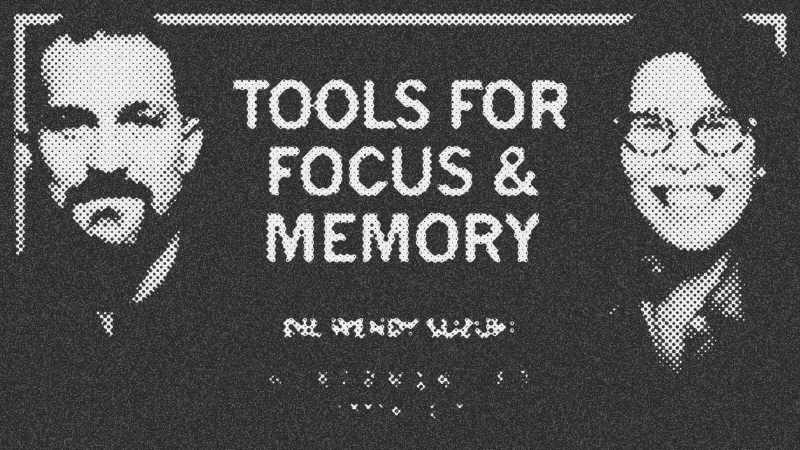
Essentials: Tools to Boost Attention & Memory | Dr. Wendy Suzuki
WatchAndrew Huberman // 36:52

The Huberman Lab podcast is hosted by Andrew Huberman, Ph.D., a neuroscientist and tenured professor in the department of neurobiology of ophthalmology, and by courtesy, psychiatry and behavioral sciences at Stanford School of Medicine. The podcast discusses neuroscience and science-based tools, including how our brain and its connections with the organs of our body control our perceptions, our behaviors, and our health, as well as existing and emerging tools for measuring and changing how our nervous system works.