Galpin reveals why 3x5 training protocol builds superior strength
The biological architecture of human adaptation
To understand the cosmos, one must appreciate the laws that govern the micro and the macro. Our bodies are biological microcosms that respond to the fundamental law of stress. Andy Galpin, a scholar of human performance, identifies nine distinct adaptations the human system can undergo, ranging from skill and speed to the expansion of muscle size, known as Hypertrophy. The universe does not give up its secrets without a catalyst; similarly, the body does not evolve without Progressive Overload. This principle dictates that for a physiological system to improve, it must be pushed beyond its current equilibrium. If you repeat the same routine indefinitely, you are merely maintaining a static orbit. True discovery requires increasing the weight, the repetitions, or the complexity of the movement to force the system to adapt to new, higher-energy states.
Calibrating the variables of cosmic force
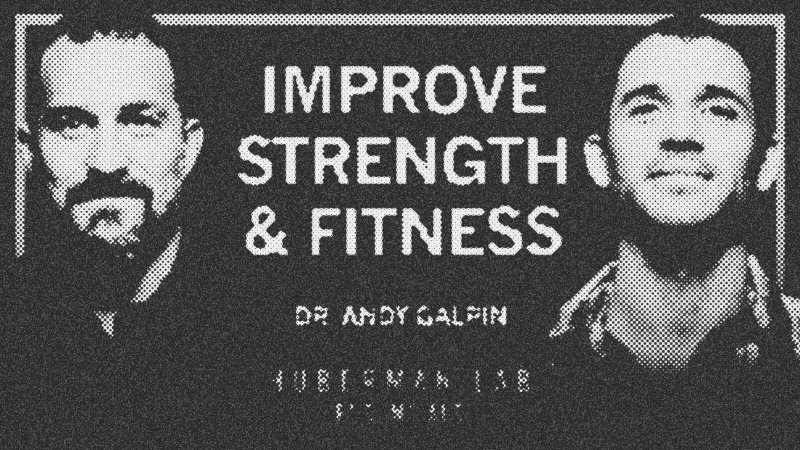
In theoretical physics, we manipulate variables to observe outcomes. In the gym, the most critical modifiable variables are exercise choice, intensity, volume, and rest intervals. Intensity, in this rigorous scientific context, is not a feeling of effort but a mathematical percentage of one’s One Rep Max. To develop true strength, you must reach a recruitment threshold that forces high-threshold motor neurons to fire. These neurons control fast-twitch muscle fibers, which are the first to atrophy as we age. Neglecting these fibers is akin to letting a star burn out; you lose the power and size that define your physical presence. Galpin suggests that for strength, you must operate above 85% of your maximum capacity. This high intensity necessitates low volume—specifically five repetitions or fewer—because the energetic demand is too great to sustain for longer durations.
Implementing the 3x5 protocol for peak efficiency
For those seeking a grounded, actionable methodology, the 3x5 Protocol serves as a fundamental blueprint. It is elegantly simple: select three to five exercises, perform three to five sets of three to five repetitions, and rest for three to five minutes between each set. This frequency should occur three to five times per week. This structure allows for the high rest intervals necessary to maintain the intensity driver. If you rush your rest, fatigue accumulates, and the signal for strength is lost in the noise. For the pragmatic explorer, Supersets—alternating between different muscle groups—can save time without significantly compromising the strength signal. It is a way to maintain high productivity within the constraints of our linear time-stream, ensuring that a training session does not expand to consume your entire day.
The mind-muscle connection as a neural bridge
Our brains are the command centers for every physical contraction. The Mind-Muscle Connection is not merely a philosophical concept; it is a measurable neural phenomenon. Research indicates that the intentionality behind a movement significantly alters the outcome. If you move a barbell with the intent to generate maximum velocity, you recruit more motor units than if you move it lethargically, even if the actual speed of the bar remains identical. For Hypertrophy, focusing your internal awareness on the specific muscle being worked can actually increase the growth response. It is the difference between a passive observation and an active experiment. Quality of work is the primary determinant of success. If you are not present during the lift, you are wasting the precious energetic currency of your nervous system.
Downregulation and the physics of recovery
Training is an act of controlled destruction; recovery is the act of creation. After a high-intensity session, the body is in a state of sympathetic arousal—an adrenaline-fueled "fight or flight" mode. To maximize the benefits of your labor, you must signal to your system that the danger has passed. Galpin recommends a three-to-five-minute Downregulation period immediately following a workout. By utilizing Nasal Breathing and techniques like Box Breathing or exhale-emphasized cycles, you can clamp the adrenaline ramp-up. This prevents the mid-afternoon energy crash often associated with hard training and accelerates the transition into an anabolic, muscle-building state. It is a vital tool for ensuring that your biological system remains resilient and ready for the next frontier of exploration.
- Hypertrophy
- 13%· products
- 3x5 Protocol
- 7%· products
- Andrew Huberman
- 7%· people
- Andy Galpin
- 7%· people
- Box Breathing
- 7%· products
- Other topics
- 60%
Essentials: How to Build Strength, Muscle Size & Endurance | Dr. Andy Galpin
WatchAndrew Huberman // 34:26

The Huberman Lab podcast is hosted by Andrew Huberman, Ph.D., a neuroscientist and tenured professor in the department of neurobiology of ophthalmology, and by courtesy, psychiatry and behavioral sciences at Stanford School of Medicine. The podcast discusses neuroscience and science-based tools, including how our brain and its connections with the organs of our body control our perceptions, our behaviors, and our health, as well as existing and emerging tools for measuring and changing how our nervous system works.