Kerry Washington reveals how the Bronx and Olivia Pope forged her leadership style
The Scrappy Spirit of the Forgotten Borough
In the grand tapestry of New York City mythmaking, Brooklyn has its Spike Lee-infused cool and Queens its sprawling urban arteries, but the Bronx often remains the "forgotten borough." For Kerry Washington, this wasn't just a geographical reality; it was a foundational identity. Growing up in the Bronx cultivated a specific kind of hustle—a scrappy, scruffy determination born from being the underdog. People don't expect much from you when you're from the Bronx, and that lack of expectation becomes a fuel for those who choose to prove the world wrong.
This Bronx-bred resilience manifests in Kerry Washington as an intense work ethic that colleagues describe as almost superhuman. Tony Goldwyn, her longtime co-star, notes that her drive is a professionalized, operationalized force. This isn't just about showing up; it's about a relentless pursuit of excellence that sets the tone for everyone around her. Whether it was learning to dance from a young Jennifer Lopez at a local Boys and Girls Club or navigating the elite halls of the Spence School on the Upper East Side, the Bronx remained the anchor. It provided the grit necessary to transition between vastly different worlds, a skill that would later define her career as an actress capable of disappearing into any role.
Leading from the Front of the Call Sheet
The pivot point of Kerry Washington's professional life came with Scandal. Before stepping into the shoes of Olivia Pope, she viewed herself primarily as a film actor, the "good luck charm" who helped her male co-stars win Oscars. Television offered something different: the chance to inhabit a character over years rather than months. When Shonda Rhimes launched Scandal, it was a historic moment—the first time a Black woman had led a network drama in nearly four decades. The weight of that responsibility was immense, and Kerry Washington used it to transform her understanding of power.
Playing Olivia Pope was a masterclass in leadership. Kerry Washington admits that the character taught her how to be "number one" on a call sheet and in her own life. It was about learning not to shy away from being the team captain. This leadership extended beyond her own performance; she took pride in creating an environment where her scene partners could excel. The relationship between Kerry Washington and Tony Goldwyn became a blueprint for healthy professional collaboration. Despite the intense "shipping" from fans who desperately wanted their on-screen romance to be real, the two maintained a deep, platonic respect, often playful enough to lean into the fan frenzy precisely because their real-life boundaries were so secure.
The Professionalization of Activism
For many celebrities, activism is a secondary pursuit, a matter of donating time or a name to a cause. For Kerry Washington, activism is a fully operationalized branch of her business. She doesn't just show up; she organizes with a level of intensity that draws comparisons to Jane Fonda. This commitment is rooted in the belief that when one feels isolated or afraid, the most effective balm is plugging into community.
Kerry Washington views her platform not just as a tool for personal success, but as a mechanism for visibility. This was famously illustrated when she used her Time 100 acceptance speech to thank her nannies. By acknowledging the domestic labor that makes her career possible, she intentionally made the "invisible" working class visible. This ethos of inclusion is what keeps her engaged during times of deep societal fatigue. She rejects "toxic positivity," acknowledging that things are often genuinely horrible, yet she insists on the necessity of doing something—whether it’s marching for six hours or donating five dollars. The goal is to remain lean into solutions rather than succumbing to the numbness of the 24-hour news cycle.
Balancing the Drive of Motherhood
The transition from being a high-achieving professional to a mother of three required a recalibration of Kerry Washington’s intense drive. She often wonders where her children will find their own version of the "Bronx hustle," given they are being raised in vastly different circumstances. Her approach to parenting is guided by the "small-town reporter" method—witnessing and reflecting her children's experiences back to them without immediately trying to "fix" their problems. This technique, which prioritizes listening over lecturing, allows her children to develop their own resilience, often through sports or their own sharp, comedic wit.
Humor serves as a love language in the Kerry Washington household. She encourages her children to find a "good burn," viewing their ability to tease her as a sign of intelligence and emotional security. It humbles her and ensures that despite her global fame, she is just a mom who isn't particularly impressive to her teenagers. This grounding is essential, providing a sanctuary away from the pressures of the industry. Even their collective obsession with The Amazing Race serves as a family bonding tool, teaching the kids about geographical culture, travel resilience, and the critical importance of healthy relational dynamics under pressure.
Kintsugi and the Beauty of the Broken
Perhaps the most profound metaphor for Kerry Washington’s current phase of life is Kintsugi, the Japanese art of repairing broken pottery with gold. This philosophy—that an object is more beautiful for having been broken—has become a personal mantra. She applied this literally when her children accidentally broke a precious anniversary bowl, choosing to learn the craft and repair it rather than replace it.
This theme of honoring brokenness and truth-telling was the heartbeat of her memoir, Thicker Than Water. In the book, Kerry Washington detailed the earth-shattering discovery that she was conceived via an anonymous sperm donor, a secret her parents had kept for decades. While such a revelation could have permanently fractured a family, the process of bringing it into the light acted like the gold in Kintsugi. It forced a new kind of authenticity. Her mother noted that they are no longer as afraid to hurt each other, because they finally trust the strength of their bond. For Kerry Washington, this journey toward truth and grace is the ultimate act of leadership—not just in the public eye, but in the private, often messy, and ultimately beautiful halls of home.
- Kerry Washington
- 42%· people
- Kintsugi
- 6%· products
- Olivia Pope
- 6%· people
- Scandal
- 6%· tv shows
- Tony Goldwyn
- 6%· people
- Other topics
- 32%
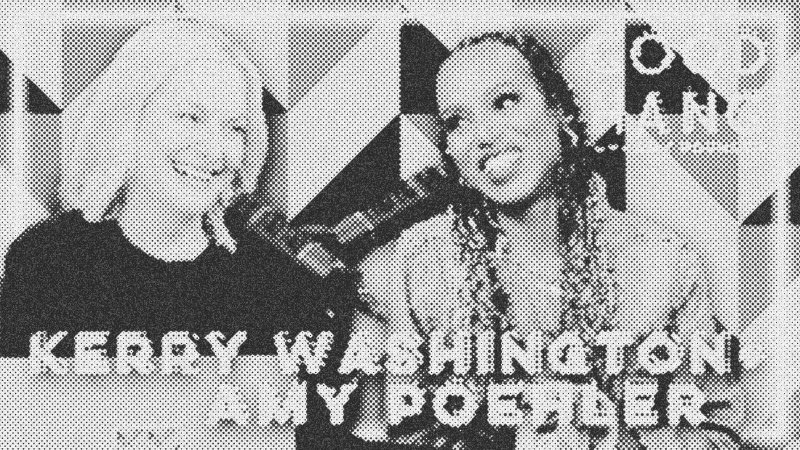
Kerry Washington | Good Hang with Amy Poehler
WatchGood Hang with Amy Poehler // 1:06:57

Come hang with Amy Poehler. Each week on her podcast, she'll welcome celebrities and fun people to her studio. They'll share stories about their careers, mutual friends, shared enthusiasms, and most importantly, what's been making them laugh. This podcast is not about trying to make you better or giving advice. Amy just wants to have a good time.