Carol Burnett reveals how a anonymous $50 bill launched her career
The Architecture of a Comedy Legend
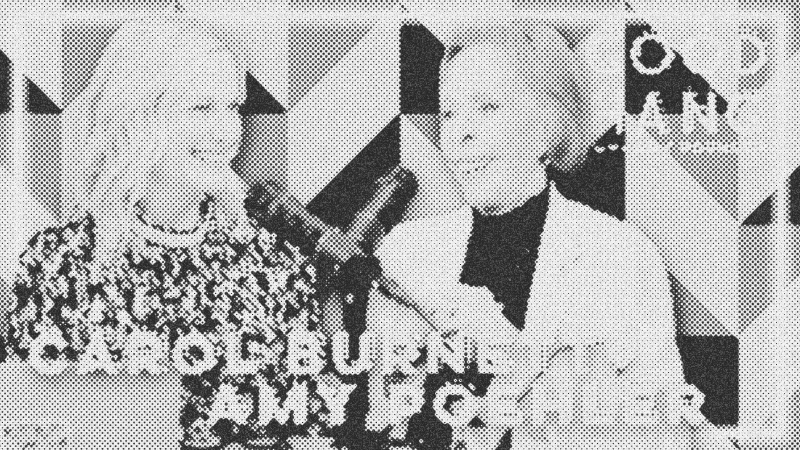
In the grand machinery of Hollywood, we often mistake success for a linear progression of talent and grit. Yet, as Carol Burnett discusses with Amy Poehler, the foundation of a legendary career is often built on the most fragile of coincidences. Burnett’s journey from a one-room apartment in Hollywood to the pinnacle of television history is less about a calculated rise and more about a series of "Clarence moments"—named after the guardian angel in It’s a Wonderful Life. These moments of intervention, combined with an unshakable sense of play, defined an era of comedy that remains the gold standard for performers today.
Carol Burnett represents a vanishing bridge between the vaudeville-infused physical comedy of the mid-century and the modern sketch landscape. Her approach to the medium was never about being a "woman in comedy"; it was about being a clown in the purest sense. By deconstructing her history, we see a blueprint of how an artist maintains relevance across nine decades by treating every stage as a sandbox rather than a pedestal.
The $43 Tuition and the Anonymous Benefactor
Before the world knew her ear-tug or her Tarzan yell, Carol Burnett was a student at Hollywood High with a desperate desire to attend UCLA. The barrier was not talent, but a staggering—by 1951 standards—tuition of $43 per semester. Living with her grandmother in a $30-a-month room, the math simply didn’t work. The story of her breakthrough is the stuff of cinematic folklore: an anonymous envelope, typewritten with her name, containing a $50 bill.
This early intervention fostered a perspective that Burnett carries to this day—a belief that she is being watched over, allowing her to take risks that others might find paralyzing. This "Clarence" philosophy enabled her to pivot from a failed acting class, where she received a D-minus for a lackluster monologue from The Madwoman of Chaillot, to discovering her true north in a student-written one-act play. Playing a hillbilly woman and hearing the first roar of a delighted audience changed her cellular composition. It wasn't just a laugh; it was an identity.
The Rehearsal Club and the Reality of 1950s New York
When Carol Burnett arrived in New York at age 21, she entered a world that mirrored the play Stage Door. Living at the Rehearsal Club—a brownstone for aspiring actresses—she transitioned from sleeping on a couch for 21 years to finally having her own bed, albeit in a room shared with four other women. The club was a curated ecosystem of ambition, strictly regulated by "house mothers" and supported by wealthy New York socialites to keep the rent at $18 a week.
This environment provided the psychological safety net necessary for the brutal audition circuit of the 1950s. Burnett’s eventual casting in Once Upon a Mattress remains a masterclass in the necessity of professional rejection. She had been passed over for a part in Babes in Arms because she lacked a "name." Within two minutes of that devastating phone call, the universe balanced the scales: she was invited to audition for the legendary George Abbott at the Phoenix Theater. Had she secured the first role, she would never have originated the role of Princess Winnifred, the part that ultimately caught the eye of Lucille Ball.
The Lucille Ball Mentorship and the Burden of the 'S'
One of the most poignant revelations in Burnett’s history is her relationship with Lucille Ball. Ball, who was 22 years Burnett’s senior, didn't just offer praise; she offered a roadmap for survival in a male-dominated industry. After seeing Burnett in Once Upon a Mattress, Ball went backstage and famously dubbed her "kid."
Burnett recounts a specific dinner where Ball, fueled by a few whiskey sours, laid bare the cost of creative control. Ball explained that during her marriage to Desi Arnaz, she was "Silly Lucy," protected by her husband’s administrative and technical genius. Post-divorce, Ball had to become her own Desi Arnaz, asserting herself in script meetings and production decisions. Ball warned that when a woman stops being just the performer and starts being the boss, the world adds an "S" to the end of her name—transforming her from a star into something the industry viewed as difficult. This mentorship was pivotal for Burnett, who would eventually lead The Carol Burnett Show for 11 seasons with a similar blend of iron-willed production standards and on-screen silliness.
Breaking the Fourth Wall of Professionalism
The Carol Burnett Show is often remembered for its "cracking up"—the moments where Tim Conway would successfully dismantle Harvey Korman on camera. While some critics at the time viewed this as a lapse in professionalism, Burnett defends it as the soul of the show. It was a family-driven atmosphere where the 28-piece orchestra and the 65 weekly costume changes by Bob Mackie provided a high-glamour shell for what was essentially a group of friends playing in a sandbox.
Burnett’s willingness to share the spotlight was her greatest innovation. She insisted that guests like Ray Charles, Chita Rivera, and Gwen Verdon do more than just their "bit." She put them in sketches, forcing them out of their comfort zones. Ray Charles allegedly told her he had never been asked to perform lines before their "piano bar" sketch. This collaborative spirit, paired with the total creative freedom granted by CBS (who gave only one note in 11 years—asking her to change a "nudist" joke they deemed too blue), created an environment that is nearly impossible to replicate in the modern era of micro-management and algorithmic content.
The Miss Hannigan Legacy and the Chin Incident
For a generation of viewers, Carol Burnett is synonymous with Miss Hannigan in the 1982 film Annie. Her interpretation of the character—adding the element of alcoholism to make the villainy more grounded—remains iconic. However, the production was plagued by the excess of the Hollywood system. Burnett reveals that the original filming of the "Easy Street" number featured 400 dancers and a monkey grinder, a spectacle that she, Bernadette Peters, and Tim Curry felt buried the performance.
When the producer Ray Stark decided to reshoot the number with just the three principals, a continuity crisis emerged. In the hiatus between the two shoots, Burnett had undergone elective oral surgery to correct a "weak chin." She returned to set with a significantly different profile. When she pointed out to director John Huston that she entered a closet in one scene without a chin and would now be exiting with one, the legendary director gave the most practical advice in film history: "Just come out looking determined." It is a testament to Burnett’s charisma that the audience never noticed the anatomical shift; they were too focused on the performance.
Longevity and the 11-Year-Old Interior
At 92, Carol Burnett rejects the notion of aging out of the industry. Her recent work in Palm Royale and Better Call Saul demonstrates a continuing hunger for "locking eyeballs" with new talent like Kristen Wiig and Allison Janney. When asked how she feels internally, her answer is consistent: 11 years old.
This 11-year-old interior represents the sweet spot of human development—the moment before self-consciousness takes root, where play is still the primary language. Burnett’s career suggests that the secret to artistic longevity isn't just talent, but the preservation of that pre-adolescent magic. She remains a living reminder that while the business of show business has become a series of spreadsheets and focus groups, the heart of it still relies on a person being brave enough to climb a rickety Hollywood sign and yell "Hello" to the world.
- Carol Burnett
- 16%· people
- Desi Arnaz
- 5%· people
- Lucille Ball
- 5%· people
- Once Upon a Mattress
- 5%· movies
- Ray Charles
- 5%· people
- Other topics
- 63%
Carol Burnett | Good Hang with Amy Poehler
WatchGood Hang with Amy Poehler // 1:08:54

Come hang with Amy Poehler. Each week on her podcast, she'll welcome celebrities and fun people to her studio. They'll share stories about their careers, mutual friends, shared enthusiasms, and most importantly, what's been making them laugh. This podcast is not about trying to make you better or giving advice. Amy just wants to have a good time.