Steve Carell reveals why he never watched the British Office
The hum of a basement drum kit provides an accidental soundtrack as Stephen Colbert leans back, reminiscing about a time before the suits, the late-night desks, and the global fame. Long before they were household names, he and Steve Carell were just two young men at Second City in Chicago, navigating a world of "chemo-psychosis" induced by twenty-four-hour work cycles. They were the hungry underdogs of the Improv Olympic scene, initially skeptical of the established institution on Lincoln Avenue until they realized the intoxicating power of a sold-out room and a liquor license. This was the crucible where the modern comedy landscape was forged, a place where failure wasn't a catastrophe but a shared, joyful destination.
In those early years, the bond between performers was cemented by the sheer absurdity of their requirements. Colbert recounts a pivotal moment when he was tasked with understudying for Carell, which required him to master the baritone horn in a mere six days. Carell, a brass instrument enthusiast since the fourth grade, didn't just hand over the horn; he taught Colbert the "embouchure"—the specific facial muscle positioning needed to produce a sound. This period of intense, collaborative work at Second City and later on The Dana Carvey Show created a language of trust. It was an environment where a sketch about a lactating Bill Clinton could serve as a series premiere, regardless of the catastrophic drop in Nielsen ratings that followed Home Improvement.
The intentional ignorance of Michael Scott
When the conversation shifts to The Office, Carell makes a startling admission: he has never watched the original British version of the show. While most actors would study the source material for clues, Carell felt that seeing Ricky Gervais even for a minute would be ruinous. He feared he would simply replicate the performance rather than find his own path. This intentional ignorance allowed him to approach Michael Scott not as a caricature of a regional manager, but as a man whose primary, desperate mission was to be loved. He didn't want the character to seek respect; he wanted him to seek a family.
This perspective deeply influenced the way Michael Scott exited the series. Carell reveals that he pitched the specific idea for Michael to leave a day before his scheduled goodbye party. In a narrative turn that defined the character's growth, Michael realizes he no longer needs the hollow validation of a public celebration. By leaving early, he demonstrates that he has found the security he was always searching for, moving beyond the need for the documentary cameras' gaze. It was a choice that prioritized the character's internal dignity over a traditional television spectacle, cementing the show’s legacy as a cultural security blanket for audiences during times of crisis.
Anchorman and the caloric joy of discovery
If The Office was about the search for love, Anchorman: The Legend of Ron Burgundy was about the pure, unadulterated joy of the craft. Carell describes the production as his first major break, a "one and done" opportunity he intended to savor. The daily ritual involved the core cast gathering in a trailer to watch dailies while consuming hot fudge sundaes from the catering department. This atmosphere of low-stakes experimentation allowed for the creation of Brick Tamland, a character who originally had a back-story as a Vietnam platoon leader before becoming the news team's oblivious mascot.
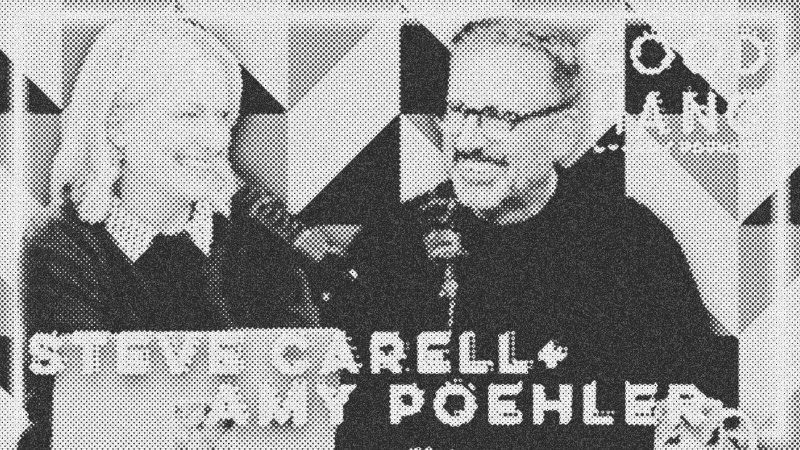
Carell and host Amy Poehler reflect on the evolution of improv in film, noting that it is often misunderstood as a free-for-all. For Carell, improv is merely a tool, a means to an end, rather than the end itself. He stresses that the scripts for The Office were meticulously crafted, providing a foundation that allowed spontaneity to feel earned. On Anchorman: The Legend of Ron Burgundy, this spontaneity was fueled by a lack of hierarchy, where everyone was equally committed to the bit, whether they were the lead or a bullet-ridden bank teller cut from the final theatrical version.
The radical commitment of the straight man
Colbert's observation that Carell "works really hard" and "never phones it in" serves as the bridge to understanding Carell's dramatic work in projects like Foxcatcher and The Patient. Carell argues that a character doesn't know they are in a comedy or a drama; they are simply living their life. He points to Alan Arkin and Peter Sellers as his north stars—actors who remained equally committed to their character's truth without ever "winking" at the audience. To Carell, a joke is intrinsically less funny if the performer seems to be waiting for the laugh.
This commitment to character is evident in his new HBO series, Rooster, where he plays an academic writer navigating a complex relationship with his daughter. He describes the show as having the same sense of freedom as his earlier collaborative environments, with a cast of "stacked" improvisers like Edie Patterson from The Righteous Gemstones. It's a return to the ensemble dynamics that defined his Chicago days, proving that while the venues have changed from small clubs to major streaming platforms, the core philosophy remains the same: the most interesting things happen when you embrace the potential for failure.
Massachusetts roots and the gift of directness
Despite the Hollywood accolades, Carell remains anchored by his Massachusetts upbringing. He and Poehler, both "Boston kids," discuss the unique social landscape of New England, characterized by a certain brusqueness and a "you're not better than me" attitude. This directness was perfectly encapsulated when a man in a local supermarket recognized Carell and told him, "That thing you did was good. Don't get cocky." It's a grounding force that has shaped his professional conduct, leading to a reputation for being polite, thoughtful, and perhaps more introverted than his public persona suggests.
In a moment of pure domestic comedy, Carell's appearance is "booked" by Poehler's parents, who accosted him at Gibbet Hill Grill in Groton. This collision of world-class celebrity and suburban parental intervention highlights the absurdity that Carell often mines for his characters. Whether he is waving at an unimpressed tour bus in Beverly Hills or learning to navigate the "cringe" of Michael Scott, the through-line of Carell's career is an unwavering empathy for the human condition. He reminds us that the best stories are not about the spectacle, but about the anxious, aspiring individuals trying to make sense of a world that doesn't always provide the punchline.
- The Office
- 9%· tv shows
- Anchorman: The Legend of Ron Burgundy
- 6%· movies
- Alan Arkin
- 3%· people
- Amy Poehler
- 3%· people
- baritone horn
- 3%· products
- Other topics
- 75%
Steve Carell | Good Hang with Amy Poehler
WatchGood Hang with Amy Poehler // 1:15:40

Come hang with Amy Poehler. Each week on her podcast, she'll welcome celebrities and fun people to her studio. They'll share stories about their careers, mutual friends, shared enthusiasms, and most importantly, what's been making them laugh. This podcast is not about trying to make you better or giving advice. Amy just wants to have a good time.