Randolph reveals how Miss Piggy and Al Pacino forged her Oscar path
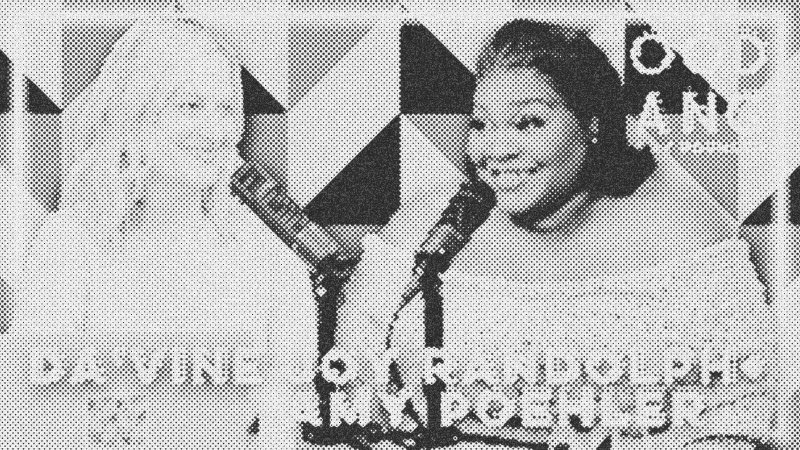
The quiet confidence of Da'Vine Joy Randolph doesn't just happen. It was forged in the fires of classical conservatory training and the high-stakes world of operatic performance. Sitting down with Amy Poehler, Randolph projects an aura of an artist who has done the work, yet remains entirely porous to the magic of the moment. This is a performer who grew up thinking her immense vocal gift was merely how people sounded, only to discover that her specific frequency—what she calls a baby dramatic soprano—was a rare instrument that required precision, heft, and a certain brand of competitive fire to master.
Her journey from Temple University to the Yale School of Drama reads like a series of sliding door moments. At Temple, a territorial dispute between the music and theater departments nearly derailed her. When she crossed the street to seek acting advice to better portray the character of Aida, her music teachers flunked her out in a fit of academic gatekeeping. It was her mother who provided the logic she needed, urging her to pivot toward the theater program where her credits would transfer. This collision of classical discipline and narrative curiosity created the foundational guardrails that allow her to thrive today. She views training as a safety net; once the parameters are set, she is free to bang against the edges, a technique that has made her one of the most versatile forces in contemporary cinema.
Miss Piggy as a blueprint for female power
Long before the formal training of Oxford University or the hallowed halls of Yale University, Randolph found her spiritual mentor in a felt puppet. She credits Miss Piggy from The Muppets as a primary influence on her self-actualization. To a young girl in Philadelphia, the pig who demanded respect, refused to change for any man, and maintained a fabulous aesthetic regardless of the circumstances was more than a comedic character—she was a blueprint for personal agency. Randolph recalls forcing her parents to buy her a tricycle so she could emulate Miss Piggy's motorcycle-gang persona, a memory that highlights her early attraction to characters who occupy space without apology.
This influence manifest in Randolph's own "regalness," a quality she brings to every role, regardless of the character's social standing. She discusses how this informed her approach to her Oscar-winning role in The Holdovers. While director Alexander Payne initially envisioned her character, Mary Lamb, in hot pink rollers and a bathrobe, Randolph pushed for a more professional, learned presence. She insisted that Mary was not just a cook, but a chef who had studied her craft. By ad-libbing lines about the over-use of paprika and directing white kitchen staff, Randolph subverted the "help" trope, instead presenting a woman who maintained immense pride and authority within her domain. This wasn't just about costume or dialogue; it was about the psychological infrastructure of a woman who has endured profound loss but refuses to let it erode her dignity.
The Al Pacino ladder and the weight of success
Every rising star needs a moment of validation from the vanguard, and for Randolph, that moment occurred in a French bistro with Al Pacino. Exhausted and voice-worn during a Broadway run, Randolph was approached by the legend himself. Al Pacino offered a metaphor that became her career North Star: the ladder. He told her that as you climb higher, you must let go of more weight. It was a permission slip to shed the anxieties and the "clutter" of expectation to focus on the ascent.
Years later, this conversation came full circle during a photo shoot for Netflix. As she stood on a literal ladder for the camera, she found herself looking down at Al Pacino, who was positioned on the floor nearby. The moment was a surreal, physical manifestation of the advice he had given her. While he likely didn't recall their brief encounter in the bistro, for Randolph, it was the closing of a loop. It reinforced the idea that success isn't about accumulating more; it's about refining what you carry so you can reach the next rung. This philosophy is perhaps why she appears so "unflappable" on set—she has learned which weights to drop and which to hold onto with everything she has.
Cooking as a conduit for collaborative respect
Beyond the screen, Randolph’s obsession with kitchenware and the culinary arts serves as a vital grounding mechanism. Her conversation with Amy Poehler frequently veers into the technical specifications of Ruffoni Cookware copper pans and KitchenAid Mixer attachments. This isn't mere consumerism; it’s a reflection of her respect for tools and craft. Just as she meticulously researched the "levels of addiction" and the "science of the dangle" to portray a smoker in The Holdovers, she approaches her home life with the same desire for excellence.
She uses her love for cooking as a way to bond with directors and co-stars, ensuring that her characters’ relationship with food is realistic. In The Holdovers, she contractually obligated herself to do the actual cooking on screen, refusing the artifice of a hand double. This commitment to truth creates a secondary layer of performance that audiences feel even if they can't explicitly name it. It also allows her to navigate the "imposter syndrome" she occasionally feels in interview settings. When she is "doing the thing"—whether it's searing a steak or delivering a monologue—the fear disappears. The kitchen, like the stage, is a place where her training and her instinct meet to create something nourishing.
Lessons from Robin Williams and Eddie Murphy
Randolph’s early film experiences were masterclasses in the diverse rhythms of comedic genius. Working on The Angriest Man in Brooklyn, which would be Robin Williams’ final film, she witnessed the explosive, "buzzing" energy of a legend whose thoughts moved faster than the camera could capture. Robin Williams was the first major figure to tell her she "had it," an anointing she carried into her next major collaboration with Eddie Murphy in Dolemite Is My Name.
Where Robin Williams was a whirlwind of activity, Eddie Murphy taught her the power of stillness. She observed how he maintained a quiet, almost subterranean energy between takes, only to flare into brilliance once the director called action. This education in pacing and "jumping rope" with comedic timing prepared her for the intense press cycles and the level of fame she is now navigating. She learned that a performer must be a thermometer—reading the room, adjusting the temperature, and knowing when to let the silence do the work. It is this balance of operatic power and cinematic restraint that has made Da'Vine Joy Randolph the most compelling actor of her generation.
- Al Pacino
- 9%· people
- Robin Williams
- 9%· people
- The Holdovers
- 9%· movies
- Amy Poehler
- 6%· people
- Da'Vine Joy Randolph
- 6%· people
- Other topics
- 63%
Da'Vine Joy Randolph | Good Hang with Amy Poehler
WatchGood Hang with Amy Poehler // 1:12:20

Come hang with Amy Poehler. Each week on her podcast, she'll welcome celebrities and fun people to her studio. They'll share stories about their careers, mutual friends, shared enthusiasms, and most importantly, what's been making them laugh. This podcast is not about trying to make you better or giving advice. Amy just wants to have a good time.