Beyond the Basics: Master 10 Essential Chef Knife Skills
The Foundation of Culinary Excellence
Cooking is an act of respect for the ingredient. Many home cooks struggle with recipes not because they lack taste, but because they lack the physical technique to handle produce properly. Understanding
Essential Tools and the Grip
Before the first cut, you must respect the tool. A standard
Precision Vegetable Techniques
The Tap Chop serves as your high-speed engine for items like onions. By using a slight sawing motion rather than a vertical crush, you utilize the blade's sharpness to glide through fibers. For herbs, the Rock Chop is common, but it often bruises delicate leaves. Instead, roll your herbs into a tight bundle and use a long slicing motion to preserve the essential oils.
When elegance is required, move to the Chiffonade or Julienne. These involve creating uniform matchsticks or fine ribbons. The secret to a perfect Julienne is creating a flat surface first; a round carrot is a dangerous carrot. Once you have a Julienne, you can rotate the strips and cut across them to create a Brunoise, the tiny, therapeutic dice that defines professional precision in a fine tartare or oyster dressing.
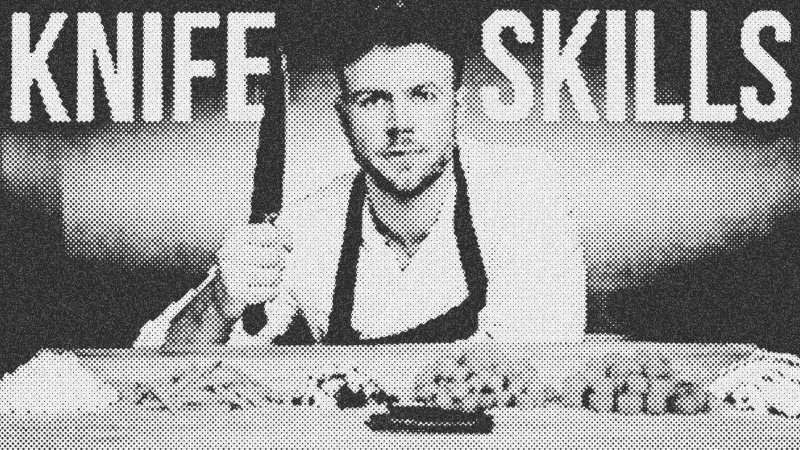
Mincing and Dicing for Flavor
Mincing is about extracting flavor without adding chunky texture. By rough-chopping garlic and adding a pinch of salt, you create friction. Using the side of the
Advanced Protein Fabrication
Handling meat requires a shift in philosophy. Carving is about confidence and smooth, single-stroke movements. Whether slicing a duck breast or a roast, use the entire length of the blade from heel to tip to avoid "sawing," which tears the fibers and lets juices escape.
Deboning and Filleting require you to "listen" to the bone. When deboning a chicken leg, use the tip of a
Maintenance and Troubleshooting
A dull knife is a dangerous knife. You must maintain your edge using a Honing Rod or a Diamond Steel. Hold the rod firmly against the board and draw the knife across at a 45-degree angle. If your herbs are turning dark or your onions are making you cry excessively, your blade is likely crushing rather than cutting. Regular sharpening—every few minutes of heavy prep—is the hallmark of a disciplined chef. Practice these movements slowly; speed is merely the byproduct of perfect form.