RNG Brutality: Dominating the Chaos of GTA 5 Random Racing
FailRace////4 min read
The starting grid of a random race is a lesson in calculated volatility. We aren't just racing against other drivers; we are battling an algorithm that can gift you a car at one checkpoint and a lumbering at the next. This format demands more than just raw driving skill. It requires instant adaptation to shifting physics, weight distributions, and power-to-weight ratios that fluctuate every few hundred yards. On a long circuit like this one, the marathon nature of the event allows the RNG to level the playing field, making high-level catch-up settings a double-edged sword for anyone trying to break away from the pack.
The Fragility of Momentum
The race began with a deceptive sense of power. Trading a for a high-downforce open-wheeler should be a dream scenario, but in the tight confines of a circuit, speed is often a liability. I found myself hitting the apexes at speeds only to be downshifted into a heavy truck mid-corner. This transition is where most racers fail; they try to carry the momentum of the previous vehicle into the physics of the next. Success in random racing hinges on the first three seconds after a vehicle swap. You have to recalibrate your braking points instantly. If you treat a like a supercar, you're going into the wall.
Optimization Through The Chaos
As the pack thinned, the technical demands of the track began to favor the analytical driver. The provided a brief window of stability, allowing for precision lines that the heavier SUVs couldn't match. However, the true test of optimization came during the hill climbs. A steep incline in a that refuses to turn is a mechanical nightmare. I watched opponents like find surprising efficiency in a quad bike, proving that sometimes the smaller footprint is the superior choice for verticality. The game mechanics here are punishing; if the RNG gods hand you a on a steep grade, your only hope is the slipstream logic. I spent a significant portion of the race hunting for to exploit the lag-bubble bump draft, a high-level tactic where you use the game’s network latency to push an opponent from behind without losing speed.
The Reverse Circuit Trap
The second heat introduced a mechanical variable that most casual players overlook: directional design. Most tracks are built with a primary flow in mind. When we run them in reverse, the safety barriers, fence gaps, and sightlines become hazards. A wall designed to deflect a car in one direction becomes a blunt-force stop when approached from the rear. This creates a "meat grinder" effect where a single mistake from a leader like or creates a pile-up that consumes the entire mid-pack. In these moments, the goal isn't to be the fastest; it's to be the most durable.
The Statistical Collapse
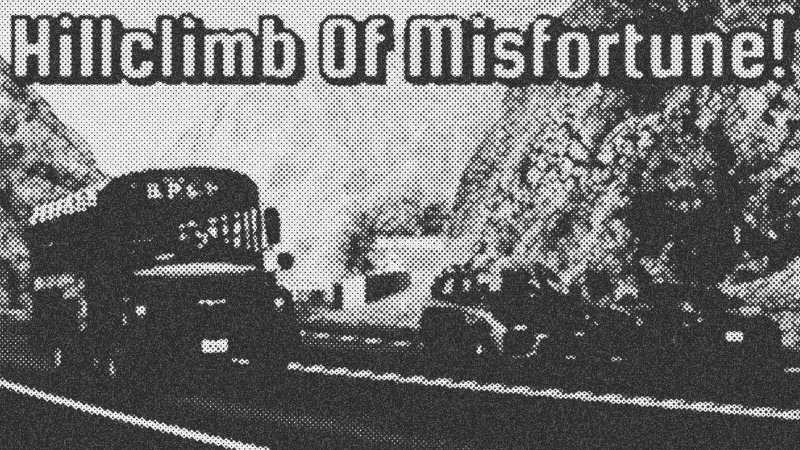
The climax of the event was a masterclass in how RNG can invalidate even the most perfect racing line. Finding a and a in the final stretch felt like a guaranteed podium finish. I was closing the gap on the leaders with surgical precision. Then, the collapse happened. The game swapped a supercar for a and then a right as the track turned upward. No amount of technical mastery can overcome a vehicle that lacks the raw horsepower to climb a thirty-degree grade. It’s a reminder that in the world of competitive optimization, you can control the inputs, but you can never fully control the environment. Mastery is about minimizing the damage during the inevitable failures of luck.
The Hillclimb Of Misfortune... - Gta 5 Random Racing
WatchFailRace // 24:48