The Brutality of Randomness: Navigating the Wheel of Pain in BeamNG Drive
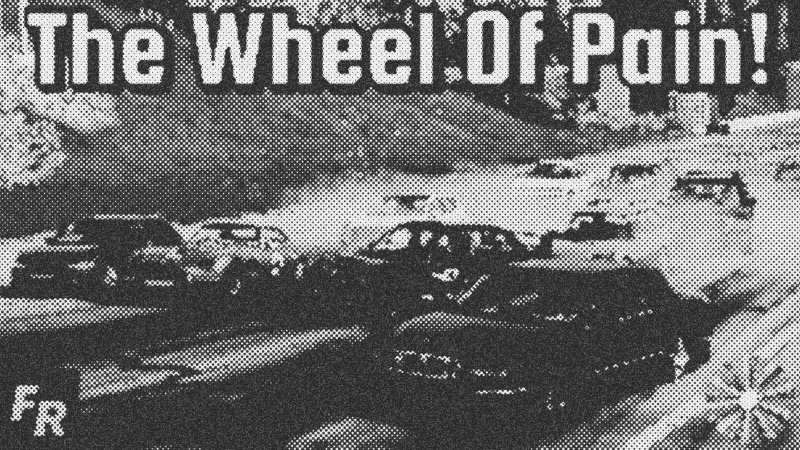
The Swedish rallycross circuit sits under a grey sky, its mixture of asphalt and loose dirt promising a technical challenge even under perfect conditions. For this competition, however, perfection is a distant memory. A diverse grid ranging from the nimble Subaru Legacy Heritage to heavy-duty trucks and vintage coupes lines up for what appears to be a standard two-lap sprint. But hovering over the event is the titular Wheel of Pain, an ominous mechanic that introduces random modifications after every round. This is the starting point of a descent into mechanical madness, where the goal isn't just to be the fastest, but to remain functional as the laws of physics and engineering are toyed with by fate.
The Illusion of Normalcy
The opening race feels like a genuine display of rallycross skill. Driving the Legacy, the car feels remarkably stable even when pitched sideways through the dirt sections. It is a predictable machine, one that allows for aggressive braking and tight corner exits. Competitors like Mika in the Tograk and Danger Man set a frantic pace, but the racing remains clean. Crossing the line in second place feels like a solid foundation for a championship run. The cars are mostly intact, the engines are healthy, and the strategy is simple: drive fast. This stability, however, is the first thing the Wheel of Pain targets. The initial spin grants every car maximum nitrous oxide, a massive power boost that comes with a high risk of catastrophic engine failure.
Escalating Mechanical Chaos
The introduction of nitrous immediately shifts the dynamic from racing to survival. For cars like the Subaru and the Sterling, which cannot physically accept the nitrous mod, the race becomes a defensive struggle against high-powered monsters. Engines begin to scream under the stress, and the smell of metaphorical burnt oil hangs over the track. Amy takes a victory in this high-pressure environment, but the true chaos arrives with the next spin: extreme negative camber and slammed suspension. Suddenly, cars that were once agile rally machines are transformed into "stanced" show cars with zero ground clearance. On the dirt, they are useless. Chassis scrape against the soil, tires lose contact with the surface, and the Sterling models DNF almost immediately as they beach themselves on the uneven terrain. Handling becomes a game of Russian roulette; if the car snaps sideways, the extreme camber ensures it never comes back.
The Square Wheel Turning Point
Just when the drivers think the situation cannot get more absurd, the wheel mandates square wheels on all driven axles. This modification represents the climax of the absurdity, effectively turning the race into a literal vibration test. For front-wheel-drive vehicles like the Mistral, the square wheels make steering a nightmare of rhythmic thumping and lost traction. Surprisingly, the Subaru handles the square rear wheels with a strange grace, allowing for a recovery into the podium positions despite being bullied by the more powerful Grand Marshall. The paddock is a graveyard of bodywork; half-shafts are snapping, and steering racks are vibrating into pieces. The grid is no longer a set of racing teams; it is a collection of survivors desperately trying to limp their mangled machines across the finish line.
The Fuel Crisis and the Great Swap
In a cruel twist, the wheel then slashes fuel levels to a single liter. In a high-performance rally car, a liter of fuel vanishes in seconds. This forces a complete shift in philosophy: hyper-miling. The aggression of the early rounds is replaced by "lift and coast" techniques. Then comes the ultimate shake-up: the Car Swap. Drivers are forced out of their familiar seats and into the chaotic builds of their rivals. Taking over Chris's Mistral provides a temporary reprieve from the Subaru's square wheels, but the fuel crisis remains. The final four-lap double-points race becomes a psychological battle. How much throttle can one dare to use? Chris manages the fuel with masterclass precision, while Danger Man and Euan fight for every inch of tarmac as their tanks run dry.
A Lesson in Adaptability
When the dust settles and the leaderboard is tallied, Danger Man emerges as the champion, his consistency in the Hirochi Sunburst and the Roma proving decisive. The final standings reflect a journey of extreme adaptation. The lesson of the Wheel of Pain is that in a world of random variables, the most rigid competitor is the first to break. The Tograk, which started as a dominant force, ended as a heavy, inefficient anchor. Conversely, those who could navigate the transition from square wheels to fuel conservation found themselves on the podium. Success in BeamNG Drive isn't always about the line you take through a corner; sometimes, it's about whether your car still has four wheels—square or otherwise—at the end of the day.
- Danger Man
- 15%· people
- Chris
- 10%· people
- Mistral
- 10%· products
- Sterling
- 10%· products
- Tograk
- 10%· products
- Other topics
- 45%
The Wheel Of Pain Lives Up To Its Name - BeamNG Drive
WatchFailRace // 39:09

FailRace is a place where cars are raced, rolled, put through incredible challenges and sometimes crashed rather spectacularly all for your entertainment on some of the best driving video games around. If you are feeling super generous you can help support this channel on patreon :), the link can be found below