Integra’s mechanical edge dismantles muscle car power in Forza Lucky Dip
The Lucky Dip Paradox and Class Optimization
In the high-stakes environment of Forza Horizon 6, the "Lucky Dip" challenge introduces a chaotic variable that exposes the raw mechanical balance of the game's B-Class tier. By utilizing Kudos Prime to randomly assign vehicles and forcing the game's auto-upgrade logic to bridge the gap to B-Class, racers are often left with fundamentally flawed machines. This scenario creates a fascinating tactical divide: power-dense builds with zero lateral grip versus balanced handling platforms that lack straight-line speed. The modern Acura Integra stands out in this ecosystem, leveraging sport tires and superior turn-in to combat raw horsepower from the likes of the Dodge Coronet and Chevrolet El Camino.
The technical failure of the auto-upgrade system is most evident in the muscle car category. When the game attempts to hit a Performance Index (PI) target for a vintage chassis, it frequently prioritizes displacement over chassis stiffness or tire compound. This results in "power builds" equipped with vintage race tires—a combination that becomes a liability on technical circuits. My analysis of the Integra's performance suggests that while it may sit a few PI points below the cap, its mechanical efficiency in transition phases allows it to maintain higher average speeds than competitors boasting double its output.
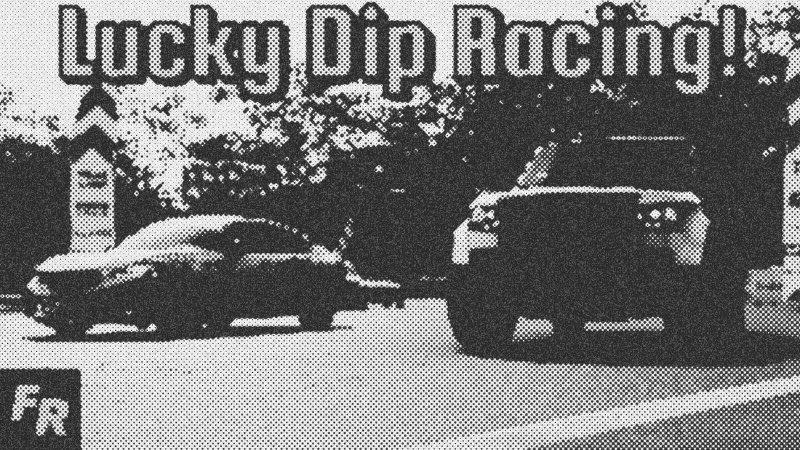
Tactical Analysis of the Tokyo Electric Town Circuit
The Tokyo Electric Town circuit served as the ultimate stress test for these randomized builds. City circuits in this iteration of Forza Horizon 6 demand extreme precision due to the high density of checkpoints and unforgiving street furniture. The Integra's front-wheel-drive layout presented an immediate disadvantage off the line, yet its ability to brake late and rotate through tight 90-degree corners allowed for a rapid ascent through the field.
A critical strategic error occurred when I overdriven the Integra, gambling on a tight apex at a final checkpoint and missing it entirely. This mistake highlights the psychological pressure of the "chase" in a handling-focused car; when stuck behind a massive Land Rover Defender, the impulse to make up time in the twisty sectors often leads to high-risk maneuvers. The Defender effectively acted as a moving roadblock, utilizing its straight-line torque to pull away on exit, only to overslow the mid-corner and bottleneck the more agile Integra and Mazda MX-5.
Breaking the Power Wall at Legends Island
The final race at Legends Island provided a masterclass in exploiting speed differentials. Unlike the city circuit, Legends Island features long, sweeping turns that punish cars with poor weight distribution. The Land Rover Defender, driven by Impega, dominated the early straights but became a liability in the tunnel transitions where lighting changes affect depth perception. My strategy centered on "parking" the Integra in the middle of the road during the tighter sectors to prevent the muscle cars from using their power to dive-bomb.
The most significant tactical move occurred during a three-way battle between a Chevrolet Camaro, an Mazda RX-7, and the Integra. By observing Chris in the Mazda RX-7 overdriving the hairpin, I successfully executed a cut-back maneuver. This involves intentional late-braking to bait the opponent into a deep entry, then squaring off the corner to gain a superior exit trajectory. Once the Integra cleared the "power wall" of the heavier cars, its rhythm and consistency allowed it to pull a gap that even 800-horsepower builds could not close on the straights.
Performance Breakdown and Vehicle Dynamics
The individual performance metrics reveal a startling truth about the B-Class meta. The Acura Integra and Mitsubishi Eclipse consistently traded fastest laps, despite the Mitsubishi Eclipse struggling with traction on corner exit. Gla demonstrated that the Mitsubishi Eclipse could compete, but it lacked the Integra’s poise over elevation changes, specifically the uphill climb at the traditional circuit.
Conversely, the vintage muscle cars like the Buick and Dodge Coronet were virtually uncompetitive on anything other than a drag strip. The auto-upgrade’s reliance on vintage tires meant these cars spent more time sliding than accelerating. The Land Rover Defender remains the outlier—an "annoyance" vehicle that can ruin a handling car's race by occupying the racing line during the sectors where the lighter cars need to maintain momentum. Total domination in these challenges isn't about having the most power; it's about having the most usable grip when the track gets technical.
Future Implications for Randomized Racing
This session proves that randomized racing formats are essentially a test of adaptive driving. The "Lucky Dip" format forces players to identify their car's single greatest advantage—be it braking, mid-corner speed, or launch torque—and build their entire race strategy around it. For the Integra, the strategy is clear: survive the start, exploit the braking zones, and use the superior tire compound to carry more speed through the final sectors of every lap. To improve in future events, players must resist the urge to clatter into "power builds" and instead focus on the "cut-back" to capitalize on the inevitable mistakes made by high-horsepower, low-grip opponents.
- Acura%20Integra
- 7%· products
- Buick
- 7%· products
- Chevrolet%20Camaro
- 7%· products
- Chevrolet%20El%20Camino
- 7%· products
- Chris
- 7%· people
- Other topics
- 67%
Forza Horizon 6 - Lucky Dip Racing!
WatchFailRace // 33:38

FailRace is a place where cars are raced, rolled, put through incredible challenges and sometimes crashed rather spectacularly all for your entertainment on some of the best driving video games around. If you are feeling super generous you can help support this channel on patreon :), the link can be found below