Choi secures $100,000 in race cars during frantic 48-minute GTA heist
Strategic Deployment and the 48-Minute Clock
The Gone in 48 Minutes challenge in Grand Theft Auto V represents a high-stakes convergence of route optimization and mechanical mastery. The premise is deceptively simple: steal $100,000 worth of vintage race cars within a single in-game day. However, the execution requires a surgical understanding of the Los Santos geography and the behavioral patterns of player-controlled hunters. Success isn't just about speed; it's about the economy of movement. Every second spent searching for a vehicle in an industrial alleyway is a second the hunters have to consolidate their positions and establish road blocks.
The challenge begins with a critical two-minute head start, a window that must be utilized to secure "easy money" targets before the map becomes a tactical minefield. The player opted for an early capture of a $10,000 Maserati Grand Prix car. This decision served as a baseline, ensuring that the initial momentum wasn't wasted on high-risk, high-reward targets that could have resulted in an early death and a total reset of the timeline. In speedrunning terms, this is a safety strat—a reliable gain that mitigates the RNG of hunter spawns.
Key Strategic Decisions and Route Optimization
The most pivotal decision-making process occurred during the transition from low-value, unguarded vehicles to high-value, guarded targets. A masterclass in psychological warfare was displayed when the player intentionally moved toward a $30,000 car to draw hunters away from the Cinema location. By creating a "ghost" threat in one sector of the map, the player manipulated the hunters' defensive spread, allowing for a cleaner extraction of a yellow Swinger valued at $25,000.
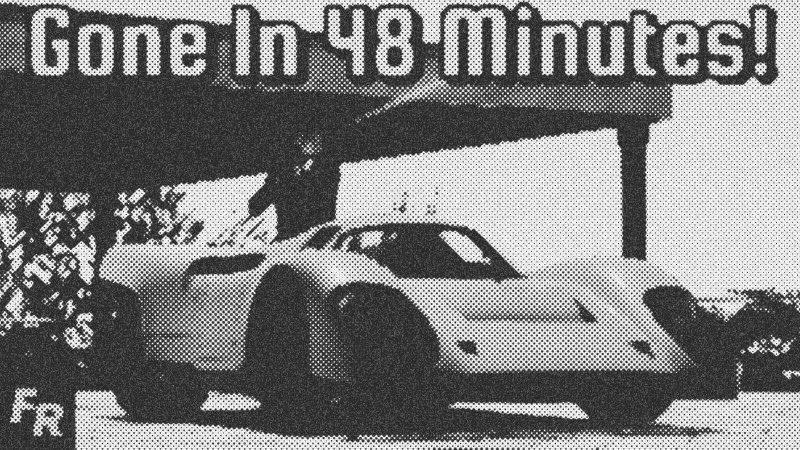
Mechanical nuances also dictated vehicle choice. The player frequently weighed the trade-offs between straight-line speed and handling. The Picador drag car, while fast, proved to be a liability in urban environments due to its inability to navigate tight corners without losing lateral stability. Conversely, the Porsche 917K offered the raw power necessary to punch through highway roadblocks, even when suffering from catastrophic tire failure. The strategy shifted from stealth to brute force as the timer dwindled, moving from alleyway sneaking to high-speed motorway gambles where the only defense was a heavy foot on the accelerator.
Performance Breakdown of Vehicle Extractions
The efficiency of the run can be broken down by the dollar-per-minute yield of each extraction. The early Maserati and Picador runs were relatively slow due to navigation errors, but they provided the necessary padding for the final, more dangerous maneuvers. The extraction of the Sterling GT marked a turning point; its superior handling allowed for a more aggressive escape through traffic, proving that in Grand Theft Auto V challenges, a car's agility is often more valuable than its top speed.
However, the performance reached its peak during the Porsche 917K heist. Despite being pursued by an E-Type and taking heavy gunfire that stripped the tires to their rims, the player maintained a trajectory toward the Docks. The mechanical skill required to drive a rim-riding vehicle at high speeds without spinning out is substantial. This segment highlighted the player's ability to remain analytical under pressure, focusing on the physics of the game's driving engine to compensate for the lack of traction.
Critical Moments and Defensive Evasion
Two specific moments defined the success of this run. The first was the discovery of a hunter's trap involving a ramp car and vans blocking a highway exit. By identifying the trap before committing to the jump, the player avoided a catastrophic "box-in" scenario that would have ended the run instantly. This situational awareness is what separates experts from casual players; the ability to read the environment for player-placed obstacles is a meta-skill essential for any challenge involving human opponents.
The second critical moment was the final delivery of the gray $20,000 race car. With less than five minutes remaining, the player took an unconventional path through a train tunnel and a side car park entrance. This "back-door" approach completely bypassed the main road where hunters had likely concentrated their forces. By the time the hunters realized the car had been moved, the player was already within the delivery radius. It was a victory won not by speed, but by superior map knowledge and the exploitation of predictable defensive patterns.
Future Implications for Challenge Mastery
This run provides several key takeaways for the optimization of the Gone in 48 Minutes format. First, the importance of a diverse vehicle portfolio cannot be overstated. Relying solely on high-speed drag cars leads to failure in the city center, while relying on nimble classics makes one vulnerable on the long motorway stretches. A hybrid approach, selecting vehicles based on the specific terrain between the car's spawn and the Docks, is the most efficient path to $100,000.
Furthermore, the use of distractions and misdirection proves more effective than direct combat. Every bullet fired at a hunter is a second lost; every successful juke that forces a hunter to turn around is a second gained. Future runs should look to further exploit the "off-radar" mechanics and alternative entry points to the delivery zone. The success of the train tunnel route suggests that the verticality of Los Santos remains an underutilized asset in these challenges. To break the next limit, players must stop thinking in two dimensions and start using the entirety of the map's geometry to vanish from the hunters' sight.
- Docks
- 11%· places
- Gone in 48 Minutes
- 11%· tv shows
- Grand Theft Auto V
- 11%· products
- Los Santos
- 11%· places
- Maserati
- 11%· products
- Other topics
- 47%
Gone In 48 Minutes! - 70's Race Car Edition - Gta 5 Challenge
WatchFailRace // 51:22

FailRace is a place where cars are raced, rolled, put through incredible challenges and sometimes crashed rather spectacularly all for your entertainment on some of the best driving video games around. If you are feeling super generous you can help support this channel on patreon :), the link can be found below