BeamNG hill climb yields 40 percent survival rate against giant AI shredders
FailRace////3 min read
Strategic Maneuvers in Physics-Based Attrition
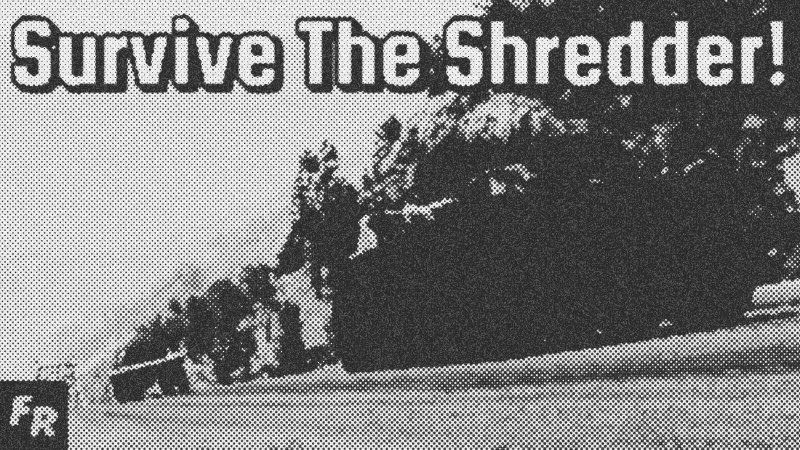
In the latest session of high-stakes , survivors faced a brutal hill climb challenge where the physics engine acted as both teammate and executioner. The objective: reach the summit while oversized, scaled-up vehicles hurtle down the narrow ascent. This scenario is a masterclass in risk management. Using a scaling mod, participants transformed standard vehicles into massive, road-filling obstacles that lack conventional handling but dominate through sheer physical volume.
Optimization here isn't just about speed; it's about predicting the chaotic vectors of uncontrolled mass. The most successful runs utilized a "bait and switch" tactic. Fast vehicles, such as 's drag car, served as high-speed targets to draw the AI's attention. By forcing the giant attackers to commit to a steering line early, slower climbers gained a critical window of safety. However, the lack of traction on steep inclines remained the ultimate bottleneck for underpowered kits.
Performance Breakdown of the Ascent Fleet
The initial round saw a surprisingly high survival rate, with , , , and reaching the top. The technical standout was the trophy truck. Its suspension geometry and torque delivery allowed it to maintain momentum even after sustaining significant bodywork damage. Conversely, the smaller vehicles like 's tiny truck struggled with the "disintegrating" effect of large-scale collisions, where even a glancing blow from a giant wheel can instantly sever a chassis.
As the rounds progressed, the difficulty spiked. Eliminated players rejoined the fray as massive interceptors, creating a feedback loop of increasing danger. By the second ascent, the road was congested with the wrecks of 's Rush and other failed attempts, which served as secondary hazards. The performance delta between off-road optimized builds and street-tuned vehicles became glaringly obvious as the terrain transitioned from asphalt to dirt bridge sections.
Critical Failure and Impact Mitigation
The most catastrophic moment occurred near the dirt bridge, a notorious choke point. I attempted to utilize the bridge as hard cover—a sound tactical move in theory. However, the synchronization of incoming giant vehicles, specifically the and , created a collision zone that was impossible to navigate. The possesses enough grip to adjust its trajectory downhill, unlike the more erratic , making it a much more lethal predator.
My decision to attempt a reverse maneuver under the bridge failed due to a lack of rear-end traction and a mistimed collision with . This illustrates the fragility of precise strategies when external variables—like a teammate's panicked positioning—override the mechanical plan. A fuel tank rupture ended the run, proving that even the most robust cannot survive a vertical crushing force from a vehicle five times its mass.
Future Implications for Chaos Simulations
This experiment confirms that in challenge runs, traction is the primary currency. Future attempts should prioritize all-wheel-drive platforms with high ground clearance, even at the expense of top-end speed. The "Snowman Distraction" noted in the final round suggests that environmental debris can be exploited to temporarily disrupt the AI's targeting. To dominate these shredder events, players must treat the map not as a race track, but as a live-fire physics puzzle where the goal is to remain in the AI's "dead zone" for as long as possible.
Survive The Shredder But With Giant Cars! - BeamNG Drive
WatchFailRace // 25:54