Asuka Redline Reverie demo proves indie racing still has teeth
An unexpected email from a small development team often yields nothing more than a passing glance. However, the playable build of Asuka Redline Reverie demands a complete halt. This stylized mountain racer immediately shrugs off the modern obsession with photorealism in favor of an expressive, cell-shaded aesthetic. It looks brilliant. But do not let the colorful, low-poly art style fool you. Underneath the stylized bodywork lies a surprisingly complex mechanical simulation that respects your intelligence, your time, and your mechanical sympathy.
Inside the Obsessively Detailed Engine Bay
The depth of the mechanical customization immediately recalls the classic, grease-stained charm of Street Legal Racing: Redline. You do not simply buy generic "Stage 1" performance packages here. Instead, you manage fuel mapping, ignition timing, and individual engine components. This mechanical depth introduces a brilliant risk-reward dynamic centered around reliability. Bolt a massive turbocharger onto a cheap, bone-stock engine block and the cooling system will fail. Your engine will overheat. Your components will degrade.
If a part fails during a run, your car breaks down and stops dead on the asphalt. The game forces you to inspect your components regularly. You must manage your budget carefully to afford replacement brakes, tires, and suspension elements. Visual customization is equally granular, allowing you to fit wide-body kits, change track widths, and swap bumpers. Every choice has a physical consequence. Fitting a wide body kit without adjusting your track width and suspension look ridiculous and hurts performance.
Braving the Nighttime Gauntlet and Ruthless AI
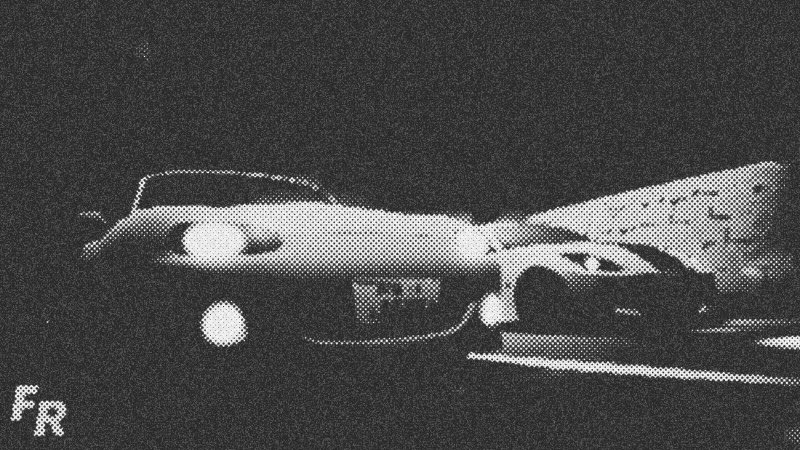
The gameplay loop runs on a daily cycle. Daytime events consist of precise time trials and chaotic drift events complete with civilian traffic. When night falls, the real action begins. Saturday night hosts the Gauntlet, a high-stakes gauntlet of consecutive duels. You line up against rival cars on tight, terrifyingly narrow mountain passes. The rules of engagement are clear and brutal: a tug-of-war health bar represents the distance between you and your opponent. Build a sufficient lead, and their health bar drains to zero. Impact a guardrail or crash into a wall, and your own bar takes a massive hit. This simple design brilliantly incentivizes clean, precise driving over reckless wall-riding.
Crucially, the driving physics lean closer to simulation than pure arcade physics. It is not a simple "tap brake to drift" affair. You must hit your braking points perfectly. You must manage weight transfer. You must fight for grip. AI drivers are tough. They launch like rockets in a straight line, forcing you to use superior braking and brave cornering to find a way past. They will even flash their headlights in your rearview mirror to distract you as you approach a hair-raising corner.
The Slow and Satisfying Friction of Progression
Modern racing titles suffer from a gold-rush pacing. They shower players with million-dollar supercars within the first twenty minutes. This title takes the opposite route. It treats progression with refreshing friction. Spending five hours with the demo might yield a modest forty-horsepower increase for a starting vehicle like an MK2 MX-5.
This sluggish pace makes every minor upgrade feel monumental. Finally saving up 37,000 credits to buy a sport differential or upgrading to a piggyback ECU feels like a hard-won victory. You are constantly balancing the desire for faster parts against the cold reality of maintenance costs. This creates a deeply satisfying loop where you truly bond with your low-powered machine.
Where the Rubber Fails to Meet the Road
The demo is not flawless. The AI drivers, while fast, are highly scripted. They follow rigid paths and rarely react dynamically to your presence, making them easy to exploit once you memorize their lines. Additionally, visibility can be an issue. When using a high third-person camera angle, the pace-note icons and UI overlays frequently pop up directly in front of the road. This blocks your view of oncoming traffic and makes blind corners an unnecessary gamble.
A Bold Step Forward for Mountain Racing
These minor flaws do not ruin the experience. The mechanical depth, rewarding progression, and challenging physics model make this one of the most exciting indie racing projects in years. If you are tired of sterile, corporate racers, this passion project is exactly what you need. While the game is still in active development, the developers currently offer demo access to supporters on their Patreon page. It is well worth the entry fee.
- Asuka Redline Reverie
- 50%· products
- Street Legal Racing: Redline
- 50%· products
Awesome Touge Racing And Customisation! - Asuka Redline Reverie
WatchFailRace // 27:17

FailRace is a place where cars are raced, rolled, put through incredible challenges and sometimes crashed rather spectacularly all for your entertainment on some of the best driving video games around. If you are feeling super generous you can help support this channel on patreon :), the link can be found below