The E-Transit Custom: A Modern Workhorse Examined
For nearly six decades, the Ford Transit has stood as an undeniable pillar in the commercial vehicle segment, a testament to enduring utility. It has served tradespeople and delivery fleets with unwavering reliability since 1965. Now, Ford introduces an electric iteration, the E-Transit Custom, prompting a critical inquiry: can an electric powertrain genuinely fulfill the rigorous demands historically met by its diesel and hybrid forebears?
"The Ford Transit: Enduring Utility, Electrified"
Ford positions the E-Transit Custom as a contemporary evolution, but a closer examination of its core attributes reveals both compelling advancements and inherent limitations. At its heart lies a 64 kWh battery, promising a manufacturer-claimed range of 205 miles. However, empirical observation quickly adjusted this figure; a 95% charge yielded merely 171 miles. An optional extended battery purports 250 miles, yet these remain figures for an unladen vehicle. Real-world applications, laden with cargo or engaged in towing, will invariably diminish this range, a critical consideration for operators. The E-Transit Custom offers three power outputs: 135 horsepower, 215 horsepower, and a range-topping 2185 horsepower for the MSRT variant. All share a consistent 415 newton-meters of torque. This van also boasts a payload capacity exceeding 1 ton and a towing capacity of 2.3 tons, a commendable figure. However, towing with an electric vehicle impacts range significantly, often reducing it by 30 to 50%.
Charging infrastructure dictates much of an electric vehicle's utility. The E-Transit Custom supports rapid DC charging, achieving a 10% to 80% charge in a swift 39 minutes. Without access to such high-speed options, an 11 kW charger extends this to 6.5 hours for a 10% to 100% charge, while a 7.4 kW charger requires over 10 hours for the same replenishment. Priced without VAT, the base 'Trend' model starts at just over £43,000, while the 'Sport' variant, equipped with the 215 horsepower engine, begins around £45,000. The MSRT, a visually distinct offering, commands a price north of £60,000.
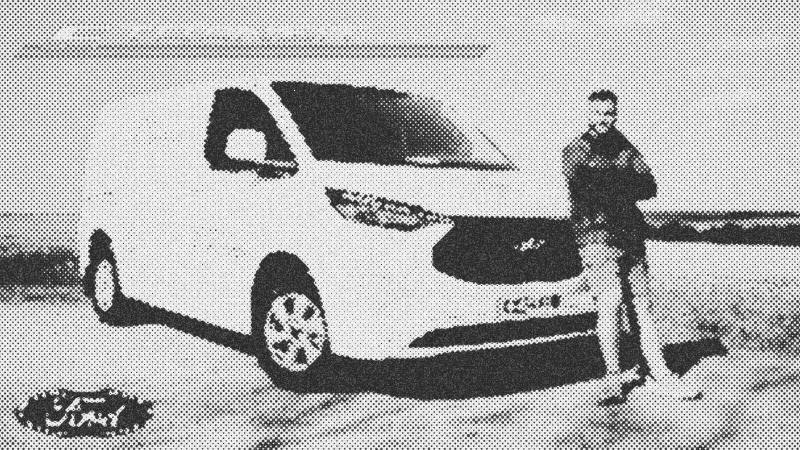
"Ergonomics and Digital Integration"
The interior environment of the E-Transit Custom, largely consistent across the range, impresses with its inherent design. The elevated driving position, a hallmark of vans, provides excellent visibility. Powering up the vehicle reveals the substantial Sync 4 infotainment screen, featuring Apple CarPlay and Android Auto as standard. This system, proven user-friendly in other Ford models like the Ranger Wildtrak X, offers various drive modes: Normal, Eco, Sport, Slippery, and Tow. The convenience of one-pedal driving is an optional activation, favored by many electric vehicle operators. Charge settings and driver assistance features are accessible, though the speed limit assist requires manual deactivation upon each start, and the lane-keeping system only offers 'aid' or 'alert,' never a full deactivation. A digital driver's display intuitively presents regenerative braking feedback and other vital information. The flat floor design contributes to a remarkably spacious cabin, complemented by ergonomic seating and an abundance of storage—USB-C and USB sockets, numerous cup holders, and capacious gloveboxes both standard and overhead. The steering wheel, distinctively flat-bottomed and flat-topped, enhances the contemporary feel. Notably, the absence of vanity mirrors on either the driver or passenger side is a minor oversight in an otherwise well-appointed cabin.
"Dynamics: A Shift in the Van Paradigm"
The driving experience marks a significant departure from traditional vans. The E-Transit Custom's electric powertrain eliminates the familiar diesel engine drone, ushering in an almost unsettling quietness. This is not merely an electric motor retrofitted; the vehicle feels meticulously engineered. Power delivery, even in Normal mode, is progressive, avoiding abruptness. The rear-wheel drive configuration, unique among current Transit variants (diesel and hybrid are front-wheel drive), paired with a low center of gravity from the underfloor motor placement, transforms the handling characteristics. The steering feels natural and light, ideal for urban navigation. In Sport mode, particularly through bends, the van exhibits surprising agility, more akin to a compact SUV than a utilitarian carrier. This responsiveness, coupled with independent rear suspension (a departure from the bouncy torsion beams of conventional vans), allows it to absorb road imperfections with remarkable composure, providing a comfortable ride even over extended periods. Aesthetically, the exterior has received a substantial update, with modern front and rear lighting and a distinctive light bar, creating a visually appealing commercial vehicle.
"The Verdict: A Purpose-Driven Evolution"
The E-Transit Custom presents a compelling case for specific commercial applications. For businesses operating strictly within a local urban or city environment, where daily mileage remains moderate and charging infrastructure is accessible, the electric variant is unequivocally the superior choice. However, for those navigating more rural landscapes or undertaking daily medium-range journeys, the hybrid Transit offers a pragmatic blend of electric efficiency and fuel flexibility. Long-haul operators traversing motorways extensively would still find the diesel variant the most suitable option due to its established range and refueling convenience. The E-Transit Custom marks an important evolutionary step for Ford, offering a refined, quiet, and surprisingly dynamic driving experience tailored for the demands of localized, efficient operation. It is a workhorse re-envisioned for a new era, demanding a careful alignment of its capabilities with specific operational needs.
- 11 kW charger
- 5%· charging types
- 7.4 kW charger
- 5%· charging types
- E-Transit Custom
- 5%· vehicle models
- Eco
- 5%· drive modes
- Ford
- 5%· companies
- Other topics
- 75%
Is This The Best Electric Van of 2025? | Ford E-Transit Custom Review
WatchDriven+ // 11:51

Your new home for automotive content. What to expect: - Track Battles - New car reviews - Modern Classics - Comparison tests Presenter: Max Haftavani (@maxhaftavani)