Alaska Gold Fever player prioritizes massive bucket upgrade over family rescue
Tactical Evaluation of Wilderness and Mountain Mine Campaigns
The cold reality of prospecting in Alaska Gold Fever forces players to confront a harsh logistical truth: moving dirt is the ultimate bottleneck. In this operational theater, players must navigate a complex economy of scale while balancing the immediate costs of tool upkeep, employee wages, and transport fees. The primary focus of this tactical analysis centers on two contrasting claims—the notoriously disappointing Wilderness Mine and the labor-intensive Mountain Mine. Navigating these underground networks reveals the stark difference between raw resource extraction and optimized logistic pipelines. Success relies on balancing physical labor, machinery upgrades, and infrastructure.
Historically, the Wilderness Mine has suffered from visual glitches where gold deposits do not render on screen. Players must ignore the lack of visual feedback and rely entirely on systematic extraction. By implementing a methodical excavation grid, the player demonstrated that invisible wealth still exists within the dirt nodes. However, operating without proper tool efficiency turns this endeavor into a punishing grind. The strategic shift from manual panning to mechanized, rail-supported mining represents the dividing line between bankruptcy and industrial scale.
Strategic Purchases and the Logistics of Scale
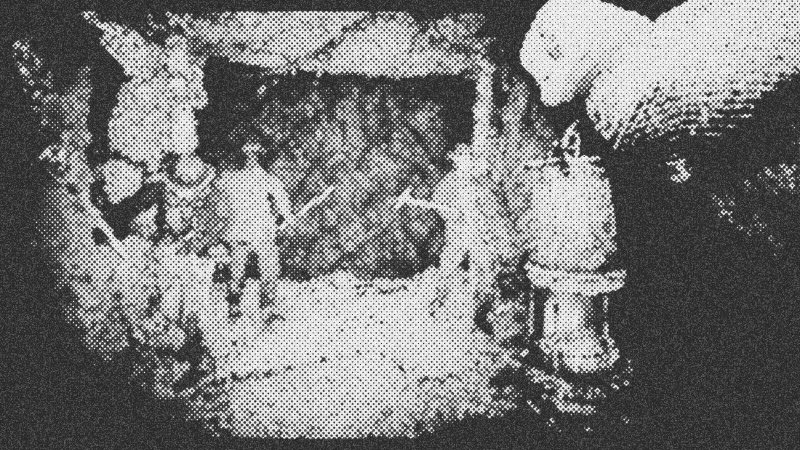
Every prospector eventually faces a critical crossroad between long-term infrastructure investment and immediate liquid capital. In this campaign, Drae made a decisive move to purchase consecutive bucket upgrades, culminating in the acquisition of the Huge Bucket for $800. This immediate cash drain temporarily crippled fast-travel capabilities, forcing a manual trek through the dangerous Alaskan wilderness to pay employees at the Mountain Mine. While a $250 jump to a large bucket and subsequent leap to the "biggest bucket in all of Alaska" seems reckless, the throughput increase proved essential.
To complement the raw carrying capacity, the player invested in track infrastructure and an upgraded cart. This decision highlights a core operational principle: transport efficiency must match extraction rates. However, laying down rails in the cramped, poorly cleared corridors of the Wilderness Mine introduced unexpected collision issues. Supports interfered with track placement, requiring painful manual clearing. Despite these minor hiccups, the implementation of a functional rail system with manual switching levers represents a significant evolution in tactical efficiency.
Yield Metrics and Tool Performance Breakdown
A granular look at the numbers shows that raw effort does not always correlate with high-value yields. In the Wilderness Mine, visual cues failed to display gold sparkles, prompting community advice to mine regardless of visual feedback. The metrics proved this strategy valid: a single run with the huge bucket and mine cart returned 23 iron ore alongside 677 gold flakes and three gold dust units. Subsequent runs yielded upwards of 770 gold flakes per cartload, demonstrating a remarkably consistent flake yield despite the absence of larger nuggets.
Crucially, the performance of mining tools dictates the pace of progression. Operating with a basic stone axe severely limited wood collection rates—a vital activity for crafting support structures and smelting fuel. Upgrading to an iron axe for $40 cut wood-chopping times in half, illustrating how small capital outlays yield massive time-saving dividends. Conversely, the heavy reliance on dynamite in hard rock proved highly inefficient. While dynamite can clear vast pockets of loose dirt in seconds, hard rock walls resist the explosive force, rendering the expensive sticks a waste of capital.
Unearthing Hidden Corridors and Dead Ends
The turning points of this mining operation occurred at the literal ends of the earth. While digging deep into the Wilderness Mine's right-hand corridor, a massive blast exposed an unexpected chamber containing historical remains. Inside, the player discovered a sniper rifle, a revolver, ammunition, and three high-value gems: an emerald, a ruby, and a topaz. This discovery provided a temporary injection of wealth but ultimately led to a dead end. The entire right corridor abruptly terminated, forcing a rapid reallocation of labor and capital.
After abandoning the Wilderness Mine, the player shifted operations to the Mountain Mine, where miners had been working a different seam. Pushing a new side corridor with 12 sticks of dynamite yielded dynamic results. Unlike the hard rock of the Wilderness Mine, this terrain consisted of soft, light dirt that easily gave way to explosions. This rapid advancement allowed the player to carve out a deep, downward-sloping tunnel. The highlight of this push was the discovery of a sapphire, though it highlighted a frustrating game mechanic: players lose raw inventory gems if they fall or fast-travel improperly.
Future Operational Planning and Resource Allocations
The ultimate goal of accumulating $5,000 to bring the protagonist's family to Alaska remains unfulfilled, largely due to the player's preference for cosmetic and tool upgrades. Purchasing leather pants and custom clothing exhausted hard-earned profits from gold bar sales. If future operations are to succeed, the player must adopt a strict capital-reinvestment strategy.
The Mountain Mine presents a highly lucrative target due to its soft dirt and cooperative AI miners. Future shifts must focus on extending the rail network deep into the newly blasted downward corridors of the Mountain Mine. Rather than manually hauling buckets up steep inclines, establishing a continuous cart system will maximize throughput. Furthermore, the player must maintain a steady supply of smelting materials, particularly wood sticks and mercury. Running out of sticks during a high-volume melt cycle stalls the entire supply chain, leaving valuable gold sitting unrefined. The transition from a chaotic solo prospector to an industrial mining supervisor requires structured logistics, reliable supply runs, and a ruthless focus on the bottom line.
- Alaska Gold Fever
- 50%· products
- Drae
- 50%· people
Building a Gold Mining Empire Deep in Alaska
WatchDrae // 44:04

Hey, I'm Drae I'm an Indie-focused gaming channel that produces at least one new video every day and I have been doing so for over a decade. I don't stick to one game or genre so if a flavor is your spice of life, you came to the right place! =========================================== Find More About Me At www.draegast.com ========================================== Sponsorship Requests: [email protected] Other Inquiries: [email protected]