DrainSim update tests players with massive subway floods and broken physics
The city of DrainSim finds itself submerged under an unprecedented deluge, and Dre is the technician answering the call. The day begins at the downtown subway station, a subterranean labyrinth where the utility room's pump has failed and manhole covers have vanished, leaving the transit system in a state of aquatic chaos. Despite the dire circumstances, the local train conductor remains inexplicably committed to his schedule, driving what is effectively a submarine through chest-high waters. This setting establishes the stakes: society needs saving, and the tools at hand are a mix of high-tech pumps and a trusty rake.
To prepare for the escalation in difficulty, Dre invests $2,000 in the Generator Mark 2. This red-chassis upgrade promises superior power delivery, though its sheer size—taking up twice the space of a standard unit—raises immediate questions about efficiency and spatial management. The goal is clear: stabilize the downtown station before tackling a even more formidable challenge at a local construction site.
Subterranean hydrodynamics and the daisy chain strategy
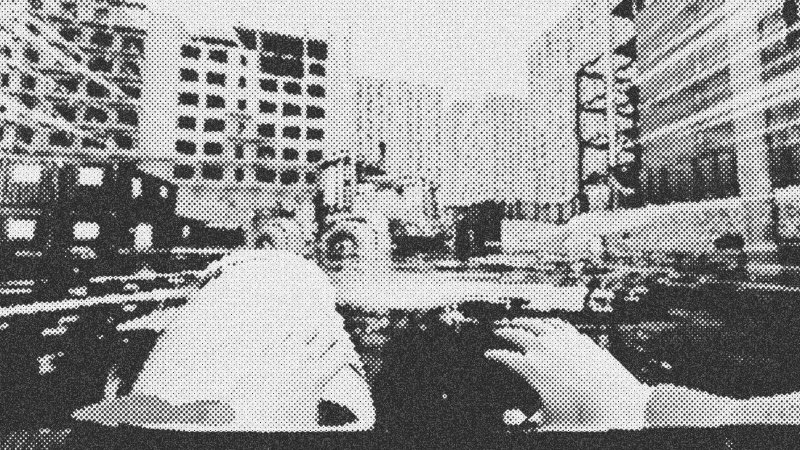
The subway station level serves as a masterclass in layered drainage. Initial progress is hampered by invisible walls and quirky level design that prevents Dre from accessing certain stairs, but the core gameplay loop remains intact. The first priority is locating the control room. Once inside, a simple wrench repair restores partial functionality to the station's internal pump systems, though they require a manual boost to reach peak efficiency. This is where the Generator Mark 2 earns its keep, powering submersible pumps that begin the slow process of reclaiming the escalator banks and platforms.
Efficiency in DrainSim often comes down to clever positioning. By utilizing the platform's storm drains and manholes, Dre establishes a "daisy chain" of pumps. One pump pulls water from the deepest sections of the tracks, while another, positioned higher up, receives that water and directs it into a storm drain that leads out of the station. This method proves far more effective than relying on the small, frequently clogged side drains. As the water recedes, the satisfying visual of the red-tiled floor emerging from the murky depths provides a sense of accomplishment, even if the physics occasionally allow water to clip through solid glass walls. The station is eventually declared operational, allowing thousands of virtual commuters to return to their digital meetings.
Construction site chaos and the physics of failure
The victory at the subway is short-lived as a new crisis emerges at a massive construction site. This level represents a significant leap in scale and complexity. Thousands of gallons of water pour into foundation pits, and both crane platforms are completely submerged. The mission brief explicitly suggests bringing a shovel and a bucket, hinting that mechanical pumps alone won't suffice. Unlike the subway station, where water was largely stagnant, the construction site features active flow. If the incoming torrent isn't diverted, the pumps will simply be fighting a losing battle against a constant supply of new water.
This level also introduces the first major technical hurdles for Dre. Inflatable barriers, designed to block or redirect water, prove notoriously finicky. Several attempts to deploy these barriers result in them vanishing into the geometry or simply failing to inflate despite being connected to the Generator Mark 2. At one point, a physics glitch causes Dre to sink uncontrollably into the mud, forcing a full tool reset. The frustration is palpable; the game's mechanics, while satisfying when they work, struggle under the weight of the massive water volume and the complex terrain of the foundation pits.
Engineering a poop levee through brute force
When technology fails, Dre turns to the most primitive and reliable tool in his arsenal: the shovel. Realizing that the inflatable barriers aren't holding back the flow, he begins an arduous process of manual terrain deformation. This involves digging up dirt from one area and piling it into another to create a massive moat and levee system. This "poop levee," as Dre affectionately calls it due to the brown texture of the digital soil, is designed to redirect the incoming water away from the foundation pits and toward a specific drainage point on the cliffside.
This process is neither fast nor glamorous. It requires a deep understanding of the map's topography, as water naturally seeks the path of least resistance. By creating a higher wall of dirt and a deeper trench, Dre forces the flood to bypass the sensitive construction zones. This brute-force approach, while time-consuming, proves more effective than the glitchy high-tech tools. It transforms the gameplay from a simple simulation into a high-stakes civil engineering project. Every shovelful of dirt is a calculated move to stabilize the environment and allow the pumps to finally make headway in the deeper pits.
The mystery of the phantom flood and the lesson of persistence
Midway through the construction site ordeal, a startling revelation occurs. After a power outage forces a game restart, Dre discovers that the water level is significantly lower than it was during his first attempt. It appears he had been fighting a "phantom flood"—a glitch that had maxed out the water volume to an impossible degree from the start of the level. This discovery is both a relief and a source of immense frustration. The hours spent building massive dirt dams were, in many ways, a response to a level of difficulty that the developers never intended.
However, this setback highlights a core theme of the Dre experience: persistence in the face of the absurd. Whether fighting a legitimate level challenge or a buggy physics engine, the satisfaction comes from the eventual restoration of order. The construction site remains unfinished after four hours of effort, but the baseline has been established. The water is flowing where it belongs, the deep drains are finally uncovered, and the path to a dry foundation is clear. The lesson learned is one of patience; in the world of simulated drainage, sometimes the most important tool isn't a pump or a shovel, but the willingness to restart and try a different angle when the world literally overflows around you.
- Dre
- 69%· people
- Generator Mark 2
- 19%· products
- DrainSim
- 13%· products
Draining this Flooded Construction Site Broke Me - DrainSim
WatchDrae // 1:11:54

Hey, I'm Drae I'm an Indie-focused gaming channel that produces at least one new video every day and I have been doing so for over a decade. I don't stick to one game or genre so if a flavor is your spice of life, you came to the right place! =========================================== Find More About Me At www.draegast.com ========================================== Sponsorship Requests: [email protected] Other Inquiries: [email protected]