Nature's Path fails to turn National Park management into compelling gameplay
The deceptive charm of Faremont National Park
Nature's Path: National Park Simulator presents an initial hook that is difficult for any simulation fan to resist. The premise places you in the boots of a newly minted ranger tasked with rehabilitating Faremont National Park, a sprawling, rundown natural preserve suffering from neglect and limited funding. From the first few moments, the aesthetic world-building hits all the right notes. The redwoods are towering, the lighting captures the soft glow of a wilderness morning, and the ambient sounds of the forest create a genuine sense of place. It feels like a space where a player could lose themselves in the quiet dignity of environmental stewardship.
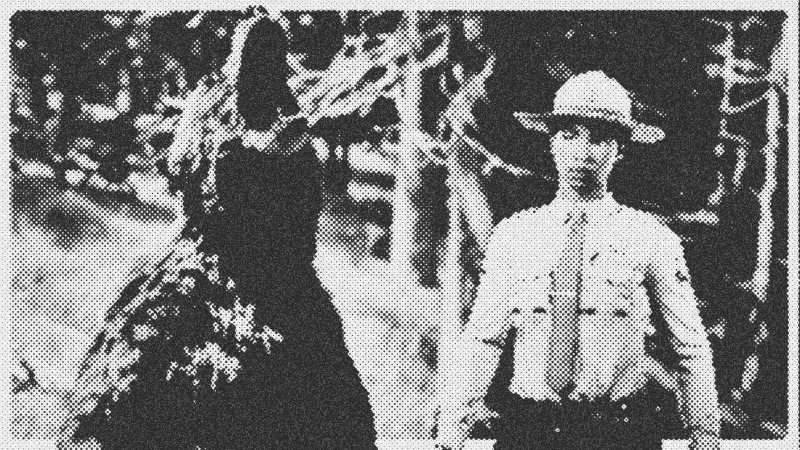
However, the gap between visual atmosphere and mechanical engagement becomes apparent almost immediately. While the world looks like a handcrafted labor of love, the actual interactions within that world feel thin. You start with the basics: repainting park fixtures, clearing fallen branches with an axe, and picking up discarded trash. It’s a classic "fixer-upper" loop that has worked in countless other simulators, yet here, the tasks feel less like building a legacy and more like checking off a grocery list in a beautiful forest.
Mechanical loops and the grind of maintenance
The core gameplay loop centers on a variety of mundane responsibilities that, in theory, should simulate the life of a ranger. You engage with the public by providing directions to landmarks like Strawberry Overlook or checking visitor permits for validity. There is a light survival or rescue element as well, such as locating hikers suffering from hypothermia and signaling for medical evacuation. These moments provide brief flashes of variety, but they are quickly buried under the weight of repetitive maintenance.
One of the more interesting additions is the photography system. As a ranger, you are encouraged to document the park's flora and fauna, capturing "action shots" of Cottontail rabbit or Mule deer to fill out an information board. This feels like a nod to Pokemon Snap, where observation is rewarded with knowledge about animal behavior and conservation status. You learn that Big horn sheep are remarkable climbers, even when the game's AI occasionally causes them to get comically stuck on the environment. But even this system struggles to maintain interest once the novelty of finding a new flower, like the Indian paintbrush, wears off.
A struggle with technical stability and pacing
The experience of playing Nature's Path: National Park Simulator is frequently interrupted by technical friction. In a game where immersion is the primary selling point, encountering "soft-locks"—where the character becomes unable to move or interact after a menu transition—is a significant deterrent. These glitches don't just break the flow; they necessitate reloads and lost progress, which is particularly frustrating in a game that relies on a slow, methodical pace.
Furthermore, the movement across the map can feel like a chore. While the inclusion of a ranger truck allows for faster travel along the road network, much of the work must be done on foot. Navigating steep inclines often leads to the player character sliding or getting stuck in the geometry, forcing a return to the designated trails. While staying on the path is thematic for a park ranger, the lack of freedom to explore the dense woods without mechanical punishment feels restrictive in a sandbox environment. The lag in populated areas like the visitor center further hampers the experience, making the simple act of picking up litter feel sluggish.
The repetitive reality of the ranger's path
By the second or third in-game day, the central problem of the title becomes unavoidable: it is extremely repetitive. The tasks do not evolve in complexity or stakes. You are repainting the same benches and clearing the same trail debris day after day. A quest involving a "mischievous" Raccoon named Todd offers a bit of narrative personality, but the actual requirements—follow tracks and take a photo—don't deviate from the established formula.
There is a missed opportunity here for a deeper narrative or a more robust management system. While you are told the park has "limited funds," you don't feel the weight of those financial decisions. You aren't hiring staff or choosing between trail expansions and wildlife conservation programs. You are simply a one-person cleanup crew. Without a compelling story to drive the player forward, the act of repairing the same sign for the 15th time loses its charm rapidly. The developer has created a beautiful stage, but they haven't written a play that keeps the audience in their seats.
Final Verdict
Nature's Path: National Park Simulator is a game that works best as a digital relaxation tool rather than a compelling simulation. If your goal is to walk through a pretty forest and perform low-stress tasks while listening to a podcast, it might satisfy that niche. However, for those looking for deep mechanics or a meaningful progression system, the game falls short. The repetitive gameplay loop and technical instabilities make it difficult to recommend for a long-term series or a deep dive. It is a scenic walk that unfortunately leads nowhere in particular.
- Nature's Path: National Park Simulator
- 21%· games
- Big horn sheep
- 7%· animals
- California blackberry
- 7%· flora
- Cottontail rabbit
- 7%· animals
- Eerie Spring Trail
- 7%· places
- Other topics
- 50%
I Regret Becoming a National Park Ranger
WatchDrae // 36:30

Hey, I'm Drae I'm an Indie-focused gaming channel that produces at least one new video every day and I have been doing so for over a decade. I don't stick to one game or genre so if a flavor is your spice of life, you came to the right place! =========================================== Find More About Me At www.draegast.com ========================================== Sponsorship Requests: [email protected] Other Inquiries: [email protected]