The Art of the Unclog: Masterminding Water Physics in Drain Sim
The city has surrendered to the deluge, and emergency vehicles sit paralyzed in a gridlock of rising water. While the municipal crews are nowhere to be found, a lone figure arrives with a plunger on his belt and a rake in hand. This is the world of Drain Sim, a simulation game that taps into a strangely universal human satisfaction: the sight of standing water finally finding its way down a pipe. What begins as a simple tutorial in clearing autumn leaves from a storm drain quickly evolves into a high-stakes engineering puzzle involving fluid dynamics, terraforming, and the strategic deployment of industrial pumps. There is something fundamentally engaging about the rhythm of the work—the slow buildup of pressure as you clear debris and the sudden, swirling vortex of success.
Tools of the Trade and Tactical Drainage
Restoring order to a flooded neighborhood requires more than just manual labor; it demands an understanding of the environment and the right hardware. Success in Drain Sim hinges on your inventory management. A basic rake is essential for the early stages, pulling back the 'poop' and leaves that choke the storm drains. However, as the water deepens, you must pivot to more advanced technology. The water vacuum provides a quick fix for shallow puddles on concrete, though its limited capacity means constant trips to dump the collected liquid. For the serious deluges, especially in basements or sunken storefronts, the submersible pump becomes the MVP. Watching the water level drop against a basement wall as the pump hums to life is where the game’s physics engine truly shines. You have to manage power too, daisy-chaining generators with cables to ensure your equipment stays operational while keeping the sensitive electronics safely above the rising tide.
The Passive-Aggressive Art of the Neighborly Moat
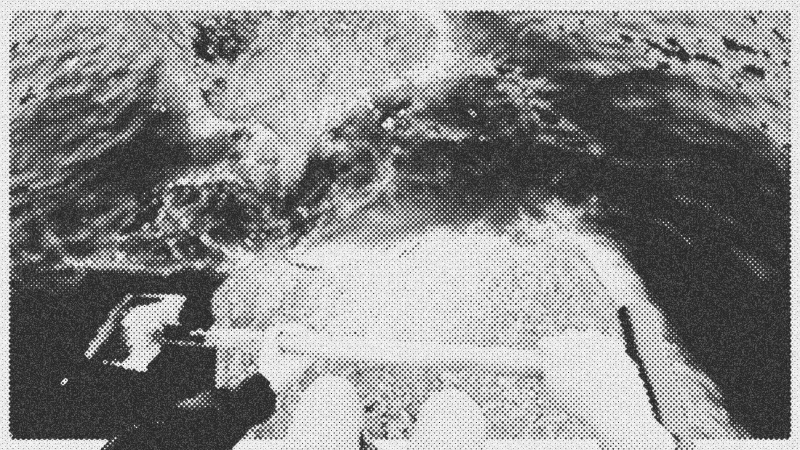
One of the most intriguing mechanics introduced is ground terraforming. When the drains are overwhelmed or simply non-existent, you have to play God with the landscape. Armed with a shovel, you can carve out trenches to redirect the flow. In one particularly memorable suburban mission, the solution involves more than just cleaning a pipe; it requires digging a literal moat to save a backyard. The water physics are remarkably reactive, pushing back against the player as the flow intensifies. There is a dark humor in the gameplay as well—specifically the ability to solve your own flooding problem by simply digging a trench that leads directly into your neighbor's yard. It transforms the experience from a civic service simulation into a sandbox of passive-aggressive hydraulic engineering, where the goal is simply to make the red 'danger' zones disappear, regardless of whose fence the runoff ends up under.
Engineering Under Pressure at the Local Cafe
As the missions progress, the complexity shifts from residential yards to urban infrastructure. A flooded cafe presents a unique challenge: a sunken entrance that acts as a natural reservoir, trapping several feet of water. Here, the vacuum is useless against the depth, and the rake finds nothing to grab. This scenario requires a multi-stage approach. You first deploy a generator on dry land, run cables down into the drink, and drop a pump to begin the heavy lifting. The turning point comes when you realize that even with the best equipment, gravity is your primary enemy. You have to use a squeegee to manually guide the final inch of water toward the suction point. It is a grueling process that highlights the game's commitment to realism—the cafe might look 'mostly' dry, but the mission won't trigger as complete until you have hunted down every last sheen of moisture on the tile floor.
Magnet Fishing and the Submerged Side Hustle
When the sun sets and the pumps are doing their work, the game offers a detour into the world of magnet fishing. It is a strange but welcome addition to the drainage loop. Casting a high-powered magnet into the murky river reveals a graveyard of local history. While much of it is magnetic trash—trash lids and lunchboxes—the river occasionally yields significant treasures. Pulling a bank safe from the silt is the ultimate adrenaline spike in an otherwise meditative game. Cracking these open reveals gold bars and bundles of cash, providing the necessary capital to upgrade your kit for the harder levels. This 'side hustle' isn't just a distraction; the money earned here allows for the purchase of the Mark III and Mark IV pumps, which offer significantly higher flow rates that become essential for the mountain-runoff challenges.
The Mountain Road and the Water Boss
The true climax of this hydraulic journey takes place on a forest road, where the water isn't just standing; it’s attacking. Unlike the static floods of the city, the mountain road is subject to constant runoff from the peaks. Here, the player faces a 'water boss' of sorts—a never-ending flow that refills the area as fast as you can drain it. The strategy involves a massive terraforming project, digging a diversionary canal while simultaneously deploying inflatable barriers to hold back the tide. This level tests your patience and your ability to adapt. At one point, a 'water pyramid' glitch—a strange accumulation of physics-defying liquid—threatens to soft-lock the progress. But by repositioning the heavy-duty Mark III pump and meticulously clearing a buried storm drain that requires manual shoveling underwater, the flow finally breaks. It is a twenty-minute tug-of-war against a millimeter of water that feels like a hard-won victory when the road finally clears.
Lessons from the Trench
The takeaway from these flooded streets is that management is a game of inches and angles. Drain Sim teaches a peculiar kind of environmental awareness: you start to see every slope and every dip in the pavement as a potential path for disaster. The game rewards curiosity and the willingness to experiment with different tool combinations. Whether you are redirecting a mountain stream or squeegeeing a cafe floor, the core satisfaction remains the same. It is the triumph of human ingenuity over the chaotic, unyielding nature of fluid. Restoring the flow isn't just about finishing a level; it’s about the peace of mind that comes when the whirlpool finally gurgles and the street is dry once again.
My Shovel vs This Entire Flood - DrainSim
WatchDrae // 47:27

Hey, I'm Drae I'm an Indie-focused gaming channel that produces at least one new video every day and I have been doing so for over a decade. I don't stick to one game or genre so if a flavor is your spice of life, you came to the right place! =========================================== Find More About Me At www.draegast.com ========================================== Sponsorship Requests: [email protected] Other Inquiries: [email protected]