Drae sacrifices nose to join mutant bird army in Birds Watching
The world as we know it has ended in a haze of chemical smog and perpetual flame, but on the isolated peak of Grand Talk, one hermit remains. This is the starting point for Birds Watching, a narrative indie horror game that subverts the serene expectations of its title. Drae guides us through a landscape where the atmosphere is thick with more than just ash; it is heavy with the paranoia of a man convinced he is the last human alive. Living in a small, walled-off farm, the protagonist’s only connection to life is a pair of binoculars and a collection of local avian species. However, these birds are not merely scenery. They are the gatekeepers of the mountain’s secrets and, as the story unfolds, the only allies against a rising military threat led by a man named Kyo.
Initially, the game presents a familiar gameplay loop of finding and cataloging species like the Redstart and Swallow. The mechanics shift quickly from passive observation to active engagement when a radio transmission cuts through the static. Kyo, a Brigadier Officer leading a group of survivors, demands submission and tasks the player with finding a hidden food reservoir at Fort T. This intrusion into the hermit's peaceful isolation introduces the rising action, forcing a choice between serving a human tyrant or siding with the creatures of the air. The discovery that the birds can communicate—specifically a Hoopo named Sharon—shatters the grounded reality of the simulation. Sharon warns that Kyo is a predator who will destroy the mountain's fragile ecosystem, urging the player to gather a bird army to repel the human invaders.
Feathers and flesh melt in the smog of Grand Talk
The narrative takes a grotesque turn as the player attempts to earn the trust of the mountain's residents. It is not enough to simply watch them; one must become them. This thematic shift highlights the game’s analytical look at environmental adaptation and the loss of humanity. Drae encounters birds like Craig Martin and a cynical Blue Jay who harbor deep-seated resentment toward humans, blaming them for the world-ending fires. To bridge this divide, the protagonist undergoes a series of disturbing physical transformations. First comes the outer layer—gluing resin-soaked leaves to bare skin to mimic plumage. When that fails to convince the more skeptical birds, the ritual demands internalizing the avian lifestyle by consuming worms, a scene that pushes the boundaries of the short narrative's horror elements.
As the clock ticks toward 19:00, the deadline set by Kyo, the demand for commitment reaches its peak. The birds demand "tenacity," a quality they believe humans lack. To prove his substance, the protagonist allows Sharon to use her claws to excise his nose and break his facial bones to make room for a prosthetic beak. This turning point is more than just a body-horror set piece; it represents the total abandonment of the human identity in favor of a new, mutated survival. The game’s mechanics reflect this descent into madness or evolution, as the player's interactions with the birds change from stilted dialogue to a mutual understanding of their shared, polluted reality. The protagonist is no longer a man watching birds; he is a fledgling waiting to defend his nest.
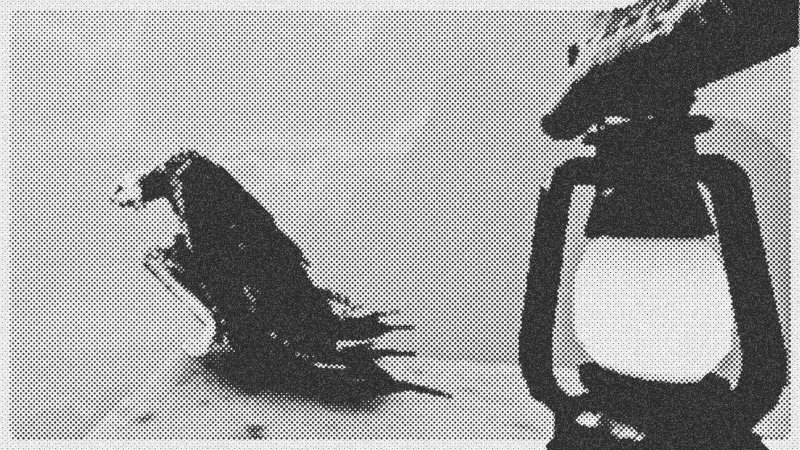
Mutated biology reveals the horror of the Fort T archives
While gathering allies like the House Sparrow and a remarkably philosophical Owl, the player eventually reaches Fort T. The archives found within provide the scientific backbone to the supernatural events on the mountain. Notes left by former inhabitants reveal that the fires released a cocktail of arsenic, nickel, and vanadium into the air. This continuous exposure didn't just kill; it triggered radical physical mutations and severe hallucinations. This revelation casts a shadow over the entire experience—is the protagonist truly turning into a bird, or is he a victim of chemical delirium? The game leaves this open to interpretation, though the physical presence of Kyo and his brigade suggests that the world has indeed changed in fundamental, terrifying ways.
Kyo himself is a testament to this new world order. When he finally confronts the player at the old gate, he reveals that his own biology has adapted. His skin withstands heat, and his bones have become hollow and light. He sees himself as a creature chosen by history to inherit the earth, intending to wipe out any remaining "soft" humans. The climax of the game is not a traditional firefight but a confrontation of ideologies. Kyo views his mutations as a way to maintain military dominance, while the protagonist has used his transformation to find community with the mountain's original inhabitants. The tension peaks as Drae refuses to open the gate for the brigade, choosing instead to trust in the screech of the wild.
The bloodied beak and the birth of a new leader
The resolution is swift and brutal. When the protagonist lets out a final, mighty screech, the birds he spent the day recruiting—now revealed to be massive, menacing mutants rather than the small creatures seen through the binoculars—descend upon Kyo. The Brigadier, for all his talk of being a "reborn" creature of history, is revealed to be insignificant. The very monsters he claimed to command turn on him, devouring his flesh in a display of primal justice. The humans who sought to conquer the mountain are silenced forever, leaving the protagonist as the "supreme wild leader" of Grand Talk. The game concludes with the somber realization that the last human being has died, not through violence, but through the total completion of his metamorphosis into something else.
Reflecting on the experience, Birds Watching serves as a stark allegory for the cost of survival in a dying world. The protagonist's journey suggests that to survive the end of the world, one cannot simply hide behind a wall; one must be willing to lose everything that makes them human. The community the hermit found was real, but it was built on blood, bone-shifting, and the consumption of the self. As Drae notes, the ending is abrupt but deeply resonant. It challenges the player to consider if winning is worth the price of the reflection in the mirror. On Grand Talk, the birds are finally real, but the man who watched them is gone, replaced by a creature that no longer needs binoculars to see the truth of the fire.
- Kyo
- 28%· people
- Drae
- 14%· people
- Grand Talk
- 10%· places
- Sharon
- 10%· animals
- Birds Watching
- 7%· games
- Other topics
- 31%
A Game About Bird Watching
WatchDrae // 55:59

Hey, I'm Drae I'm an Indie-focused gaming channel that produces at least one new video every day and I have been doing so for over a decade. I don't stick to one game or genre so if a flavor is your spice of life, you came to the right place! =========================================== Find More About Me At www.draegast.com ========================================== Sponsorship Requests: [email protected] Other Inquiries: [email protected]