Returns Outlet Simulator forces players to gamble on high-stakes mystery pallets
The morning air in the shop is thick with the scent of recycled cardboard and the faint, ozone tang of questionable electronics. Standing in the middle of the cluttered floor of Returns Outlet Simulator, it is easy to see the appeal of the hustle. The game transforms the mundane labor of a liquidation warehouse into a high-stakes psychological drama. You start with a few hundred dollars and a dream of turning someone else’s discarded Amazon return into pure profit. It is a world where a "mystery 420 blaze it" pallet can either be the foundation of your retail empire or a $420 pile of broken keyboards and regret. The shop itself is a work in progress, featuring a new sliding smart door that feels almost too sophisticated for a place that primarily deals in "crappy returns for absurd prices."
Success in this landscape requires more than just a fast trigger finger on the barcode scanner; it requires a cold, analytical eye for inventory management. The shop recently saw an update where shelving racks finally disclose their contents, a small but vital quality-of-life improvement for anyone who has ever accidentally thrown their work phone into a pile of stock. The early hours are spent processing a stream of customers buying Yeti microphones and shavers, slowly building a bankroll that feels like it’s barely keeping pace with the shop's expansion needs. There is a specific rhythm to the work: scan, cash out, sort the trash, and look for the next big buy. The goal is simple, but the execution is fraught with the constant risk of the unknown.
Hiring Taylor and the overhead of automation
Expansion brings its own set of headaches, primarily in the form of labor. Reaching level 11 unlocks the ability to hire employees, a prospect that sounds like a dream for anyone tired of manually restocking shelves. Hiring Taylor for a steep $200 a day feels like a massive leap forward, but the reality is a steep learning curve in management. The game does not hold your hand; if your shelves aren't coded correctly with the right categories, your new hire will stand there staring at the wall while your backroom overflows. The confusion stems from the "price tag sampler," a tool that sounds like a paint swatch but is actually the key to telling your employee what goes where.
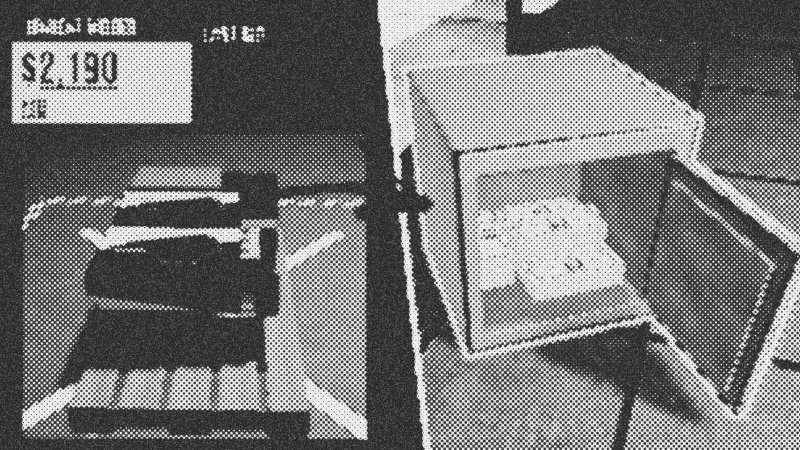
Watching an employee work is a lesson in patience and the hidden costs of automation. While Taylor eventually starts moving stock, the investment feels shaky when you realize she won't handle the checkout counter. You are still tethered to the register, watching $200 drain from your account daily while you scream at an NPC for not picking up a used keyboard. This stage of the game highlights the friction between manual labor and shop efficiency. You want to be out there hunting for rare collectibles, but the reality of a retail simulator is that someone has to stay behind and give change for a $15 universal battery charger. It’s a grind, but a necessary one to reach the truly high-limit rooms of the liquidation world.
Gambling five grand on a DSLR lens mystery
All the penny-pinching at the register leads to the game's true heart: the mystery pallets. There is a visceral thrill in dropping $5,000—virtually all your liquid capital—on a single crate labeled "Mystery Excess." It is the ultimate tabletop gamble translated into digital form. The initial reveal of the $5,000 crate is a crushing blow; the box is tiny, and it seems to be filled with $5 pen drives and $15 headphones. This is the moment where the game tests your resolve. You start ripping open boxes, bracing for a total loss, until you hit the jackpot. Tucked away in the corner are multiple DSLR lenses, each worth hundreds of dollars.
This swing from despair to euphoria is what keeps players locked in. Those lenses didn't just break even; they turned a potentially catastrophic loss into a five-figure payday. The repair mechanic adds another layer to this strategy. A damaged Zoomy microphone might only be worth $75 as junk, but with a network card and a capacitor, it becomes a $400 premium item. Suddenly, you aren't just a shopkeeper; you are a technician, scouring your trash for the specific components needed to revive a dead piece of tech. The warehouse becomes a graveyard of electronics waiting for a second chance, and your ability to spot the value in the wreckage determines your profit margin.
Breaking the bank with a high-interest loan
The hunger for growth eventually leads to the siren song of the loan department. With a $5,000 loan and twenty days to pay it off, the pressure is on to find a crate that delivers. The target is a $9,000 pallet of "A-Grade" electronics, a beautiful, pristine-looking box that promises high-end collectibles. The fear of being "bamboozled" by a pretty box is real. When the $9,000 crate opens to reveal rollerblades and building blocks, the panic is palpable. Rollerblades aren't going to pay back a high-interest loan. However, the game once again rewards those who dig deeper. Hidden beneath the generic sporting goods are VR headsets and high-end subwoofers.
This cycle of risk and reward is punctuated by the introduction of online storage auctions. The auction house is a frantic environment where you compete against NPCs like Mary Sue, who seems to have an bottomless pit of cash and a desire to outbid you on everything. Winning a lot for $950 feels like a victory, especially when it turns out to contain Game Boy systems and rare tech. The auctions represent the endgame of the current simulation, moving away from fixed-price pallets into a more competitive, predatory market. It’s a place where your knowledge of market prices for Elemental Titans cards or high-end drones is the only thing standing between you and bankruptcy.
Building a recycling empire in the backroom
The final evolution of the shop involves turning the waste stream into a secondary revenue source. Investing $600 in specialized recycling bins seems like a waste until you realize that every piece of trash discarded provides both experience points and cash. By connecting your breakdown machine to the waste bins, you create a seamless loop of profit. You buy a pallet, strip the valuable items, repair the high-end tech, and then recycle the rest for a small kickback. This "circular economy" within the game is the key to hitting the $10,000 mark needed for a self-checkout machine.
The lesson learned in the trenches of the returns outlet is that volume and repair are the two pillars of retail survival. You cannot rely on the luck of the mystery box alone; you have to have the infrastructure to turn junk into gold. As the shop grows from a dreary room into a $10,000-a-day powerhouse, the focus shifts from individual sales to overall store throughput. The true challenge isn't just knowing the rules of the pallets; it's understanding the heart of the market and how to manipulate it to your advantage. By the time you’re eyeing that self-checkout machine, you’ve stopped being a clerk and started being a mogul, one broken Game Boy at a time.
- DSLR
- 13%· products
- Elemental Titans
- 13%· products
- Game Boy
- 13%· products
- Mary Sue
- 13%· people
- Returns Outlet Simulator
- 13%· products
- Other topics
- 38%
I Bought My First Auction Crate and Found a Safe Full of Cash
WatchDrae // 1:04:12

Hey, I'm Drae I'm an Indie-focused gaming channel that produces at least one new video every day and I have been doing so for over a decade. I don't stick to one game or genre so if a flavor is your spice of life, you came to the right place! =========================================== Find More About Me At www.draegast.com ========================================== Sponsorship Requests: [email protected] Other Inquiries: [email protected]