The Absurd Odyssey of Horsey Game: From Gambling Debts to Genetic Engineering
The journey began with a mysterious link and a twelve-dollar leap of faith into a world that looked like it was painted in a fever dream. Stepping into Horsey Game without a map or a manual, the landscape immediately presented a bizarre juxtaposition of crude aesthetics and high-stakes financial ruin. I found myself portrayed as a character resembling a poorly rendered witch, tasked with a monumental goal: curing a horse flu that carried a staggering price tag of over sixty-two thousand dollars. The only path forward was through the dirt tracks of the racing world, where fortune is as fickle as the physics of the animals themselves. The environment felt vast and unpredictable, a world made in a digital paint program where apples grow on trees and neighbors offer cryptic weather reports while I scrambled to find my first equine companion.
The High Cost of the Track and the Gambler's Fallacy
The initial foray into the economy of Horsey Game was a brutal lesson in probability. With no horse of my own, I was relegated to the betting stands, placing my dwindling cash on racers with names like Lost in your Yonkers and It's pronounced GIF. The racing mechanics revealed a chaotic reality; horses often ran in reverse, veered off the track entirely, or collapsed under the weight of their own strange proportions. Watching a horse you've bet on pull a literal U-turn at the starting gate is a special kind of digital heartbreak. Every loss pushed me further from the fifty dollars needed for a simple lasso, the gatekeeper tool for true progression.
This cycle of betting showcased the game's unique brand of humor. Statistical odds of five-to-one meant nothing when the competitors included shopping carts and reindeer. It wasn't until a beefy, well-balanced horse named Goo Boy entered the fray that the tide turned. There is something remarkably endearing about a fat, pixelated horse that actually understands the concept of moving forward. Goo Boy became the unlikely hero of the early game, providing the financial cushion necessary to finally purchase a lasso and transition from a desperate gambler to a horse owner.
Wild Frontiers and the Dark Reality of Sue's Glues
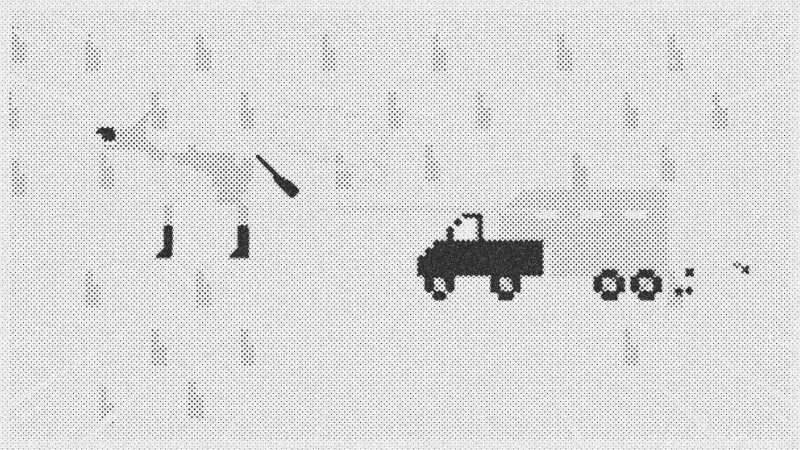
Equipped with a lasso, the world expanded into a sprawling island of diverse biomes. The exploration was not just about finding horses; it was about uncovering the unsettling secrets hidden in the corners of the map. In the southwest, I encountered Ying, a square-shaped, black-and-white horse who looked more like a geometry project than an athlete. Capturing Ying was the first step into management, requiring a home base and a steady supply of apples to keep the stable running. However, the game quickly introduced the "glue" aspect of its simulation.
Sue's Glues, a factory that buys creatures by the pound with "no questions asked," serves as the grim alternative to the racing circuit. The proprietor, Sue, explained the process with a nursery rhyme about stew, goo, and glue that felt deeply out of place yet perfectly consistent with the game’s twisted logic. This revealed a dark economic loop: if a horse cannot race, it still has value as a raw material. Whether it's roadkill found in the crocodile-infested Amazonian region of the map or a failed breeding experiment, every creature has a price. This mechanic adds a layer of ruthless pragmatism to the experience, forcing a choice between sentimental attachment and the cold efficiency of the glue trade.
Restoring Power and the Secrets of the CRISPR Lab
The exploration eventually led to a massive industrial gate protecting a nuclear power plant. Inside, a malfunctioning turbine required a stable runner to restore electricity to the island. This was where the limitations of my square-shaped friend Ying became painfully apparent. To get the turbine spinning, the horse had to maintain a steady gallop without falling or resetting against the sides of the machine. It was a test of physical stability that Ying initially failed, highlighting the need for specialized equipment.
A quest for buried boots south of an apple tree—which cost nearly a hundred dollars for a shovel and a significant amount of trial and error—provided the solution. These boots, once equipped to Ying, granted the stability needed to power the island. This act of restoration opened the doors to the CRISPR Lab, shifting the game from a simple racing sim into a sci-fi genetic experiment. Suddenly, the goal wasn't just to find a fast horse, but to extract DNA and manipulate the very genes of the population. The lab allows for cloning and gene splicing, providing a pathway to create the ultimate racer by combining the traits of different specimens.
Breeding for Bunnies and the Quest for Two Thousand Dollars
One of the most peculiar side-quests involved Bobber's Hutch, home to giant, long-eared rabbit-horses. The owner offered a massive two-thousand-dollar bounty for a horse that descended from specific lineages like Scrambled Eggs or Golgi, provided the offspring was both fast and possessed those signature long ears. This introduced the breeding mechanic, where I had to manage the hunger and exhaustion of my stable to produce the perfect hybrid.
Breeding in Horsey Game is an exercise in unpredictability. Cross-breeding Ying with a long-eared bunny-horse produced a variety of mutants, some of which lacked the balance to even stand upright. I watched as newborns collapsed immediately, unable to face the world they were born into. These failures were promptly sent to the glue factory to recoup costs, while I waited for the one genetic miracle that could win a race and satisfy the hutch owner's requirements. The sheer variety of biomes—from snowy mountains to palm-lined tropical coasts—suggests that the genetic potential of this island is far greater than it first appears.
The Grand Finale of a Pixelated Dream
The climax of this initial journey came when Ying, equipped with his magical stable boots, entered his final race before retirement. In a dramatic display of late-race momentum, the square horse surged from the back of the pack to take the five-hundred-dollar prize. It was a triumphant moment that validated the hours spent digging for boots and restores my faith in the "adequate" horses of the world. With a trophy in hand and the CRISPR Lab finally operational, the game transformed from a confusing $12 Canadian investment into a deep, strategic exploration of life and commerce.
The lesson learned in the world of Horsey Game is one of persistence and curiosity. What looks like a crude paint-made joke on the surface is actually a complex ecosystem of risks and rewards. Whether you are betting on a horse that runs backward or splicing the genes of a giant rabbit, the game rewards those who are willing to look past the graphics and engage with its weird, internal rules. It is a reminder that the most engaging digital experiences often come from the most unexpected places, wrapped in a layer of absurdity that keeps you coming back for just one more race.
- Ying
- 32%· people
- Horsey Game
- 18%· products
- CRISPR Lab
- 9%· places
- Goo Boy
- 9%· people
- Bobber's Hutch
- 5%· places
- Other topics
- 27%
This Horse Game Got Weird Fast
WatchDrae // 1:00:23

Hey, I'm Drae I'm an Indie-focused gaming channel that produces at least one new video every day and I have been doing so for over a decade. I don't stick to one game or genre so if a flavor is your spice of life, you came to the right place! =========================================== Find More About Me At www.draegast.com ========================================== Sponsorship Requests: [email protected] Other Inquiries: [email protected]