Tactical Breakdown: The Convergence of Volumetric Splats and Practical Pyrotechnics
Overview: A New Era of Hybrid Execution
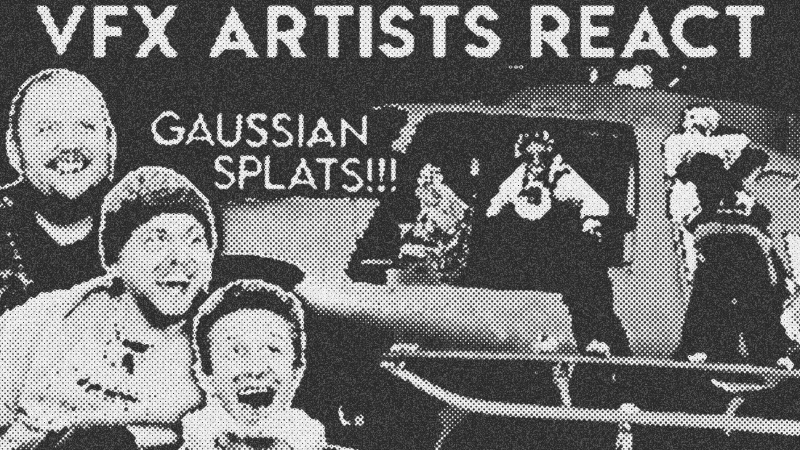
The landscape of high-end visual effects is shifting from rigid digital pipelines toward a more fluid, sandbox-style approach. We are witnessing a transition where the boundaries between live-action stunts and volumetric data points blur. This analysis dissects the technical strategy behind three distinct production philosophies: the practical-heavy action of the 1990s, the volumetric revolution in modern music videos, and the extreme pyrotechnic coordination in the latest high-budget spinoffs. Each case study reveals a different tactical choice regarding the balance of safety, realism, and technological ambition.
Gaussian Splats: The Volumetric Strategy
ASAP Rocky's music video for "Helicopter" represents a tactical shift in how we capture and manipulate human performance. Rather than relying on traditional 3D mesh modeling or even Neural Radiance Fields (NeRFs), the production utilized Gaussian splats. This choice allows for a volumetric capture that functions as a high-fidelity point cloud rather than a flat texture.
Technically, the move to splats solves a primary bottleneck in digital cinematography: camera freedom. By capturing performances with a massive camera array in New York, the team created assets that they could drop into a traditional CG environment. They relit these assets dynamically, allowing shadows to be projected from digital light sources onto the volumetric data. This "sandbox" approach gives directors the ability to change field of view, camera positioning, and lighting long after the artist has left the stage, effectively turning a live performance into a programmable digital asset.
The Dragon’s Breath: High-Risk Pyrotechnic Coordination
In the upcoming film Ballerina, the production team made the strategic decision to execute 90-95% of fire effects in-camera. This is a massive logistical undertaking led by stunt coordinator Jason DeMeno. The center of this strategy was "The Dragon," a custom-built flamethrower that ejects liquid fuel rather than just propane.
From a technical standpoint, the tactical advantage of liquid fuel is the visibility of the unignited stream and the resulting "drip" effects that CGI struggles to simulate with physical accuracy. This creates a level of interactive lighting—where the fire actually illuminates the set to the point of overexposure—that digital compositing rarely matches. However, this move requires extreme precision. Stunt performers like Chia Namova must maintain perfect breath control; inhaling during a 4,000-degree ignition would result in permanent internal scarring from superheated air and chemicals.
Performance Breakdown: Arnold’s Vertical Rigging
Looking back at Eraser, we see the tactical limitations of 1996-era CGI, which forced a heavy reliance on physical rigging. The airplane escape sequence involved Arnold Schwarzenegger suspended 80 feet in the air on a vertical fuselage. The strategic decision to blast the actor with 250 mph fans while performing manual backflips on wires created a physical deformation of the face and clothes that remains difficult to replicate digitally. While the CG crocodiles in the same film suffer from "wet-look" lighting errors common to the era, the practical aerial stunts demonstrate how physical commitment to the shot—even across seven takes—provides a baseline of reality that anchors even the most absurd scenarios.
Future Implications: The Sandbox Pipeline
The success of volumetric captures like those seen in ASAP Rocky's work suggests a future where "shooting" a movie becomes synonymous with "gathering assets." Filmmakers are no longer locked into a single perspective once the shutter closes. Simultaneously, the continued reliance on experts like the Action Factory for films like Ballerina proves that digital solutions still cannot fully replace the visceral impact and interactive lighting of real-world physics. The most effective tactical move for future productions will be the seamless integration of these two poles: using volumetric data for impossible camera movements while maintaining practical elements to ground the lighting and texture of the frame.
- ASAP Rocky
- 14%· people
- Ballerina
- 14%· movies
- Action Factory
- 7%· companies
- Ana de Armas
- 7%· people
- Arnold Schwarzenegger
- 7%· people
- Other topics
- 50%
VFX Artists React to Bad & Great CGi 214
WatchCorridor Crew // 22:31
