Gaussian splats render photoreal reality 100 times faster than video
The technical evolution of the radiance field
Cinema has always been a game of light simulation. We build 3D meshes, calculate textures, and then let powerful computers spend hours trying to mimic how photons bounce off surfaces. But the industry is shifting from simulation to pure capture. A few years ago, Neural Radiance Fields (Nerfs) promised to revolutionize 3D capture by using neural networks to learn a scene's light. While the results were breathtaking, the process was a technical bottleneck; you were essentially dealing with a complex math formula that required immense processing power to render every single frame.
Gaussian Splats have arrived to solve the speed problem. Instead of a neural network, this technology uses millions of "fuzzy blobs" or Gaussians that exist in actual 3D space. These aren't just points; they are mathematical entities with position, rotation, scale, opacity, and—most importantly—view-dependent color. Unlike traditional photo scans that look flat, these splats understand that light looks different depending on your viewing angle.
Spherical harmonics and the illusion of detail
The true technical wizardry behind this medium is a concept called spherical harmonics. If you tried to store every possible color for every possible viewing angle in a 3D scene, the file sizes would be astronomical. Instead, each Gaussian stores a base color and a set of mathematical pull-factors. As you move around the object, the math adjusts the color in real-time, creating the perfect illusion of reflections, sheen, and translucency.
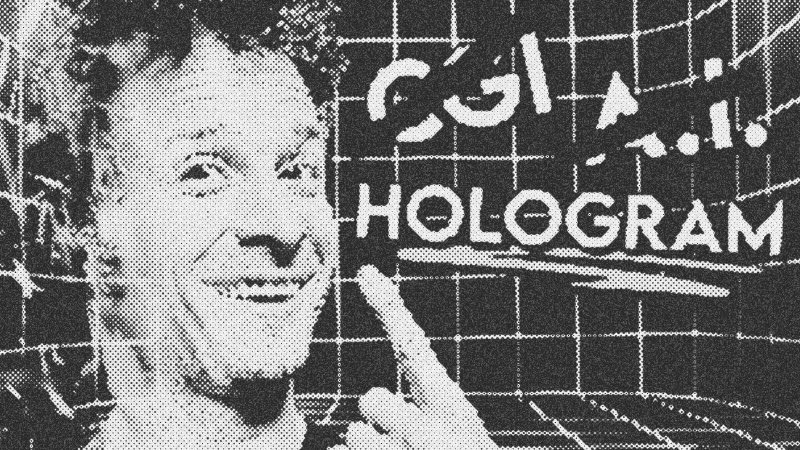
This "mathematical minimalism" allows for incredible efficiency. In practice, this means we can render high-frequency details that were previously the bane of VFX artists: the fine hairs on a dog's head, the complex transparency of a wasp's wing, or the subtle reflections on a television screen. These aren't just textures projected onto a flat mesh; they are thousands of overlapping brushstrokes that together form a photorealistic hologram.
Capturing reality with 360-degree precision
Creating a high-quality splat requires a rigorous data set. The goal is to eliminate motion blur, which is the natural enemy of 3D reconstruction. Filmmakers are now using tools like the Blackmagic Cinema app and drones like the Anti-Gravity A1 to gather as much visual information as possible. The advantage of a 360-degree drone is the ability to see everything everywhere all at once, which drastically cuts down the time needed to map a complex environment like a film studio or a historical landmark.
Once captured, the software—whether it's Postshot, Luma AI, or Metashape—undergoes a process of "tracking" and "training." This is where the computer solves the camera positions and begins growing the Gaussians like bacteria in a petri dish. The result is a digital double of reality that can be explored from any angle, even those where a camera couldn't physically fit.
Breaking the fourth dimension with 4DGS
We are now moving beyond static captures into 4D Gaussian Splatting. By adding a velocity vector and a time span to each individual Gaussian point, companies like 4DV.AI are creating true volumetric video. This isn't just a sequence of 3D frames; it's a continuous representation of movement.
According to Jaming, the CEO of 4DV.AI, this approach allows for staggering compression. They can shrink volumetric data down to 30-60 megabits per second—roughly 100 times smaller than the raw 2D video used to create it. This level of efficiency means we could soon be streaming photorealistic holograms directly to VR headsets or smartphones, allowing for live, volumetric interviews that feel as if the subjects are in the same room despite being thousands of miles apart.
The future of historical and visual effects preservation
The implications for this technology extend far beyond entertainment. There is a massive opportunity for historical preservation. When a landmark like Inspiration Point in the Angeles National Forest burns down in a wildfire, a Gaussian splat might be the only surviving 3D record of that location. For VFX artists, these assets can be brought into engines like Octane Render for relighting, path tracing, and physical distortion. We are no longer just making movies; we are capturing reality in its entirety, preserving it in a digital format that can be bent, folded, and revisited forever.
- 4DV.AI
- 13%· companies
- 4D Gaussian Splatting
- 6%· concepts
- Angeles National Forest
- 6%· places
- Anti-Gravity A1
- 6%· products
- Blackmagic Cinema app
- 6%· products
- Other topics
- 63%
THIS is the Biggest Thing Since CGI
WatchCorridor Crew // 26:47
