Sony masterfully nailed physical trajectory where Marvel fell into cartoon floatiness
The physics of the web swing
Every filmmaker knows that the true test of any on-screen Spider-Man (2002) is the web swing. It is a deceptively simple action that requires a perfect marriage of camera work, animation, and gravity. In the comic books, a single dynamic drawing easily sells the illusion of flight. In live-action cinema, however, translation requires meticulous physical math. To evaluate how fifty years of filmmaking have tackled this monumental challenge, visual effects artists analyze the work through three rigid lenses: physical realism, technical innovation, and that visceral, heart-stopping feeling known as the "Spidey sense."
From the dangerous, analog stunt work of the late 1970s to the multi-million dollar digital pipelines of modern Marvel blockbusters, the evolution of the web swing reveals a fascinating struggle between physical accuracy and pure, unhinged digital freedom. When filmmakers abandon the laws of physics, the illusion immediately collapses.
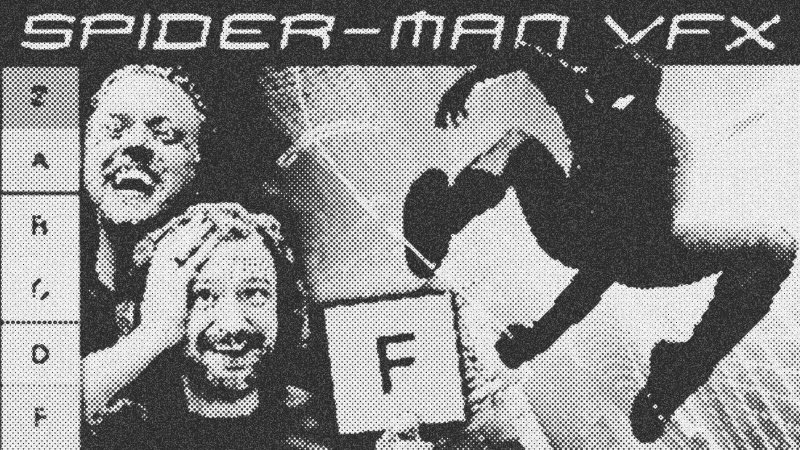
When stunts were dangerously real
Long before computers could paint photorealistic Manhattan skylines, filmmakers had to throw actual stuntmen off real buildings. The earliest iterations of the wall-crawler, such as the Spider-Man (1977) television series, relied entirely on a man swinging on a literal rope. There were no digital hand-offs or synthetic muscle simulations. What you saw was exactly what you got: a brave performer dangling over asphalt.
While highly realistic by default—it was a real human body reacting to gravity, after all—these early attempts suffered from a complete lack of heroic stylization. The stuntmen could not strike the iconic, arachnid poses from the comic books because they were too busy trying not to die. Even fan films like Dan Poole's The Green Goblin's Last Stand in 1992 pushed this analog boundary to its absolute limit, featuring terrifying, unsafetied swings off New York balconies. These efforts proved that real physics alone do not make a superhero; you need the stylized drama of the comic panels.
How Sam Raimi broke the digital barrier
Everything changed in 2002. Director Sam Raimi realized that to capture the true comic book aesthetic, Spider-Man had to become digital. The first Spider-Man (2002) film broke incredible ground by introducing a hybrid approach. For street-level plates, the production team engineered the "spider cam"—a gyro-stabilized, motion-controlled camera on a massive cable rig that could fly through real New York streets.
By compositing a highly stylized CG hero over these physical, high-speed camera plates, Raimi achieved a sense of scale and momentum that blew audiences away. By Spider-Man 2, the animation grew even sleeker. However, this technical success carried a hidden trap. The more comfortable animators became with the digital character, the more they drifted into the "CGI roller coaster" territory, where the physical weight of the character started to feel dangerously artificial.
The peak of realistic trajectory physics
If Raimi pioneered the digital swing, The Amazing Spider-Man 2 perfected it. Despite the film's narrative flaws, visual effects artists widely consider its opening swinging sequence to be the absolute gold standard of the franchise. The secret to this success lay in a custom-built physical trajectory system.
Instead of purely hand-animating the hero's path, the VFX team programmed a simulator. They would select an anchor point on a building, and the software would mathematically project the exact pendulum arc and speed of a human body of that weight. The animators then layered secondary motion on top of this physical foundation, such as the realistic fabric ripples of a slightly loose suit. Combined with a virtual camera operated by a real cinematographer watching scene playbacks, the result felt incredibly heavy, dangerous, and real.
The weightless trap of the modern green screen
As the franchise transitioned into the Marvel Cinematic Universe with films like Spider-Man: Homecoming, a strange regression occurred. Despite massive budgets and cutting-edge rendering tech, the swings began to feel floaty and weightless. Animators frequently tightened the digital suits to look perfectly smooth, accidentally erasing the tiny fabric folds and physics cues that tell the human brain an object is real.
Without a strict adherence to pendulum physics, the action can easily slide into video game territory. When characters float, drift sideways mid-air without logical leverage, or glide unnaturally, the magic evaporates. The lesson across fifty years of visual effects history is clear: the most breathtaking cinematic illusions are those that respect the unforgiving laws of gravity.
- Sam Raimi
- 14%· people
- Spider-Man
- 14%· movies
- Spider-Man (1977)
- 14%· movies
- Spider-Man 2
- 14%· movies
- Spider-Man: Homecoming
- 14%· movies
- Other topics
- 29%
We Rank Bad and Great SPIDER-MAN CGi
WatchCorridor Crew // 27:34
