Magnetism Over Springs: The Engineering Journey of the Magnetic Suspension Skate
The Quest for Frictionless Suspension
There is something visceral about the Back to the Future Part II hoverboard. It represents the ultimate freedom of movement, unencumbered by the mechanical friction of the road. While real-world maglev technology usually requires restrictive copper plates or frozen superconductors, the goal here shifts to something more practical yet equally ambitious: integrating magnetic repulsion into a standard skateboard. This isn't just about sticking magnets on a board; it is about recreating that "cushion of air" sensation while maintaining the ability to steer and carve like a traditional Skateboard.
Prototyping and the Law of Repulsion
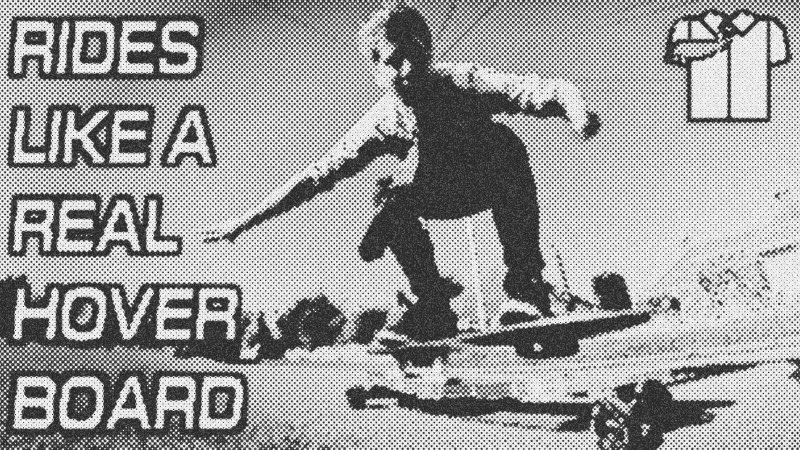
The initial design, often referred to as the Mark I, utilized massive 100x30mm disc magnets from Magnet Store. To handle the immense force required to suspend a human's body weight, the build required a heavy-duty sub-chassis. Initial tests used a dual-board setup where a top deck sat suspended above a bottom deck housing the Skateboard Trucks. The primary engineering hurdle emerged immediately: stability. Because magnets in repulsion want to flip or slide away from each other, vertical pins were installed to keep the boards aligned. While this proved the concept could hold weight, the pins introduced friction and mechanical noise that dampened the "hovering" effect.
Iterative Geometry and Hinge Mechanics
To reclaim that pure magnetic feel, the design evolved into a hinged longboard configuration. By anchoring the top board at the rear with a massive, precision-machined hinge, the side-to-side instability was eliminated. This version allowed the front of the board to bounce freely on a magnetic cushion while the hinge translated the rider's twisting motion into steering input for the trucks. It successfully achieved the sensation of floating on the front foot, though it lacked the visual "hover" aesthetic because the hinge physically connected the two layers. This led to experiments with high-tension cables in a crisscross pattern, attempting to replace rigid metal with flexible Bicycle Brake Cables. However, the tension required to prevent the magnets from snapping out of alignment often led to catastrophic failure, proving that some rigid constraints are necessary for safety.
Solving the Friction Equation
The final breakthrough—the Mark VIII—abandoned the rear hinge in favor of a specialized vertical guide system. Using square tubing and internal bearings housed in 3D-printed sleeves, the board achieved a near-frictionless vertical travel. The choice of materials shifted toward a double-layered Polycarbonate baseboard, providing just enough flex to compliment the magnetic repulsion. Unlike a mechanical spring, which has a linear or progressive rate and internal friction, magnetic repulsion provides a unique, ethereal bounce. Side-by-side tests with a glass of water proved that while the bottom deck vibrated violently over cobbles, the magnetic suspension isolated the rider from high-frequency road noise significantly better than traditional setups.
The Reality of Magnetic Hover
Building a machine like this highlights the difference between functional suspension and a gimmick. While many assume springs could do the same job, magnetism offers a frictionless response that traditional coils cannot replicate. The final result is a board that steers like a Longboard but feels like a vehicle from the future. Future iterations may explore centralizing the guides or utilizing lateral magnets to replace the mechanical pins entirely, pushing the design closer to a true, un-tethered hoverboard experience.
- Back to the Future Part II
- 9%· movies
- Bicycle Brake Cables
- 9%· products
- Colin Furze
- 9%· people
- Don Brown
- 9%· people
- Etnies
- 9%· companies
- Other topics
- 55%
The MAGNET Suspension SKATEBOARD
Watchcolinfurze // 22:03

This channel is the home of crazy inventions, brilliant world records and constant disregard to health and safety. I guarantee you will not be disappointed with the videos uploaded as there some of the best and most original on the net and it is TV shows that copy me not the other way round. Thanks and hope you have enjoyed the ride. THE BEST CHANNEL ON YOUTUBE