The Post-Journalism Era: From Information to Tribal Confirmation
The Death of the Information Monopoly
Before the internet democratized information, major news outlets held a strict monopoly on truth. This financial security allowed legacy institutions like The New York Times to prioritize factual reporting because their business model didn't rely on hyper-partisan engagement. When the internet shattered these barriers, local reporting and social media speed disrupted the traditional hierarchy. To survive the loss of their primary commodity—the news itself—legacy media pivoted from journalism to tribalism.
The Shift to Narrative Construction
Modern media functions less as a mirror to reality and more as a producer of serialized drama. We see journalists utilizing rhetorical skills to build powerful stories rather than relaying raw data. This "personification" of events transforms complex geopolitical shifts into simple morality plays. During the Donald Trump era, news cycles mirrored Saturday morning cartoons, casting figures as villains to ensure readers returned for the next installment. This approach bypasses first principles, offering an easy friction between good and bad that satisfies the human craving for justice over understanding.
Reality TV for the Intellectual Class
High-brow media consumption often masks a fundamental human drive: gossip. Whether it is Joe Biden versus Trump or intellectual debates involving Jordan Peterson, the underlying mechanics resemble reality television. This content brings news into a realm of "who's in and who's out," appealing to basic social heuristics. Even respected authors like Morgan Housel succeed by wrapping financial wisdom in storytelling. We must recognize that we are often reading fiction masquerading as fact, where twists and poetic justice replace dry reality.
Navigating the Storytelling Trap
Resilience in this era requires a high degree of self-awareness. We must ask what a story is trying to convince us of before we internalize its emotional weight. While some journalists still break vital stories, the packaging is often designed to trigger tribal instincts. The path forward involves acknowledging the story's existence while intentionally stripping away the "beautiful packaging" to find the core truth. Growth comes from resisting the urge to have our biases confirmed and seeking the foundational facts beneath the drama.
- Chris Williamson
- 13%· people
- Donald Trump
- 13%· people
- Gurwinder Bhogal
- 13%· people
- Joe Biden
- 13%· people
- Jordan Peterson
- 13%· people
- Other topics
- 38%
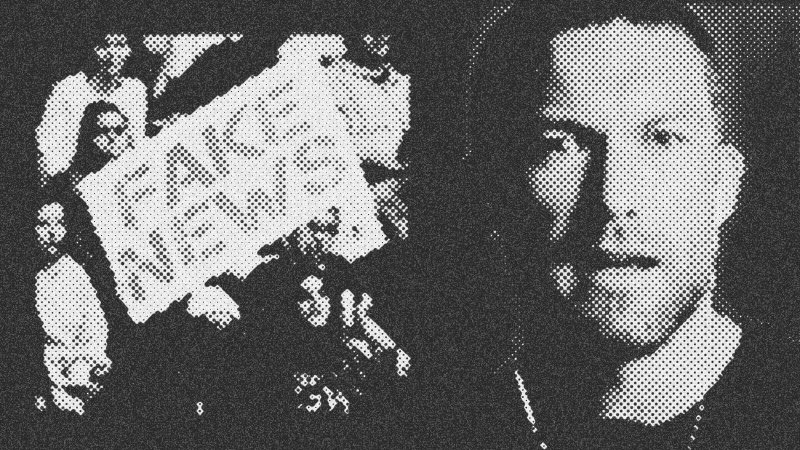
Why No One Trusts The Media Anymore
WatchChris Williamson // 11:29
