The Art of Befriending the Beast: Transforming Chronic Anxiety into Creative Presence
The Anatomy of a One-Way Spiral
Anxiety is a haunting. Unlike fear, which is a visceral, temporary response to a present danger—a rhinoceros charging or a car swerving—anxiety is a persistent narrative about a future that hasn't happened yet. It thrives on the way we tell stories to ourselves, acting like a tire ripper in a parking lot. It moves easily in one direction—up—but resists reversal because of how our biology is wired. This is the result of an unregulated feedback system where the brain’s primitive levels mistake mental movies for actual environments.
Two primary mechanisms drive this escalation. First, the negativity bias, or what we might call the 15 puppies and a cobra syndrome. If you walk into a room with 15 puppies and one cobra, your attention will fixate entirely on the snake. Evolutionarily, this saved us. Today, however, we use this same fixation to scan our modern world for digital cobras, interpreting every ambiguous signal as a threat. Second, we possess the unique human ability to project frightening stories into the future. When you tell yourself the IRS is coming to seize your home, your Amygdala reacts as if you are under physical attack. You weren't designed to live in this high state of arousal for years, yet many of us do, slowly eroding our health through degenerative illnesses caused by a nervous system that never gets to stand down.
The Left Hemisphere's Narrow World
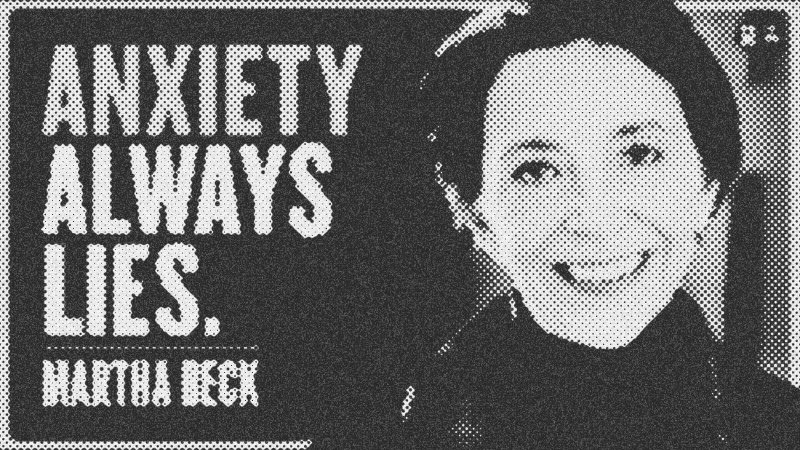
Our current culture is a mirror of the left hemisphere of the brain. As neurologist Iain McGilchrist notes, the left hemisphere loves what it can grasp, build, predict, and measure. It is a tool for survival and utility, but it is also inherently anxious and lacks context. We have built institutions, media, and social structures that reinforce this left-brain dominance, leaving us feeling alienated from the environments our ancestors inhabited for hundreds of thousands of years. Just a few centuries ago, a human's day was filled with the sounds of wind, water, and birdsong—rhythms that naturally regulate the nervous system.
Today, we spend our time in a wildly aberrant moment of history, performing tasks that feel foreign to our biological design. We then wonder why we feel broken. The truth is that activities we now call "hobbies"—fishing, weaving, or tracking—are the very things we evolved to do. They pitch our nervous systems back to where they belong. When we are trapped in the left hemisphere, we suffer from a form of hemispatial neglect, where we ignore everything that doesn't fit into our narrow survival narrative. We become like the stroke patient who believes their own leg belongs to someone else; we disown parts of our experience and our humanity because they don't fit the rigid, measureable goals of a left-brain world.
Interventive Compassion: The KIST Method
To break the anxiety spiral, we must move beyond trying to control or suppress our feelings. Control is a left-brain tactic that usually backfires. Instead, we must turn toward the practice of Kind Internal Self-Talk (KIST). This approach, rooted in the Loving Kindness Meditation or Meta practice, involves treating your anxious brain not as a broken machine, but as a frightened animal. You would never scream at a shivering, bedraggled puppy to "shut up and be calm." You would approach it slowly, softly, and gently.
Interjecting into the spiral requires a shift in how you relate to your inner critic. When that voice tells you that you are a failure or that disaster is imminent, don't fight it. Adopt what Chris Voss, a former FBI hostage negotiator, calls the "late-night DJ voice." Speak to your fear with empathy. Say, "I see you. I hear you. Tell me everything." This validates the Amygdala, letting the primitive brain know it has been heard so it can finally take a rest. By dedicating even ten minutes three times a day to this internal befriending, you begin to hook your thoughts to a different kind of spiral—one of regulation and safety.
From Anxiety to the Creativity Spiral
Anxiety and creativity cannot occupy the same space. Even the smallest amount of anxiety, such as being told you’ll be paid for a creative task, can shut down the brain's ability to innovate. To move from the anxiety spiral into the creativity spiral, you must first bridge the gap with curiosity. Judson Brewer has shown that shifting from a state of "oh no!" to "huh, that's interesting" can palpably shift the brain's mood. Curiosity provides the distance necessary to observe anxiety without being consumed by it.
Once curiosity is established, you can begin to activate the right hemisphere of the brain. The right brain is the seat of the "Self" with a capital S—the part of us that is compassionate, curious, and courageous. It is the part of the brain that understands music, jokes, and poems, and it is grounded in the present moment. You can stimulate this side of the brain through non-dominant hand drawing, moving through nature, or engaging in "spiritual sports" like skiing or surfing that require intense kinesthetic focus. When you enter this state, you aren't just managing anxiety; you are moving into a state of sacred astonishment where even the most mundane tasks, like chopping wood or carrying water, feel imbued with beauty.
The Physics of Integrity and Illness
Chronic illness and chronic anxiety are often deeply intertwined. When the body is held in a spasmodic tightening for years—a physical manifestation of a "lie" we are living—it eventually breaks down. Integrity isn't just a moral concept; it's a structural one. If a plane is in structural integrity, it flies. If your life is out of alignment with your deepest truth, you suffer from psychological and physical "physics" issues. Many of us sell out our true nature early in life to meet social pressure, leading to a core belief that we are "not enough."
Recovery from this state, whether it’s from a decade-long autoimmune struggle or a lifelong anxiety disorder, requires a radical return to the truth of your experience. This often begins with rest. If you are exhausted by years of pushing against your own rhythms, you may need four days of absolute agenda-free existence—what some might call "filling the well." On the third or fourth day of rest, the flicker of hope and spontaneous creativity naturally returns. Self-expression—whether through journaling, drawing, or music—then becomes the vehicle for getting the difficulty of human life into a state where it can be communicated and released. By paying attention to the "whispers" of your fleeting, quiet thoughts before they become crises, you align yourself with the structural integrity required for a life of peace and potential.
- Boyd%20Vardy
- 9%· people
- Chris%20Voss
- 9%· people
- Harvard
- 9%· organizations
- Iain%20McGilchrist
- 9%· people
- Judson%20Brewer
- 9%· people
- Other topics
- 55%
How to Break Free From Chronic Anxiety - Martha Beck
WatchChris Williamson // 1:03:34
