The Science of Joyful Achievement: Reclaiming Productivity Through Positive Psychology
The Symbiosis of Joy and Performance
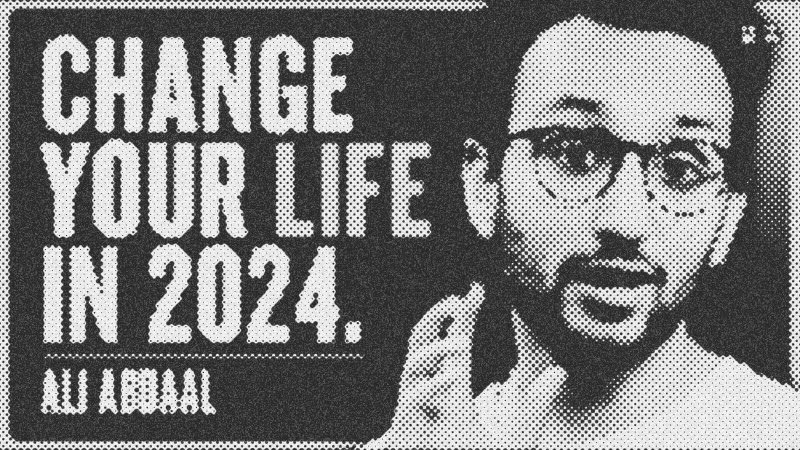
Traditional productivity advice often feels like a lecture on military discipline. We are told to wake up at 4:00 AM, endure cold plunges, and grind until our eyes glaze over. This mechanical approach treats humans like software programs that just need better optimization. Ali Abdaal challenges this narrative by introducing a concept that sounds almost radical in its simplicity: feeling good makes you more productive. This isn't just a feel-good mantra; it is a psychological reality rooted in the Broaden and Build Theory pioneered by Barbara Frederickson.
When we experience positive emotions, our brains literally open up. We become more creative, more socially connected, and more resilient. In contrast, negative emotions like stress and fear trigger a "fight or flight" response, narrowing our focus to immediate survival. While that narrow focus was useful for evading sabertooth tigers, it is disastrous for modern knowledge work that requires expansive thinking and collaboration. If you are a writer, an entrepreneur, or a doctor, your performance is directly tied to your emotional state. To be effective, you must first be well.
The Architecture of Feel-Good Productivity
True productivity isn't about doing more things; it is about doing the right things in a way that doesn't drain your soul. This requires a shift from extrinsic motivation—doing things for money or status—to intrinsic motivation—doing things because the process itself is rewarding. Extrinsic motivators are fragile. As soon as the reward disappears or becomes expected, the motivation evaporates. Worse, high extrinsic pressure can actually crowd out the natural joy we find in our work. This is the "monetization trap" where a beloved hobby becomes a chore once a deadline and a paycheck are attached.
To combat this, we must focus on the "Power" pillar of productivity: autonomy and competence. Autonomy is the feeling that you are the architect of your own life. Even in jobs where you lack control over the final outcome, you almost always have control over the process and your mindset. If you approach a task with "half-assedness" to save energy, you actually end up more drained. Taking ownership of the small details—choosing how you organize your desk or the music you listen to while you work—creates a sense of agency that acts as a fuel for the long haul.
Play as a Professional Strategy
We often view play as something we do when the work is finished, but high achievers like Richard Feynman understood that play is actually the engine of breakthrough. Feynman cured his professional burnout by calculating the physics of a wobbling cafeteria plate just for the fun of it. That playful curiosity eventually led to his Nobel Prize. When the stakes feel too high, we become paralyzed by the fear of failure. By lowering the stakes and treating our tasks as "adventures" or "experiments," we bypass the emotional hurdles that lead to procrastination.
Adopting a "sincere but not serious" mindset allows for greater engagement. Think of a board game: you play sincerely because you want to win, but you don't take it so seriously that a loss ruins your week. This balance creates the perfect environment for Flow State. If you can make your work feel like play, discipline becomes less of a finite resource you have to ration and more of a natural byproduct of your engagement. The question isn't "How do I force myself to do this?" but rather "What would this look like if it were fun?"
Solving Procrastination Through Clarity
Procrastination is rarely a sign of laziness; it is usually a symptom of uncertainty, fear, or inertia. When a goal is vague, like "get fit," the brain doesn't know where to start, so it defaults to the easiest path—distraction. Seeking clarity is the prophylactic against this paralysis. You must define the what, the why, and the when. Breaking a massive project down into a single "next physical action" removes the cognitive friction that makes us reach for our phones.
One of the most effective tools for this is the Ideal Week. By mapping out a blank calendar and filling in your non-negotiables—sleep, relationships, and deep work—you gain a realistic view of your time. This exercise reveals two things: you have more time than you think, but you also have less room for the eighteen "priority" projects you've been lying to yourself about. Clarity allows for intentional elimination. Once you stop trying to do everything, you finally have the space to do something exceptionally well.
The Art of Sustainable Consistency
Success is the result of compounding, and compounding requires you to stay in the game. Most people fail because they overexert themselves in a short burst and then flame out. To build sustainable consistency, we must address the three types of burnout: overexertion, depletion, and misalignment. Overexertion is simply doing too much. Depletion is failing to recharge. Misalignment is the most insidious; it's when you are doing a lot of work, but none of it moves you toward a future you actually want.
Recharging is not a luxury; it is a professional responsibility. However, we must be careful not to fall into "productivity purgatory," where we only rest so that we can be more productive later. This instrumentalizes our entire existence. We must learn to go for a walk just to go for a walk, not just to hit a step goal or reset our dopamine levels. True recharge comes from activities that provide autonomy and a sense of progress without the pressure of monetization. Whether it's painting, knitting, or playing a clacky mechanical keyboard, these "low stakes" creative outlets are what allow us to return to our main work with genuine energy.
Alignment and the Final Horizon
At the end of the day, productivity is a tool, not a destination. There is no point in becoming a master of efficiency if you are climbing a ladder leaned against the wrong wall. This is why the final stage of any growth journey must be alignment. It requires asking the heavy questions: What would I want my obituary to say? Am I living in a way that my future self will be proud of? Steven Covey famously suggested we "begin with the end in mind," but we should focus more on the vibe we leave behind than the trophies we collect.
Most of us want to be remembered for our warmth, our kindness, and our presence—not our inbox zero status or our hedge fund returns. If your daily actions aren't reflecting those values, no amount of time-blocking will make you feel successful. The goal is to live a life where you wouldn't want to fast-forward any part of it. When your work is aligned with your values, when you find play in the process, and when you treat your energy as a sacred resource, productivity stops being a struggle. It becomes a natural expression of a life well-lived.
- 4000 Weeks
- 5%· concepts
- Alex Hormozi
- 5%· people
- Ali Abdaal
- 5%· people
- Barbara Frederickson
- 5%· people
- Bill Perkins
- 5%· people
- Other topics
- 76%
The Top 5 Traits Of The Super Productive - Ali Abdaal
WatchChris Williamson // 1:17:06
