The Architecture of Resilience: Reclaiming Your Story Through Radical Presence
The Weight of the Invisible Backpack
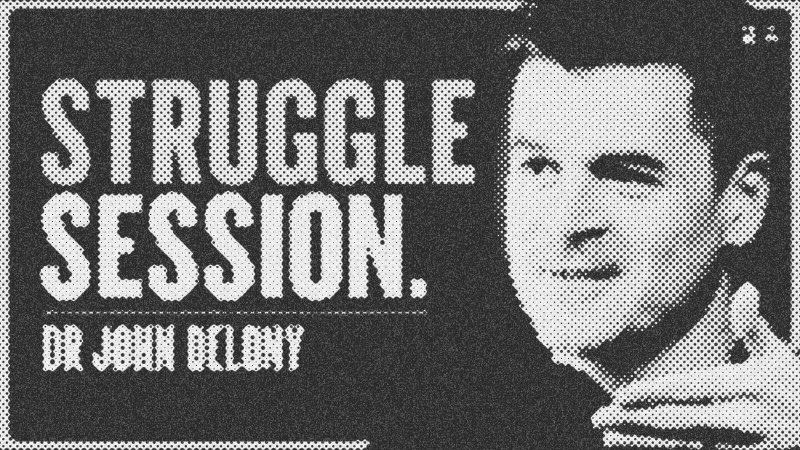
Many of us walk through life under the crushing pressure of a 'squat bar' we never actually loaded. We are high-achievers who treat our bodies like high-performance vehicles, yet we wonder why the check-engine light is perpetually flashing. We navigate the world through the lens of performance, assuming that if we just drive harder, the internal static will eventually fade. But as Dr. John Delony suggests, many 'type A' individuals are actually struggling with 'type B' problems. They have the discipline, but they lack the capacity to be still. They have the success, but they have no psychology for the concept of 'enough.'
We often find ourselves trapped in a cycle where we confuse busyness with worth. If our calendars are full, we must be valuable. If people need us, we must be necessary. This is a fragile foundation for self-esteem because it relies entirely on external validation. When we lose that momentum—through illness, a breakup, or a shift in career—we are forced to face the person underneath the accolades. Often, that person feels like a stranger. The work of personal growth isn't about adding more to your plate; it's about stripping away the layers of performance to find the inherent strength that has been there all along.
The Paradox of Presence over Answers
In our information-saturated culture, we have become addicted to 'solving' people rather than sitting with them. When a friend goes through a breakup or a colleague loses a loved one, our first instinct is to offer a theory, a quote, or a Google-searched strategy. We want to fix the pain because the pain makes us uncomfortable. However, true compassion—the kind that actually heals—requires a radical commitment to silence. Presence is not about having the right words; it is about the willingness to hold the space when there are no words.
Dr. John Delony recounts a story of a silent rancher who simply sat by him during a period of intense medical crisis. There were no graphs, no CBT techniques, and no platitudes. Just the shared exhale of a human being who was willing to witness suffering without trying to manage it. This is the 'culture of presence' we have lost. We have traded the communal parlor—where we used to sit with the dead and the grieving for days—for a 'living room' where we outsource our sorrow to professionals. Reclaiming your story begins with reclaiming the ability to be present for yourself and others in the messiest, most unresolved moments of life.
Unfinished Business and the Magnetism of the 'Fixer' Relationship
Why do we consistently find ourselves drawn to partners who are 'broken' or emotionally unavailable? It is rarely a coincidence. Our nervous systems are wired with GPS pins from our childhood. If you grew up in a household where love was a reward for performance, or where a parent's attention was a scarce resource, your body will instinctively seek out similar dynamics in adulthood. We marry our unfinished business because our subconscious mind is trying to 'solve the loop' of our past.
We become enchanted by the 'fixer-upper' partner because if we can redeem them, we believe we can finally redeem ourselves. We export our sense of value to their transformation. If I can make this person love me, then I must be lovable. If I can fix their chaos, then my own internal chaos must be manageable. This is a form of 'intellectual self-harm.' We accept the love we think we deserve, often settling for 'sips of oxygen through a straw' because we don't believe we are worthy of a full breath. Breaking this cycle requires moving from 'needs' to 'wants.' Needs are non-negotiable and often parasitic; wants are vulnerable and require us to acknowledge our own desires without the safety net of a crisis.
The Grief Circuit and the Ceremony of the Period
Moving on from a relationship is not a logic problem to be solved; it is a biological process to be endured. Neuroscience shows that breakups activate the same neural circuits as physical death. The primary difference is that the 'dead' person is still walking around, accessible via a single button on a smartphone. This creates a state of perpetual 'leakage' where we never truly allow the grieving process to finish. We ruminate, we check social media, and we rehearse imaginary arguments in the shower because our bodies haven't received a 'period at the end of the sentence.'
To move forward, we must honor the system. This often requires a literal or symbolic ceremony. In many ways, we have become allergic to grief, viewing sadness as a pathology rather than a natural response to loss. Whether it is Cognitive Behavioral Therapy (CBT) or Acceptance and Commitment Therapy (ACT), the goal is to move the memory from the reactive short-term loop into the narrative long-term memory. You must give your body permission to be sad for as long as it takes to process the loss. Only when the story is 'finished' can you begin to write the next chapter.
The Myth of Self-Actualization as a Destination
We often view Maslow's hierarchy of needs as a ladder, where we look after our survival first so we can eventually reach the 'pinnacle' of self-actualization. But this framing is flawed. Self-actualization is not a lighthouse on a hill that you reach once your bills are paid and your house is safe. It is interwoven into the very act of survival and connection. The mother who shows up for her children day after day, the worker who takes pride in a thankless job, the partner who chooses to stay and do the hard work of reconciliation—these are acts of actualization.
Our modern world has outsourced our survival to the point where we are bored to death. We have food at a button's touch and safety provided by the state, yet we are more anxious than ever. This is because we have removed the 'participation' from the bottom rungs of the ladder. We expect the world to owe us love and safety so we can focus on 'me.' But true fulfillment is found in collective effervescence—the shared struggle and the shared victory. You don't find yourself by looking in a mirror; you find yourself by being part of a team, a family, or a community that requires your presence.
Re-parenting the Self: From Performance to Peace
Final empowerment comes from learning to 'want what you want.' Most of us have spent a lifetime 'marshmallow testing' our way through existence—putting off joy in the hopes of a future reward. We have learned to deny our desires to the point where we don't even know what they are. We treat our lives like a P&L statement, checking our 'gratitude' like an administrative task rather than feeling it in our bones.
Your greatest power lies in the ability to stop moving the goalposts. You have permission to be 'enough' right now, even if you never achieve another milestone. Resilience isn't just about bouncing back from failure; it is about the courage to be still in the face of success. It is the realization that you are a person worth taking care of, not because of what you do, but because of who you are. The bar is heavy, yes—but you are allowed to put it down.
- Dr. John Delony
- 13%· people
- Acceptance and Commitment Therapy
- 7%· treatment modalities
- ACT
- 7%· psychological theories
- Alex Hormozi
- 7%· people
- Arthur Brooks
- 7%· people
- Other topics
- 60%
How To Break Free From Your Old Story - Dr John Delony
WatchChris Williamson // 2:03:33
