The Anatomy of Authenticity: Navigating Modern Myths, Meritocracy, and the Search for Meaning
The Peril of Pedestals: Humanizing Our Heroes
We often build monuments to our heroes in our minds, forgetting that those monuments are made of the same fragile clay as our own lives. The tendency to idolize figures like Alan Watts or Ram Dass serves a psychological function: we project our own missing qualities onto them, using their perceived perfection as a mirror to criticize our own fallibility. However, true maturity begins when we recognize the humanity of those we admire. As Chris Williamson notes, many individuals achieve greatness in one narrow field specifically by neglecting every other facet of their existence.
Alan Watts provides a poignant example. While he was a titan of 20th-century spirituality, his life ended in a struggle with alcohol. To some, this feels like an unceremonious defeat. To others, it is simply the reality of a man who explored life on his own terms. When we realize that Christopher Hitchens died from the very cigarettes he enjoyed, or that spiritual teachers have complex sexual lives, we aren't witnessing a failure of their message. We are witnessing the shadow side that accompanies all light. This humanization is essential for creators; it allows us to see that greatness doesn't require being a god, only the courage to be a regular person who commits deeply to a craft.
The Vapid Illusion of the Modern Dating Market
There is a peculiar romanticism attached to the current state of "free and easy" dating, yet for those who have spent years in committed partnerships, the reality of the modern market is often a cold shock. The decoupling of sex from relationship-building or procreation has created a landscape that feels increasingly hollow. Chase Reeves, who has been with his spouse for nearly two decades, highlights the child-like thrill of the hunt—the "chemical romance" of a honeymoon phase—and contrasts it with the existential crisis of casual encounters.
Chris Williamson describes the "post-nut clarity" that hits like a drug after a casual hookup, leaving individuals lying in bed with a stranger, suddenly aware of their fundamental incompatibility. This is the devil’s laughter Friedrich Nietzsche spoke of. While the culture promotes "optionality" as freedom, it often functions as a curse that prevents depth. For many young men, the pressure to "pull" and go home with someone isn't about desire; it’s about meeting a cultural expectation of what a successful male should be. The result is a cycle of chasing that leads to an inescapable sense of aloneness, even in a room full of people.
Principles Over Plans: The Case for Surprise
In a world obsessed with productivity frameworks and five-year plans, there is a quiet rebellion in refusing to map out every coordinate of the future. Chase Reeves admits a perceived deficiency in long-term planning, yet he argues that values and principles scale far better than rigid timelines. When you have a solid set of principles, they inform how you negotiate a business deal, how you treat a waitress, and how you show up for your children.
Rigid planning often leaves no room for the "co-creation" or the "dance" with the universe. If we know exactly where we are going, we eliminate the possibility of being surprised by our own growth. Chris Williamson points out that many high achievers are driven by a fear of insufficiency—a "cat" chasing them from behind—rather than a pull toward a goal. This drive produces material success but often correlates with a more miserable internal existence. The challenge for the modern individual is to find a way to perform well without the existential compulsion to fill a hole inside through the next accomplishment.
The Meritocracy Trap and the Zero-Sum Game
Our current society has traded the concept of the "unfortunate" for the concept of the "loser." In ancient Greece, failure was often attributed to Lady Fortuna, recognizing that luck plays a massive role in human outcomes. Today, we pray at the altar of meritocracy. If we believe the people at the top are entirely worthy of their success, we must also believe that the people at the bottom are entirely worthy of their failure.
This is an unempathetic and psychologically destructive way to organize a society. It turns life into a zero-sum game, much like the grading distributions in the UK school system where a set number of students must fail so that others can succeed. This cultural narrative forces individuals to constantly prove their utility to avoid the "loser" label. We become so poor that all we have is money, or so lonely that all we have are different partners. We lose the sense of belonging to a wider mythos, replacing it with bank accounts and social media metrics that provide no real spiritual sustenance.
Feral Girls and Reflexive Contrarianism
Trends like "Feral Girl Summer" or "Goblin Mode" are often marketed as radical acts of autonomy, yet they frequently represent nothing more than reflexive contrarianism. Chris Williamson notes that if the previous year was about "Hot Girl Summer"—a trend promoted by Megan Thee Stallion focused on glamour—then the current year must be the exact opposite. This isn't necessarily deeper thinking; it’s simply inverting the algorithm.
True authenticity isn't about whether you shave your legs or not; it’s about the honesty of your inauthenticity. We often adopt these archetypes because we are desperate for a script to follow. Chase Reeves argues that many of these cultural battles are "bloggers talking to bloggers," disconnected from the visceral reality of living. When we model our behavior solely to be "not like that," we are still being controlled by the very thing we claim to reject. This negative mimesis keeps us trapped in a cycle of performance, preventing us from ever reaching a state of genuine self-awareness.
Intersectionality and the Circular Firing Squad
The emergence of terms like "white gay privilege" signals a shift where intersectionality begins to eat its own. As hierarchies of grievance become more complex, the purity spiral intensifies. Chris Williamson recounts Douglas Murray noting that as a gay conservative, he is now viewed as "honorary straight" by certain groups because he isn't sufficiently oppressed.
This "oppression olympics" occurs in a society that is fundamentally safe and convenient. When we are removed from the actual dangers of nature—the "rhino in the bush"—our nervous systems find new things to fear and new ways to fight. We expand definitions of racism or discrimination to maintain social power and status. This intellectual fire-hosing—where we are overwhelmed with contradictory narratives—leads to a state of passivity and demoralization. We lose our rudder and our sense of direction because we are too busy navigating the shifting sands of social approval.
The Midwit Peak and the Return to Simplicity
The "midwit" meme captures a profound truth about human development: the idiot and the sage often arrive at the same conclusion, while the person in the middle overcomplicates everything. A simple person knows to eat protein and lift weights; the midwit optimizes fasting windows and pre-digested enzymes; the sage returns to lifting weights and eating protein.
This applies to the search for a good life as well. The midwit is consumed by ameliorating every global injustice to compensate for ancestral sins. The sage realizes that a good life consists of finding work you care about, living in a place that fulfills you, and loving your family. We cannot regress back to the simple state once we have entered the valley of overcomplication; we must go "over the hill" toward sagery. This is the Zen concept of "chopping wood and carrying water" before and after enlightenment. The tasks remain the same, but the internal relationship to those tasks is transformed.
Conclusion: Radical Responsibility
The only way out of the cultural and psychological noise is to take radical ownership of one’s life. This doesn't mean the universe isn't a partner in the dance, but it does mean that what we can control, we must control. The alternative is a victim mentality that blames parents, society, or history for our current state. While taking too much responsibility can be personally destructive, it is the only path toward genuine agency.
As we move forward, the goal isn't to reach a final answer but to improve the quality of the questions we ask. We must build our lives from the bottom up—focusing on the family, the craft, and the immediate community. By shedding the need for hero worship and cultural scripts, we can finally begin the work of being our authentic, inauthentic selves.
- Chris Williamson
- 21%· people
- Chase Reeves
- 13%· people
- Alan Watts
- 8%· people
- Christopher Hitchens
- 4%· people
- Douglas Murray
- 4%· people
- Other topics
- 50%
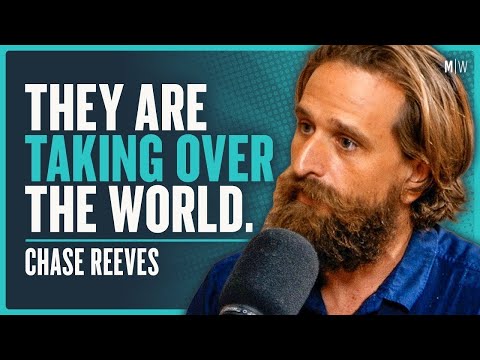
The Spirituality Of White Feral Girl Privilege - Chase Reeves
WatchChris Williamson // 1:12:39
