Surrendering the Clock: Beyond the Tyranny of Modern Productivity
The Roots of Our Industrial Obsession
We often find ourselves trapped in a relentless cycle of "doing," driven by an underlying anxiety that our worth is tied to our output. This modern obsession with productivity doesn't exist in a vacuum. It is the result of layered historical and psychological influences that have shaped our relationship with time. For many, this traces back to the Protestant work ethic, a religious framework suggesting that industry and suffering are the primary ways to earn favor. We have traded the spiritual altar for the digital one, yet the guilt remains the same. If we haven't suffered sufficiently in our achievements, we feel we haven't truly earned them.
Beyond history, we face a deep psychotherapeutic challenge: the belief that we only receive love from the world through our accomplishments. This creates a transactional existence where we make ourselves "needed" to avoid the vulnerability of being "wanted" for who we are. We become insecure overachievers, rising to the top of corporate or social ladders only to find that the pathologies driving our ascent have also robbed us of the ability to enjoy the view. We are selecting for people who lack an "off button," individuals who fill an internal void with status because they lack the inherent ability to feel secure without it.
The Fantasy of Total Control
At the core of our productivity struggle is a desperate craving for control—a control that is fundamentally impossible for a human being to possess. The modern world has tricked us into believing that certainty is a reasonable expectation. We have digital tools to predict the weather and global logistics to deliver goods in hours, leading to a "god complex" where we expect our personal lives to be just as manageable. When reality inevitably intrudes—through illness, technical failures, or human messiness—we experience it as an unfair personal affront rather than a natural part of existence.
Compare this to the medieval perspective. In an era of plagues and famines, no one would have fallen for the notion that they were in charge of their destiny. They built cathedrals that took 150 years to complete, fully aware they would never see the finish line. Today, our preferences expand faster than our ability to control the environment. We become enraged in traffic or impatient in lines because we feel we ought to be gods over our time. Accepting that we are not in control isn't a defeat; it is a liberation from the exhausting duty of trying to master the unmasterable.
Moving from Rigidity to Fluidity
True growth requires shifting from formulaic rigidity to an open-ended approach to life. Many of us treat our daily schedules as a bed of nails, believing we must whip ourselves into submission to be valid. However, a system that makes an interruption painful is a faulty system. If your productivity method causes you to resent your child walking into the room or a friend asking for a walk, you have prioritized the process over the quality of your life.
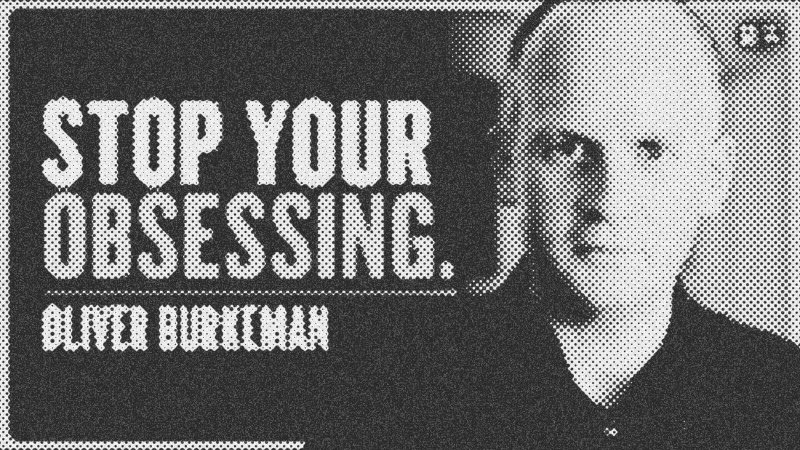
Oliver Burkeman suggests a more intuitive approach, such as the 333 technique. This involves focusing on three hours of core creative work, three maintenance tasks, and three small urgent items. The goal isn't to hit these numbers perfectly every day, but to allow for gradual compounding. Consistency should not be confused with uniformity. You must be willing to "surf" your own personality changes, recognizing that what worked for you five years ago might not serve you today. We must stop being so mean to our "selves," harnessing the fuel of what we actually feel like doing rather than relying solely on the internal tyrant's lash.
Confronting the Interior Tyrant
We often fear that if we take our foot off the gas, our lives will completely unspool. This lack of self-trust is what drives us to maintain complex systems of levers and pulleys just to get through a Tuesday. We treat our future selves like strangers who can't be trusted to be capable. We worry that if we don't stress about a problem today, we will never remember to solve it. This is why some find the concept of "self-compassion" so cringeworthy; it feels like an invitation to mediocrity.
In reality, the things we find most allergic or "new-agey" are often exactly what we need to investigate. If the idea of cutting yourself some slack makes you recoil, it suggests your identity is precariously built on the foundation of your own suffering. This "earn your cookie" mindset is a mutation of healthy achievement. We sacrifice the very thing we want—happiness—for the thing that is supposed to get it for us—success. If we could be happy in a cabin with a low income, we would have solved the problem. Since most of us aren't there yet, we must at least stop viewing our present reality as a mere prelude to a life that hasn't started yet.
The Gift of the Crisis
There comes a point in many high-achievers' lives where the old methods of "grinding it out" simply stop working. This is often viewed as a failure, but it is actually a gift. It is an invitation to move from a student-age approach of pleasing editors or meeting arbitrary deadlines to an adult approach of doing work out of love and self-expression. When the "dying neutron star" of your old motivation finally collapses, you are forced to find a new, more sustainable fuel.
For some, this means embracing external accountability, like a coach or a writing partner, to navigate the parts of our personality we cannot yet manage alone. For others, it means accepting the "messiness" of the human experience. We are fallible, our thoughts are fleeting, and we are often uncertain. Pedestalizing that uncertainty as a humble brag isn't the goal; accurately depicting it as the baseline of human existence is. When we face the reality of our limitations, we actually become more effective, not less. We stop fighting the current and start swimming with it.
Conclusion: The Path to Meaningful Action
Embracing your finitude is the only way to live a productive, creative, and sane life. The fantasy of "getting everything done" is a mirage that recedes as you approach it. Real progress happens when you stop trying to clear the decks of life's duties to eventually "start" living. Life is what happens while the decks are messy. By surrendering the need for total control and the obsession with suffering as a metric of value, we open ourselves to high-quality interruptions and genuine connections. The goal is to stop designing the perfect system and start doing the things that actually matter, even if—and especially because—we only have 4,000 Weeks to do them.
- 333 technique
- 8%· concepts
- 4,000 Weeks
- 8%· books
- Bruce Tiff
- 8%· people
- Cal Newport
- 8%· people
- Chris Williamson
- 8%· people
- Other topics
- 62%
The Dark Side Of Being A Perfectionist - Oliver Burkeman
WatchChris Williamson // 1:08:45
